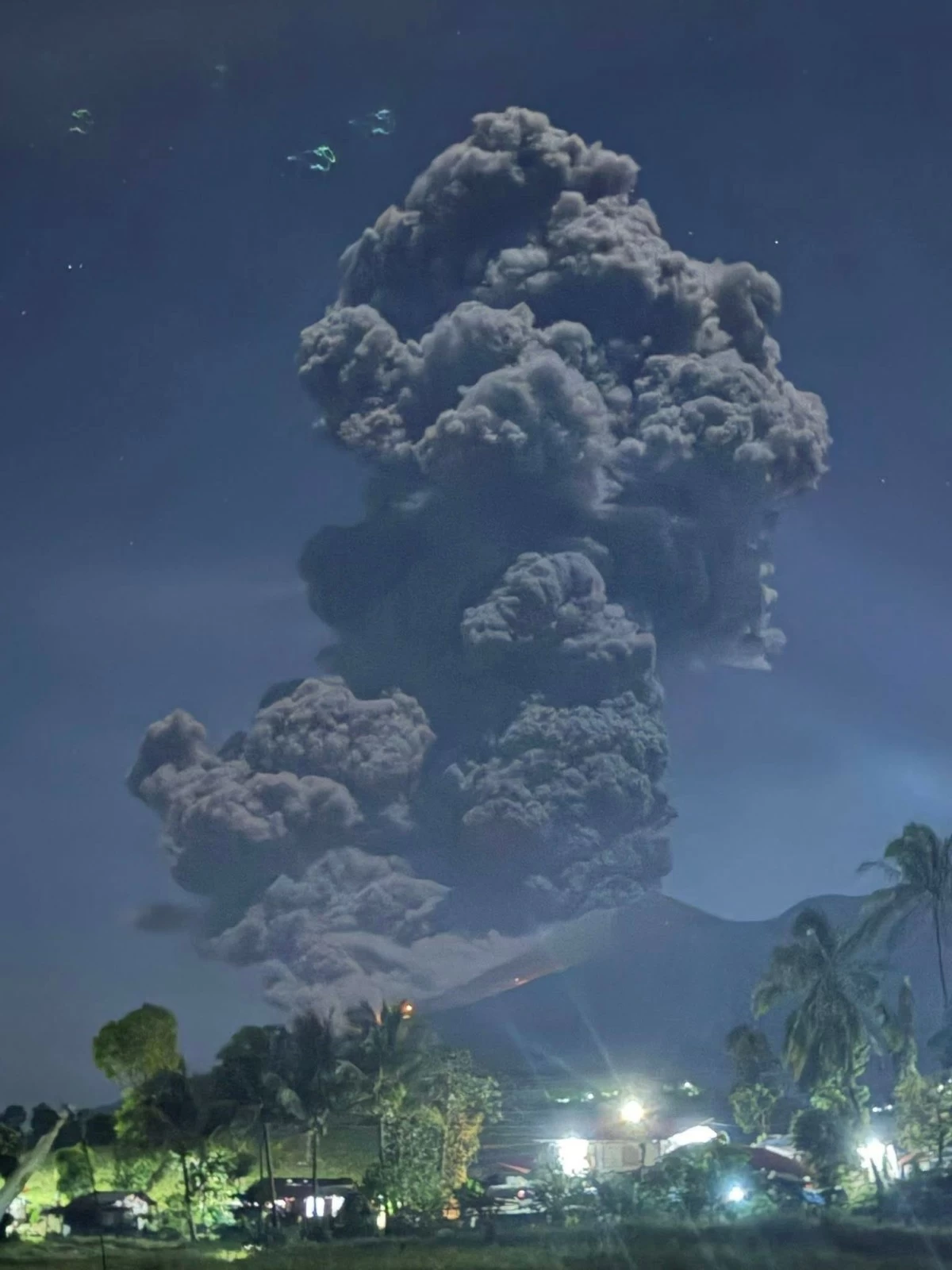
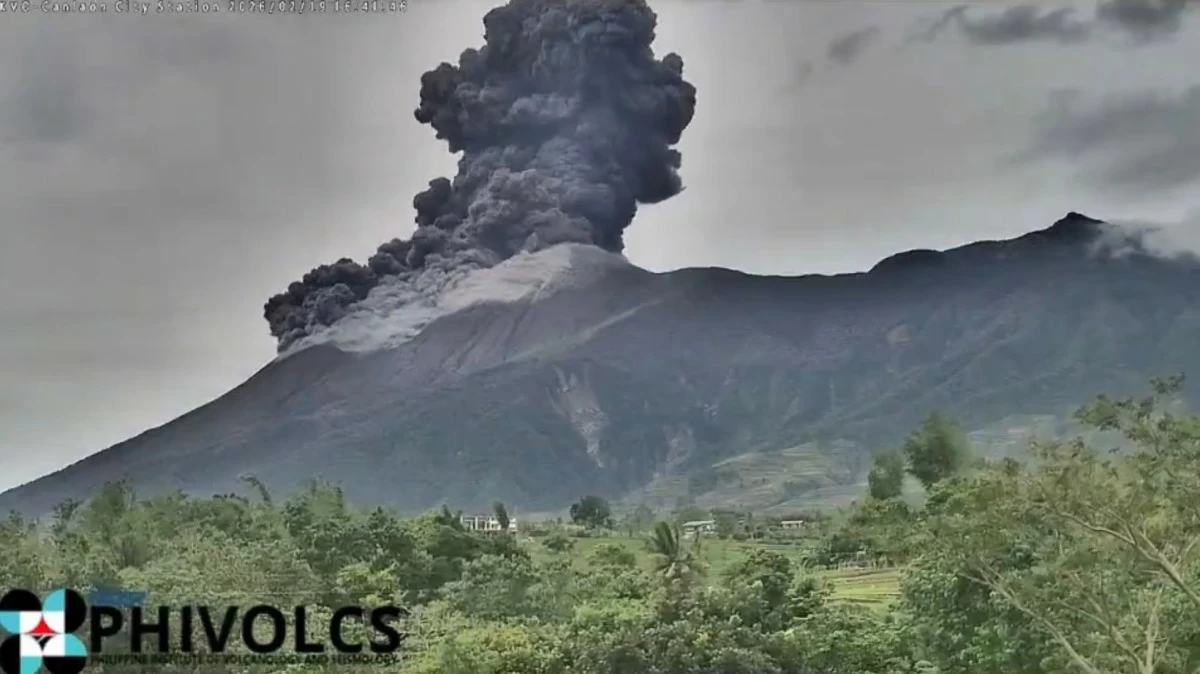
The Philippine Institute of Volcanology and Seismology (Phivolcs) reported a moderately explosive eruption that occurred at the summit crater of Kanlaon Volcano at 7:04 p.m. on Thursday, Feb. 26. The eruption, which lasted two minutes, produced a dark plume that rose 2,500 meters above the crater...
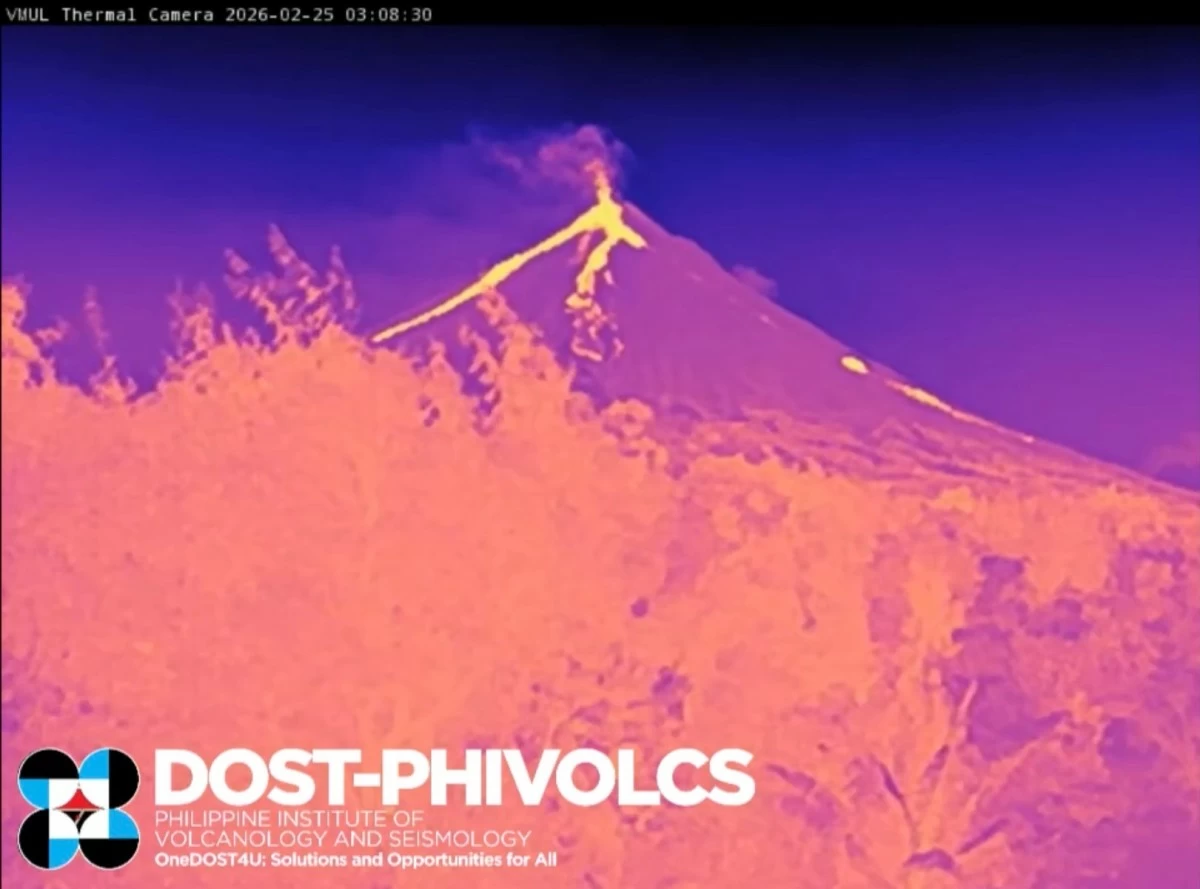
Effusive or non-explosive eruption at Mayon Volcano entered its 51st consecutive day on Wednesday, Feb. 25, with continued lava effusion and ash emission recorded at the summit crater, the Philippine Institute of Volcanology and Seismology (Phivolcs) said. Phivolcs reported episodes of lava...
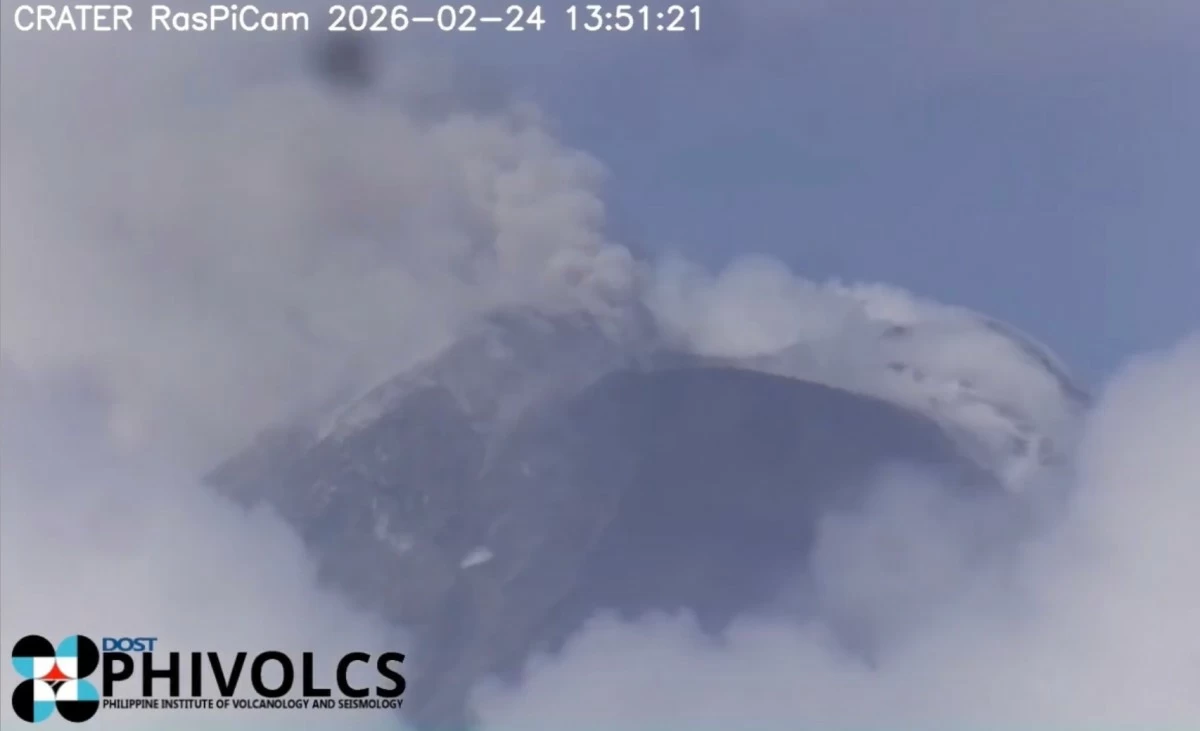
An ash plume rose anew from Mayon Volcano on Tuesday afternoon, Feb. 24, reaching about one kilometer above the summit crater as the volcano remained under Alert Level 3, the Philippine Institute of Volcanology and Seismology (Phivolcs) said. Time-lapse footage recorded at 1:50 p.m. showed a...
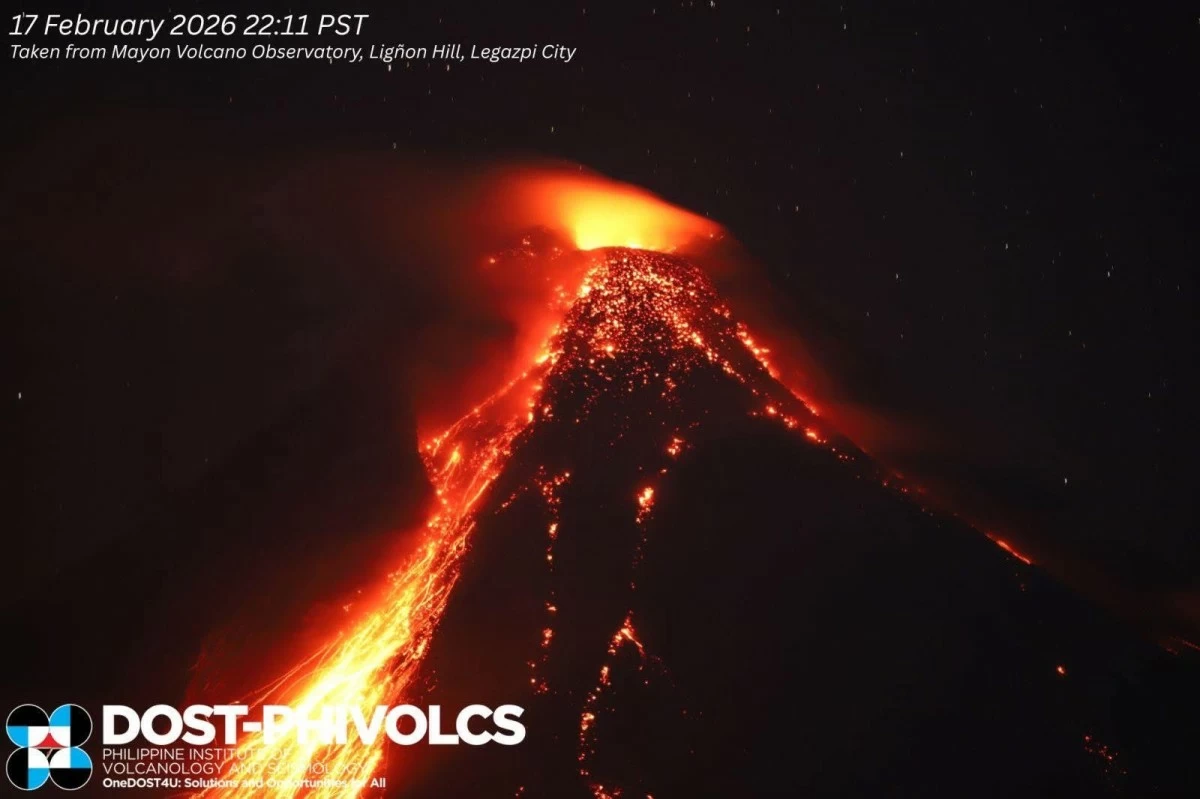
Mayon Volcano remains under Alert Level 3 as lava flows reached up to 3.8 kilometers (km) from the summit crater, the Philippine Institute of Volcanology and Seismology (Phivolcs) reported on Sunday, Feb. 22. In its 24-hour observation summary covering 12 a.m. Feb. 21 to 12 a.m. Feb. 22, 2026, the...
The Philippine Institute of Volcanology and Seismology (Phivolcs) said Kanlaon Volcano remains under Alert Level 2 following a “moderately explosive eruption” on Thursday afternoon, Feb. 19, adding that current monitoring data do not indicate the need to raise the alert status. The eruption,...
The Philippine Institute of Volcanology and Seismology (Phivolcs) reported a “moderately explosive” eruption that occurred at the summit crater of Kanlaon Volcano at 4:38 p.m. on Thursday, Feb. 19. The event, which lasted for two minutes, produced a dark gray eruption plume that rose 2,000...
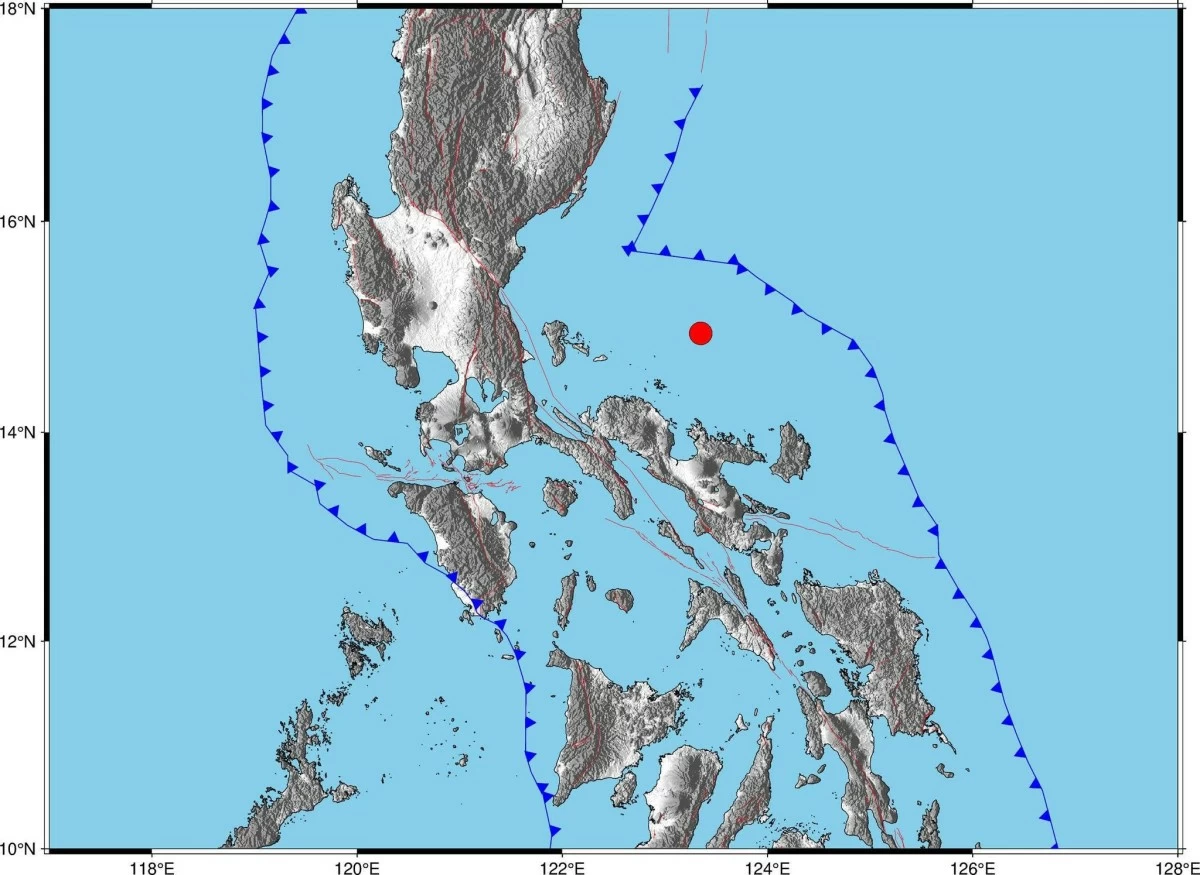
A magnitude 4.3 earthquake struck off the coast of Camarines Norte early Tuesday, Feb. 17, the Philippine Institute of Volcanology and Seismology (Phivolcs) reported. In its Earthquake Information No. 1, Phivolcs said the tremor occurred at 2:01 a.m. The agency said the epicenter was located about...
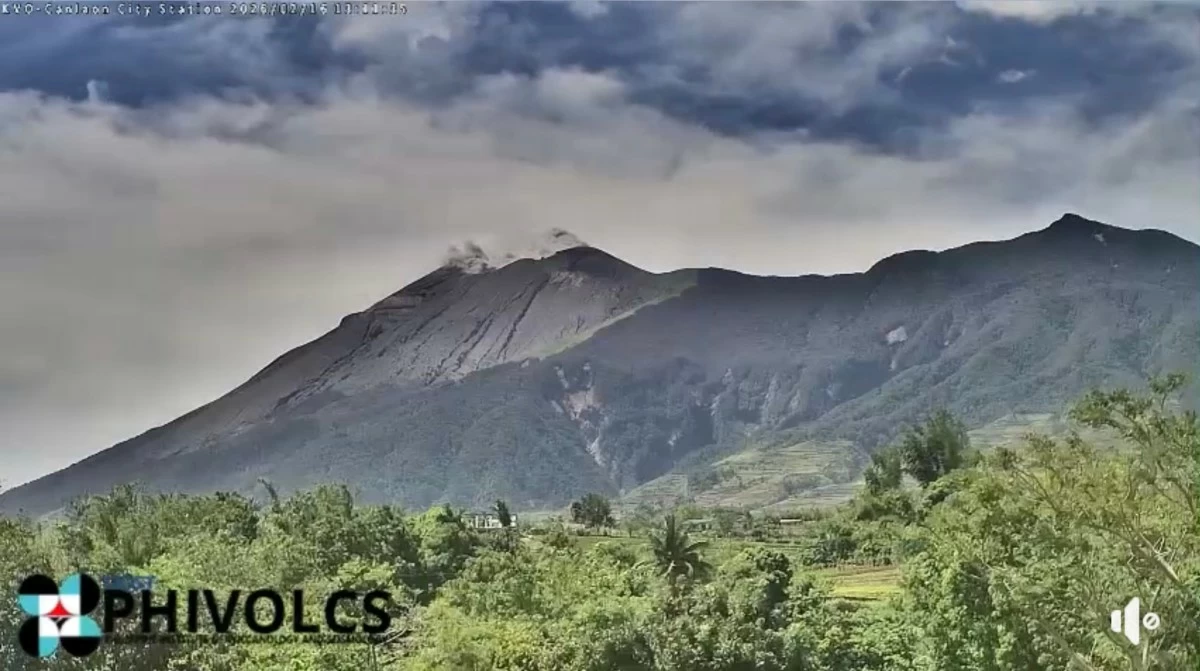
The Philippine Institute of Volcanology and Seismology (Phivolcs) reported that grayish ash plumes rose from the summit of Kanlaon Volcano in Negros Island on Monday, Feb. 16, as the volcano remained under Alert Level 2. Time-lapse footage from the Canlaon City Observatory showed the plumes rising...
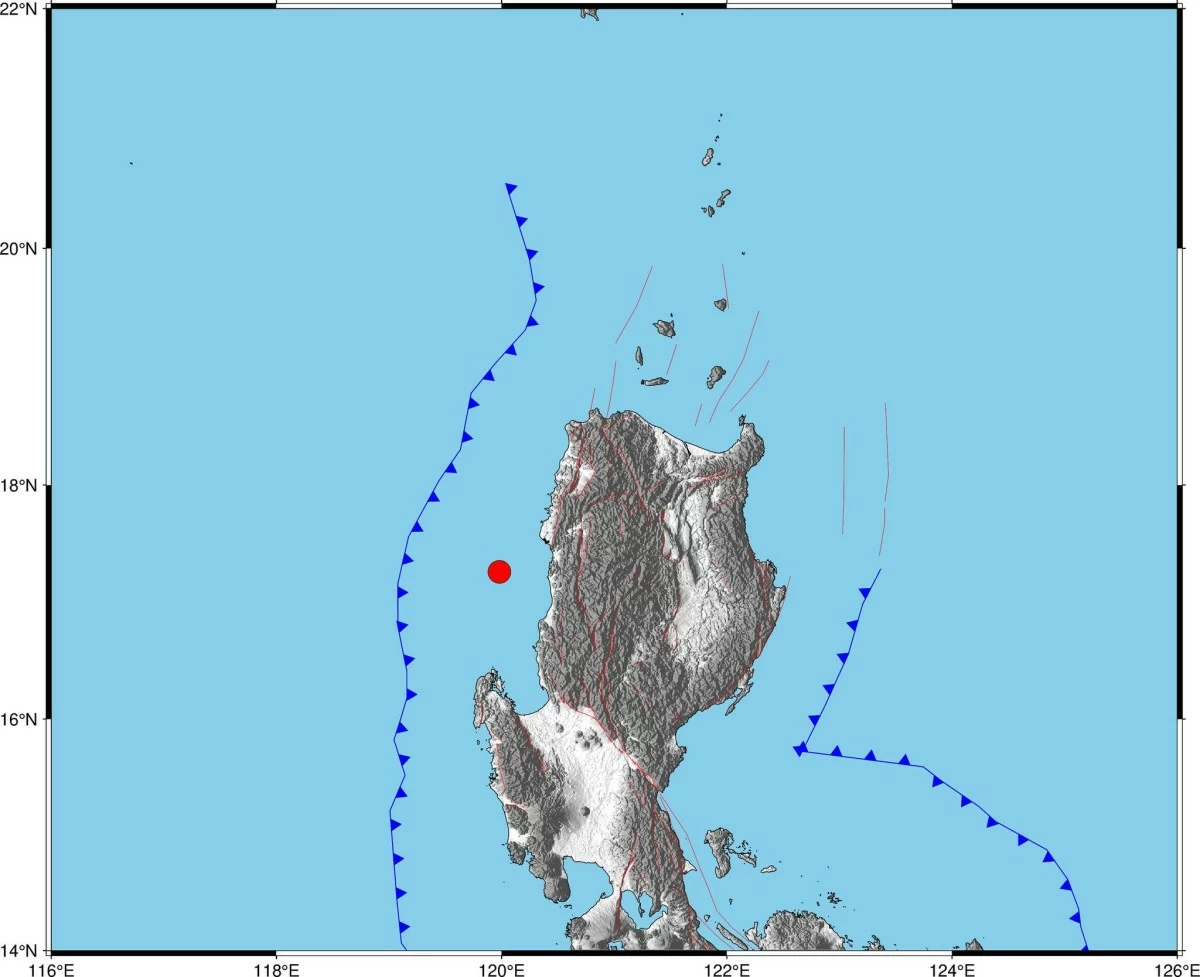
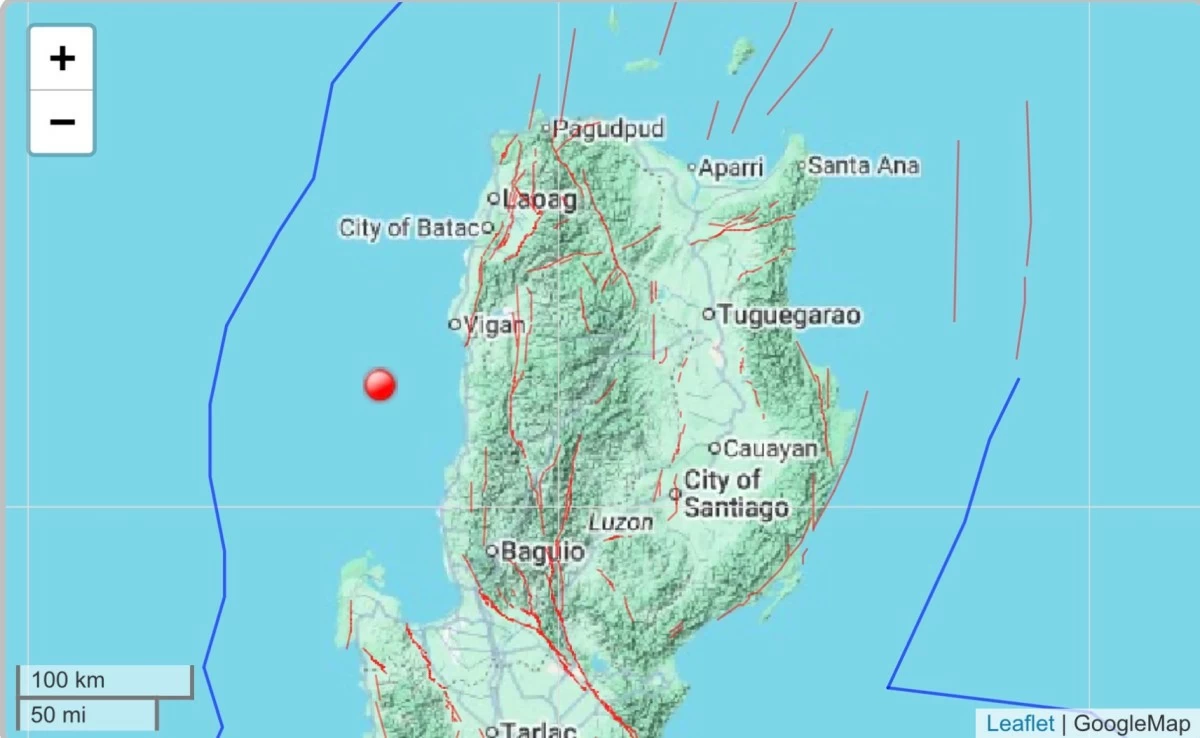
VIGAN CITY, Ilocos Sur – This province reported no damage from a magnitude-five earthquake on Monday morning, Feb. 16. But Ilocos Sur Provincial Disaster Risk Reduction and Management Officer Rhon Arquelada advised residents to remain on alert for aftershocks. “We advise our residents in Ilocos...
A magnitude 5.0 offshore earthquake struck Ilocos Sur at 9:36 a.m. on Monday, Feb. 16, the Philippine Institute of Volcanology and Seismology (Phivolcs) reported. In its initial bulletin, Phivolcs said the quake’s epicenter was located 49 kilometers southwest of San Esteban, Ilocos Sur, at a...
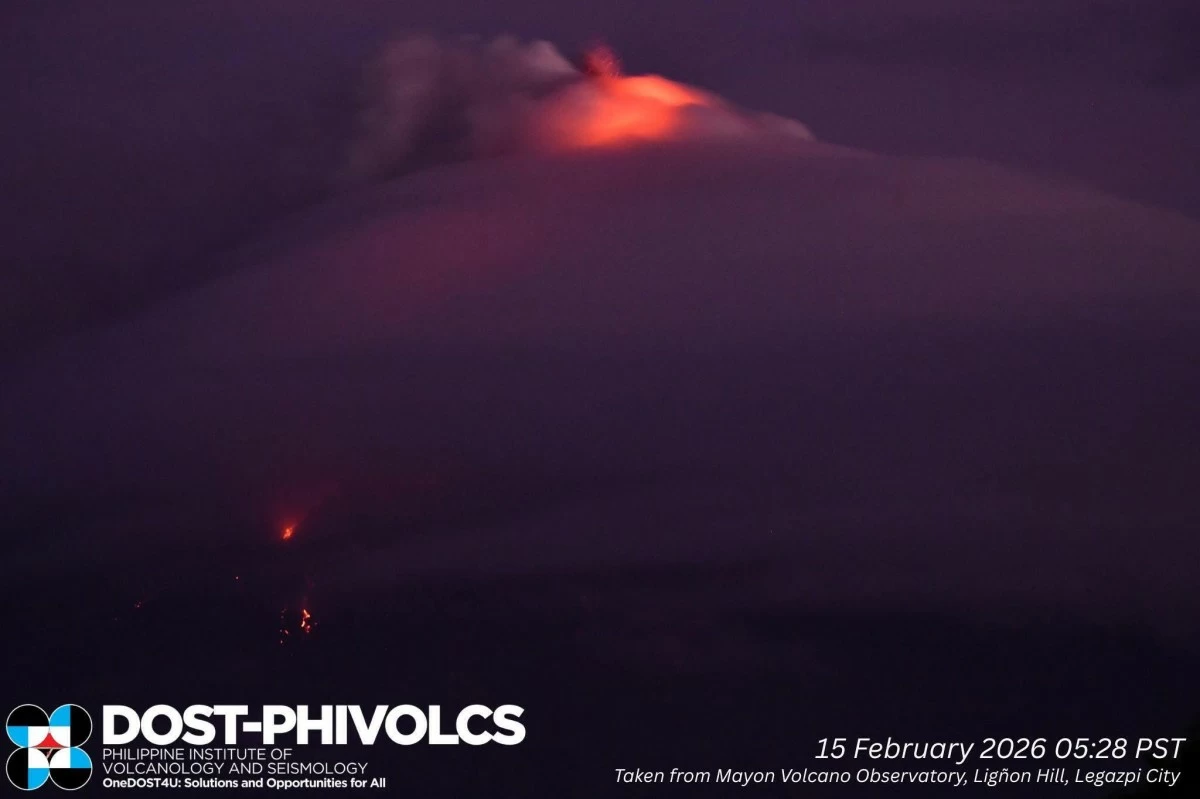
A minor strombolian activity was recorded at the summit crater of Mayon Volcano early Sunday morning, Feb. 15, the Philippine Institute of Volcanology and Seismology (Phivolcs) said. Phivolcs said the activity occurred at 5:20 a.m. and 5:28 a.m. on Feb. 15, and was accompanied by seismic and...
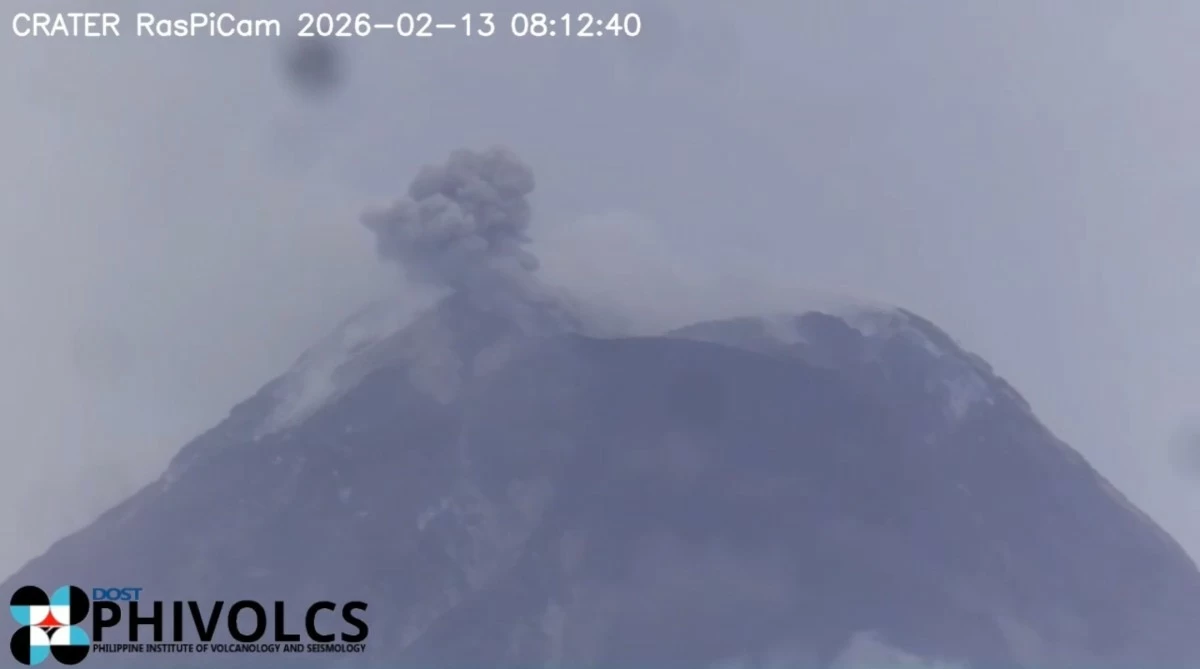
Ash emissions were recorded at Mayon Volcano in Albay and Kanlaon Volcano in Negros Island early Friday, Feb. 13, as the Philippine Institute of Volcanology and Seismology (Phivolcs) reported continued unrest at the two active volcanoes. At Mayon, Phivolcs said grayish ash plumes rose about 50...