The World Bank has released an initial $248 million, or over ₱15 billion, from its $1-billion financing for the Philippines to jumpstart the government’s ambitious agriculture modernization program aimed at boosting food production, strengthening climate resilience, and modernizing food supply...
Multilateral development banks (MDBs), including the Manila-based Asian Development Bank (ADB) and the Washington-based World Bank Group (WBG), increased climate financing to a record $163 billion in 2025, reinforcing their role in supporting resilient and sustainable economies amid mounting...
At long last, as of July 2026, the Philippines has attained Upper-Middle-Income status, as announced by the World Bank on July 1, 2026. This reclassification from Lower-Middle-Income to Upper-Middle-Income marks an important milestone in our efforts to eventually be considered a High-Income...
The World Bank has seen “tangible progress” in a delayed $300-million project aimed at protecting Metro Manila from “The Big One” earthquake, with contracts finally awarded to retrofit school buildings after years of implementation setbacks. In a July 10 implementation status and results...
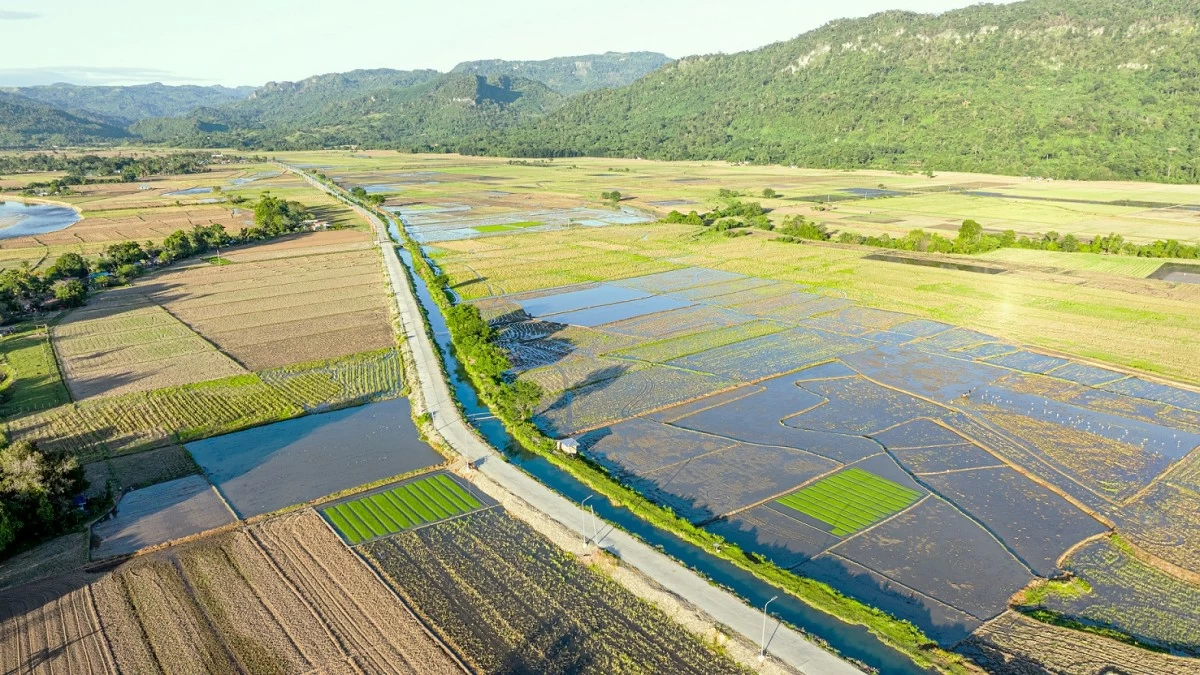
More than 60 kilometers (km) of farm-to-market roads (FMRs) and bridges with total funding of ₱2.06 billion have received clearance from the Department of Agriculture (DA), kickstarting the development of much-needed infrastructure to boost food productivity. Agriculture Secretary Francisco Tiu...
The Philippines ' achievement of upper middle-income status after nearly four decades validates the economic policies pursued by the administration and serves as a "vote of confidence" in the country 's future, President Marcos said. In a video message on Thursday, July 2, Marcos said...
Climbing to upper-middle-income-country (UMIC) status comes with a trade-off: the Philippines faces a looming decline in access to concessional official development assistance (ODA), or low-interest loans extended by the country’s multilateral and bilateral development partners. However, for...
Malacañang has welcomed the Philippines ' official graduation to upper-middle-income country (UMIC) status, saying the milestone signals stronger economic fundamentals and could translate into more jobs and better opportunities for Filipinos. In a statement on Thursday, July 2, Executive...
The Philippines has finally moved up to upper-middle-income status, breaking out of a lower-middle-income classification it held for nearly 40 years. According to new data from the World Bank, the country joined the upper-middle-income bracket, which requires a gross national income (GNI) per...
The World Bank has called for faster climate-proofing in the Philippines as floods continue to be a threat. And it doesn’t help that corruption continues to undermine the very infrastructure designed to protect lives, businesses, jobs, and the economy. The warning from the World Bank’s June 28...
The Philippines achieved its long-standing goal of attaining upper-middle-income-country (UMIC) status with a record-high gross national income (GNI) per capita in 2025, even as neighboring Vietnam made a bigger stride toward the same World Bank classification. The World Bank announced on Wednesday...
Vietnam widened its lead over the Philippines in terms of gross national income (GNI) per capita as the Southeast Asian neighbors both aspire to attain the World Bank’s upper-middle-income-country (UMIC) status. A World Bank board report dated June 18 and disclosed last Monday, June 29, showed...