The World Bank has approved an $18.85-million grant to strengthen the Philippines’ pandemic response, as the country is considered a global hotspot for emerging infectious and zoonotic diseases. The Washington-based multilateral lender’s board approved last April 29 the investment project...
The World Bank Group (WBG) has warned that the war in the Middle East is set to trigger the biggest energy price surge in four years, fueling inflation, slowing economic growth, and worsening food insecurity across developing economies. In an April 28 statement, the Washington-based multilateral...
The World Bank has given its go-ahead to the $24.5-million Technical Assistance for Sustainable Agricultural Transformation (TASAT) program, which will complement the Philippines’ largest-ever single loan from the Washington-based multilateral lender aimed at diversifying the sector and moving...
President Marcos’ chief economic manager is pressing global financial institutions for enhanced budgetary support and emergency financing, warning that escalating Middle East tensions and climate-driven crises are severely narrowing the fiscal maneuvering room for emerging economies. Speaking at...
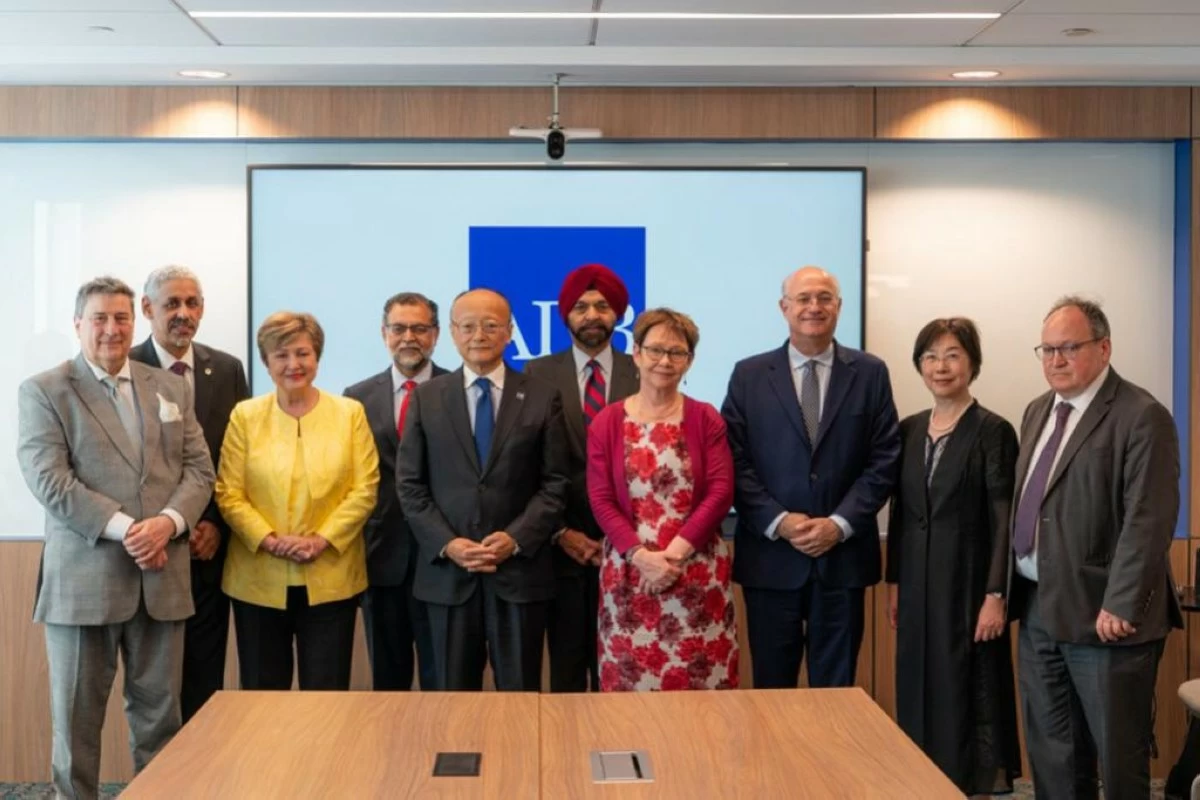
Six multilateral development banks (MDBs) have launched a coordinated push to develop critical mineral value chains, seeking to move resource-rich economies beyond raw material exports and into higher-value manufacturing as part of efforts to strengthen supply chain resilience. In an April 17 joint...
Developing economies including the Philippines are pressing the World Bank Group (WBG) to help reduce borrowing costs as the economic fallout from the Middle East conflict drives up oil prices, disrupts supply chains, and threatens growth and food security. In an April 16 statement delivered before...
Multilateral development banks (MDBs) are stepping up coordination to cushion economies from the spillover effects of the Middle East conflict, citing rising energy costs, supply chain disruptions, and tighter financial conditions as immediate risks to growth and stability. In an April 17 joint...
The International Monetary Fund (IMF), the World Bank (WB), and the Asian Development Bank (ADB) have, one after another, downgraded the country’s growth projections. This is largely due to the devastating effects of the ongoing Middle East conflict. These multilateral financial institutions...
International Finance Corp. (IFC), the private-sector lending arm of the World Bank Group (WBG), will invest up to $25 million in a structured debt fund that will finance financial technology (fintech) companies, including those operating in the Philippines. In an April 13 disclosure, IFC said its...
The World Bank approved another $600-million loan for the Philippines last Good Friday, April 3—this time to fund efforts to improve the country’s education system. In a statement published on Monday, April 6, the Washington-based multilateral lender said over 21 million K-10 students and...
The Philippines is facing an inflationary shock that could spill over to slower economic growth, potential job losses, and more capital market outflows amid a prolonged Middle East conflict, according to the World Bank. The global oil price and supply shock wrought by the war in Iran would “raise...
Multilateral lenders including the Asian Development Bank (ADB), the International Monetary Fund (IMF), and the World Bank Group (WBG) are moving to provide immediate financing and coordinated support to countries reeling from the economic fallout of the Middle East war. In a statement on...