






Manila Bulletin
 Business
The Economy
Philippines officially an 'upper-middle-income' nation. Why doesn't it feel like it?
Business
The Economy
Philippines officially an 'upper-middle-income' nation. Why doesn't it feel like it?
Business
The Economy
Philippines officially an 'upper-middle-income' nation. Why doesn't it feel like it?
Philippines officially an 'upper-middle-income' nation. Why doesn't it feel like it?
Published Jul 2, 2026 07:55 am


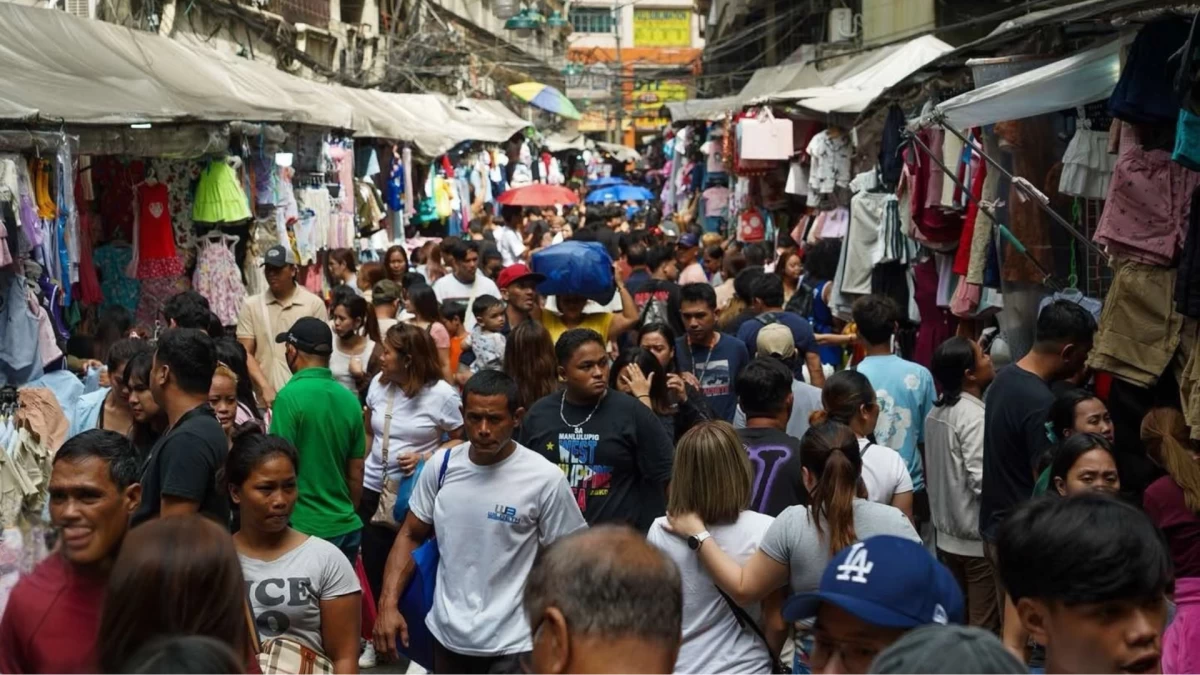
(Manila Bulletin file photo I John Louie Abrina)
The Philippines has finally moved up to upper-middle-income status, breaking out of a lower-middle-income classification it held for nearly 40 years.
According to new data from the World Bank, the country joined the upper-middle-income bracket, which requires a gross national income (GNI) per capita between $4,636 and $14,375. The Philippines reached a record GNI per capita of $4,850 in 2025, an increase from $4,470 the previous year.
To better understand this upgrade, it helps to look at how economic output is measured by the World Bank. While most people focus on gross domestic product (GDP)—which only counts economic activity happening inside the country—the Washington-based lender uses GNI.
GNI is much broader because it tracks all income earned by Filipino citizens, regardless of location. For the Philippines, GNI factors in the billions of dollars sent home by overseas Filipino workers (OFWs) as well as profits from local companies operating abroad.
Still, the World Bank noted that the Philippines managed to achieve this milestone through broad-based growth, averaging a steady 5.8 percent annual expansion over five years. This represented an economy-wide improvement across major industries rather than a temporary boom in a single sector, pushing total GNI to $566.8 billion.
However, that momentum took a hit last year when economic growth slowed to a post-pandemic low of 4.4 percent. That slowdown followed a major corruption scandal involving flood-control infrastructure, which dented investor confidence and cooled both public and private spending.
What this means for everyday Filipinos
On paper, this upgrade is a milestone. But in reality, it does not mean everyday Filipinos will see an immediate change in their wallets. The World Bank’s math simply divides the country’s total income by its population, which fails to reflect how that wealth is actually distributed.
Nevertheless, the shift will affect the country in ways that eventually trickle down to ordinary citizens.
However, the biggest downside in graduating to a higher income status is that the Philippines will eventually lose access to the cheapest, lowest-interest development loans from concessional lenders like the World Bank and the Asian Development Bank (ADB).
As the government is forced to borrow on costlier commercial terms, financing large-scale infrastructure like bridges, railways, and roads will become more expensive. This could mean fewer public works get greenlit, or that taxpayers will have to foot a larger bill down the line.
On the positive side, the upgrade serves as a stamp of approval for the economy. It signals to international corporations that the country is a more stable place to do business. Over time, this reputation can attract foreign investment, create better-paying jobs, and open up more opportunities locally.
Hitting this target is also a political win for President Marcos, who originally hoped to reach it by 2024. The previous administration had also missed a 2020 target due to the economic disruptions of the pandemic.
Now, the biggest challenge for the government will be ensuring that the benefits of this new status are felt by regular households, even as the safety net of cheap international loans falls away. (Chino S. Leyco)