ADVERTISEMENT

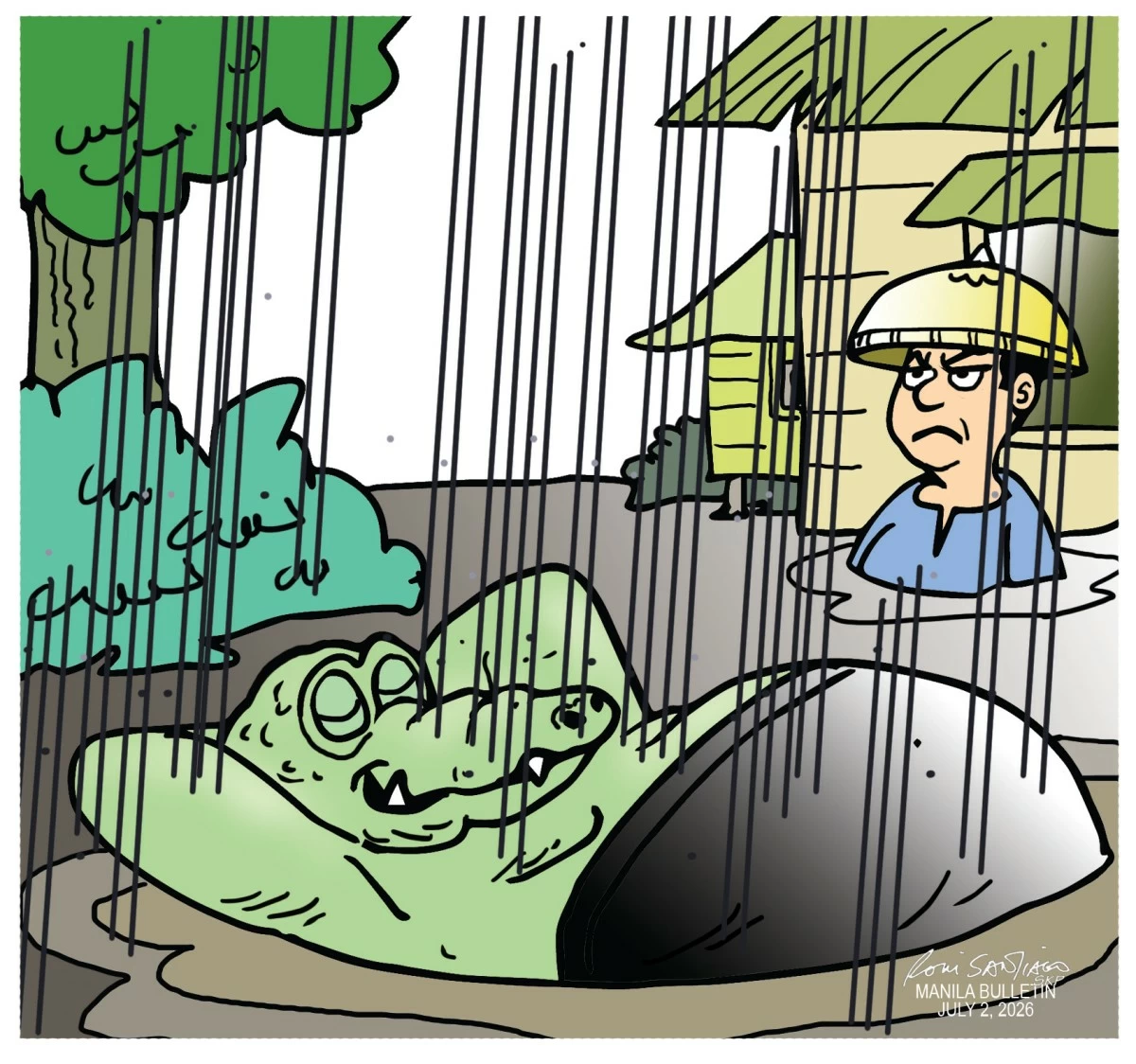
Corruption worsens climate crisis

Published Jul 2, 2026 12:01 am  |  Updated Jul 1, 2026 05:20 pm
The World Bank has called for faster climate-proofing in the Philippines as floods continue to be a threat.
And it doesn’t help that corruption continues to undermine the very infrastructure designed to protect lives, businesses, jobs, and the economy.
The warning from the World Bank’s June 28 working paper, “Climate Change, Firms and Energy Efficiency,” should serve as a national wake-up call. Climate change is no longer just an environmental concern. It has become an immediate economic threat. Recurrent flooding is eroding productivity, disrupting supply chains, destroying investments, threatening jobs, and compelling businesses to relocate. Small enterprises, which employ millions of Filipinos, remain the least equipped to cope with these risks, with only nine percent using flood early warning systems and just 39 percent carrying insurance against extreme weather events.
These vulnerabilities are not solely the result of stronger storms. They are also the consequence of years of poor governance and the alleged plunder of public funds intended to protect communities from flooding.
For decades, taxpayers have financed billions of pesos in flood-control projects. Yet every rainy season exposes the same grim reality: inundated roads, submerged business districts, damaged factories, interrupted commerce, and families struggling to rebuild their lives. If the country’s flood-control network remains inadequate despite enormous public spending, then the government owes the people more than explanations. It owes them accountability.
Every peso lost to corruption carries a human and economic cost. It represents drainage systems left unfinished, pumping stations never constructed, waterways left clogged, and flood-retention facilities that exist only on paper. It represents lost incomes, closed businesses, disrupted education, and shrinking investor confidence. Corruption has become an accelerant of climate vulnerability.
The government must therefore treat the investigation of anomalous flood-control projects not as a political exercise but as a national imperative. Cases must be resolved with urgency. Those responsible—whether contractors, public officials, or their collaborators—must face the full force of the law. Justice delayed only deepens public cynicism and emboldens future wrongdoing.
Equally important is the recovery of stolen public funds. Every peso that can still be recovered should be returned to its rightful purpose: building climate-resilient infrastructure, expanding drainage systems, modernizing flood forecasting, strengthening disaster preparedness, and protecting the country's major economic centers. Climate adaptation requires resources that the nation simply cannot afford to lose to corruption.
The World Bank likewise urges greater investments in energy efficiency, renewable energy adoption, better access to financing, supplier diversification, and climate information. These recommendations deserve immediate implementation. The government's responsibility is not merely to respond to disasters but to reduce the risks before disasters occur. Climate resilience should be embedded in every infrastructure project, every investment policy, and every local development plan.
The private sector also has obligations that extend beyond regulatory compliance. Businesses should invest in resilient facilities, renewable energy, flood preparedness, insurance protection, and diversified supply chains. Such measures safeguard not only corporate assets but also the livelihoods of millions of Filipino workers who depend on stable enterprises.
Citizens, too, have a role that cannot be delegated. Communities must protect waterways from indiscriminate waste disposal, support environmental restoration, conserve energy, and demand transparency in the use of public funds. Most importantly, Filipinos must hold elected officials accountable at the ballot box and reject leaders who regard public office as an opportunity for personal enrichment rather than public service.
Climate change is testing the nation’s capacity to govern honestly and effectively. Nature may bring stronger storms, but corruption transforms natural hazards into national disasters. Unless the Philippines defeats both with equal resolve, every flood will continue to expose not only the country’s physical vulnerabilities but also the high price of failed leadership. The nation deserves infrastructure that works, justice that is swift, and governance worthy of the people’s trust.

Related Tags

World Bank Climate Proofing Climate Change
ADVERTISEMENT
.most-popular .layout-ratio{ padding-bottom: 79.13%; } @media (min-width: 768px) and (max-width: 1024px) { .widget-title { font-size: 15px !important; } }

{{ articles_filter_1561_widget.title }}

.most-popular .layout-ratio{ padding-bottom: 79.13%; } @media (min-width: 768px) and (max-width: 1024px) { .widget-title { font-size: 15px !important; } }

{{ static_articles_1562_widget.title }}

.most-popular .layout-ratio{ padding-bottom: 79.13%; } @media (min-width: 768px) and (max-width: 1024px) { .widget-title { font-size: 15px !important; } }

{{ articles_filter_1563_widget.title }}

{{ articles_filter_1564_widget.title }}

.mb-article-details { position: relative; } .mb-article-details .article-body-preview, .mb-article-details .article-body-summary{ font-size: 17px; line-height: 30px; font-family: "Libre Caslon Text", serif; color: #000; } .mb-article-details .article-body-preview iframe , .mb-article-details .article-body-summary iframe{ width: 100%; margin: auto; } .read-more-background { background: linear-gradient(180deg, color(display-p3 1.000 1.000 1.000 / 0) 13.75%, color(display-p3 1.000 1.000 1.000 / 0.8) 30.79%, color(display-p3 1.000 1.000 1.000) 72.5%); position: absolute; height: 200px; width: 100%; bottom: 0; display: flex; justify-content: center; align-items: center; padding: 0; } .read-more-background a{ color: #000; } .read-more-btn { padding: 17px 45px; font-family: Inter; font-weight: 700; font-size: 18px; line-height: 16px; text-align: center; vertical-align: middle; border: 1px solid black; background-color: white; } .hidden { display: none; }
function initializeAllSwipers() { // Get all hidden inputs with cms_article_id document.querySelectorAll('[id^="cms_article_id_"]').forEach(function (input) { const cmsArticleId = input.value; const articleSelector = '#article-' + cmsArticleId + ' .body_images'; const swiperElement = document.querySelector(articleSelector); if (swiperElement && !swiperElement.classList.contains('swiper-initialized')) { new Swiper(articleSelector, { loop: true, pagination: false, navigation: { nextEl: '#article-' + cmsArticleId + ' .swiper-button-next', prevEl: '#article-' + cmsArticleId + ' .swiper-button-prev', }, }); } }); } setTimeout(initializeAllSwipers, 3000); const intersectionObserver = new IntersectionObserver( (entries) => { entries.forEach((entry) => { if (entry.isIntersecting) { const newUrl = entry.target.getAttribute("data-url"); if (newUrl) { history.pushState(null, null, newUrl); let article = entry.target; // Extract metadata const author = article.querySelector('.author-section').textContent.replace('By', '').trim(); const section = article.querySelector('.section-info ').textContent.replace(' ', ' '); const title = article.querySelector('.article-title h1').textContent; // Parse URL for Chartbeat path format const parsedUrl = new URL(newUrl, window.location.origin); const cleanUrl = parsedUrl.host + parsedUrl.pathname; // Update Chartbeat configuration if (typeof window._sf_async_config !== 'undefined') { window._sf_async_config.path = cleanUrl; window._sf_async_config.sections = section; window._sf_async_config.authors = author; } // Track virtual page view with Chartbeat if (typeof pSUPERFLY !== 'undefined' && typeof pSUPERFLY.virtualPage === 'function') { try { pSUPERFLY.virtualPage({ path: cleanUrl, title: title, sections: section, authors: author }); } catch (error) { console.error('ping error', error); } } // Optional: Update document title if (title && title !== document.title) { document.title = title; } } } }); }, { threshold: 0.1 } ); function showArticleBody(button) { const article = button.closest("article"); const summary = article.querySelector(".article-body-summary"); const body = article.querySelector(".article-body-preview"); const readMoreSection = article.querySelector(".read-more-background"); // Hide summary and read-more section summary.style.display = "none"; readMoreSection.style.display = "none"; // Show the full article body body.classList.remove("hidden"); } document.addEventListener("DOMContentLoaded", () => { let loadCount = 0; // Track how many times articles are loaded const offset = [1, 2, 3, 4, 5, 6, 7, 8, 9, 10]; // Offset values const currentUrl = window.location.pathname.substring(1); let isLoading = false; // Prevent multiple calls if (!currentUrl) { console.log("Current URL is invalid."); return; } const sentinel = document.getElementById("load-more-sentinel"); if (!sentinel) { console.log("Sentinel element not found."); return; } function isSentinelVisible() { const rect = sentinel.getBoundingClientRect(); return ( rect.top < window.innerHeight && rect.bottom >= 0 ); } function onScroll() { if (isLoading) return; if (isSentinelVisible()) { if (loadCount >= offset.length) { console.log("Maximum load attempts reached."); window.removeEventListener("scroll", onScroll); return; } isLoading = true; const currentOffset = offset[loadCount]; window.loadMoreItems().then(() => { let article = document.querySelector('#widget_1690 > div:nth-last-of-type(2) article'); intersectionObserver.observe(article) loadCount++; }).catch(error => { console.error("Error loading more items:", error); }).finally(() => { isLoading = false; }); } } window.addEventListener("scroll", onScroll); });

Sign up by email to receive news.