






 Philippines
National
'More jobs for Pinoys': Palace welcomes Philippines' upper-middle-income status
Philippines
National
'More jobs for Pinoys': Palace welcomes Philippines' upper-middle-income status
'More jobs for Pinoys': Palace welcomes Philippines' upper-middle-income status


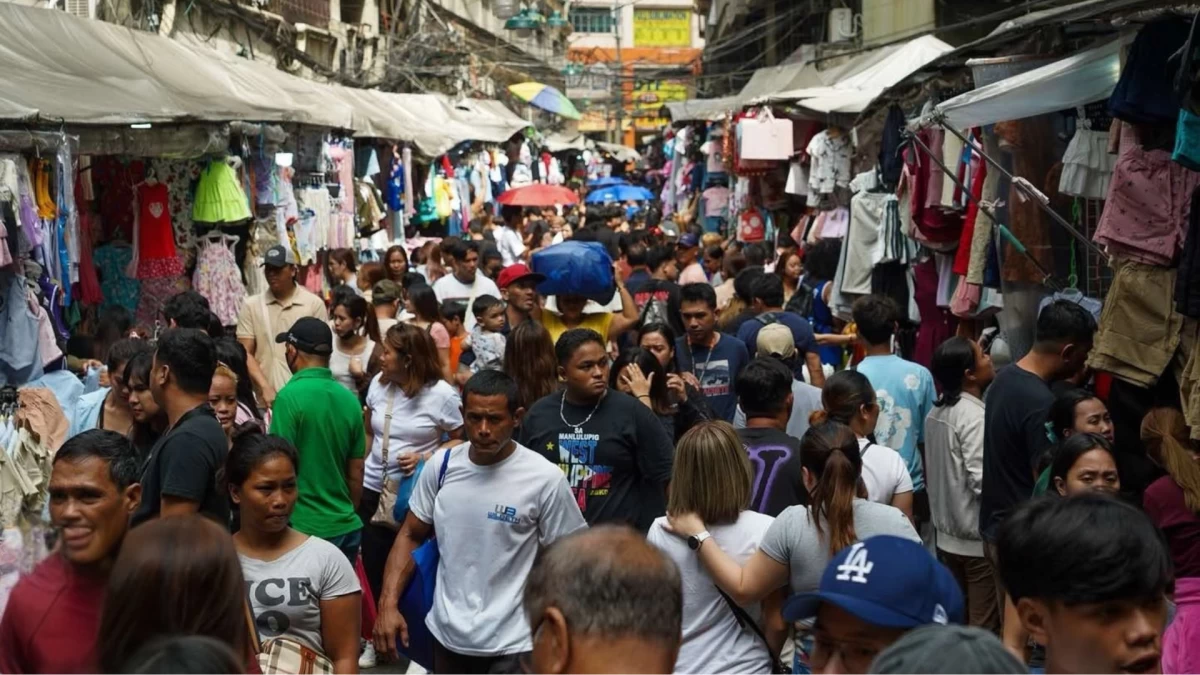
Malacañang has welcomed the Philippines' official graduation to upper-middle-income country (UMIC) status, saying the milestone signals stronger economic fundamentals and could translate into more jobs and better opportunities for Filipinos.
In a statement on Thursday, July 2, Executive Secretary Ralph Recto said the country's new classification reflects growing investor confidence and sustained economic expansion under the Marcos administration.
"Hindi lang ito titulo. Ibig sabihin nito, mas lumalago ang ekonomiya natin (This is not merely a title. It means our economy is growing),” he said.
“Mas dumarami ang trabahong nalilikha, mas lumalaki ang kita ng ating mga kababayan, at mas maraming investors ang nagtitiwala sa Pilipinas (More jobs are being created, the incomes of our countrymen are increasing, and more investors are placing their trust in the Philippines),” he added.
According to the World Bank, the Philippines' rise to upper-middle-income status was driven by broad-based economic growth, with the country posting an average annual gross domestic product growth of 5.8 percent over the past five years.
The Department of Economy, Planning, and Development (DEPDev) estimated that the country's gross national income (GNI) per capita reached $4,850 in 2025, surpassing the World Bank's upper middle-income threshold of $4,636.
GNI per capita measures the average economic output per citizen, including both domestic and overseas earnings, and is often used as an indicator of living standards.
'Not the finish line'
Despite the milestone, Recto said the government does not consider the new classification as the end goal.
"Ang tunay na sukatan ng tagumpay ay kung nararamdaman ba ito ng bawat pamilyang Pilipino (The true measure of success is whether every Filipino family feels its benefits),” he said.
“Hindi tayo titigil hangga't mas maraming Pilipino ang nakakaahon sa kahirapan at mas gumagaan ang kanilang pamumuhay (We will not stop until more Filipinos rise out of poverty and their lives become easier),” he added.
Recto said the administration remains focused on lowering inflation, protecting jobs, strengthening purchasing power, and boosting both consumer and business confidence.
Infrastructure push
The Executive Secretary said the government plans to accelerate the implementation of major infrastructure projects during the second half of the year to sustain growth momentum.
He added that the administration would continue rolling out targeted interventions under the government's UPLIFT program to cushion the lingering effects of the Middle East conflict.
The government also aims to improve budget execution for 2026 while finalizing what Recto described as a responsive national budget for 2027.
More reforms planned
Recto said the administration would continue reforms aimed at improving the business environment, strengthening digital connectivity, enhancing education and workforce skills, and building resilience against climate-related risks and external shocks.
As an upper-middle-income country, the Philippines is also expected to gradually reduce its dependence on concessional financing.
To offset this, the government plans to expand the use of public-private partnerships, deepen domestic capital markets, and tap other market-based financing mechanisms to sustain infrastructure and development investments.
The Philippines had remained a lower-middle-income economy since 1987.
With the latest upgrade, the country joins several regional economies classified by the World Bank as upper-middle-income countries, including China, Malaysia, Thailand, Indonesia, and Vietnam.