The Asian Development Bank (ADB) is mobilizing $4 billion in financing to help its developing member countries (DMCs) cope with the economic fallout from the ongoing war in the Middle East, with the Philippines among those seeking assistance as higher fuel, food, fertilizer, and freight costs...
The Washington-based International Monetary Fund (IMF) said it stands ready to deploy support to the Philippines should it request assistance during the ongoing Middle East war, assuring close engagement with local authorities through surveillance and policy advice. This remained the IMF’s...
The World Bank Group (WBG) has lowered its 2026 growth forecast for the Philippines to 3.7 percent, warning that the ongoing war in the Middle East is weighing heavily on energy-importing economies and threatening to push global growth to its weakest pace since the onset of the Covid-19 pandemic....
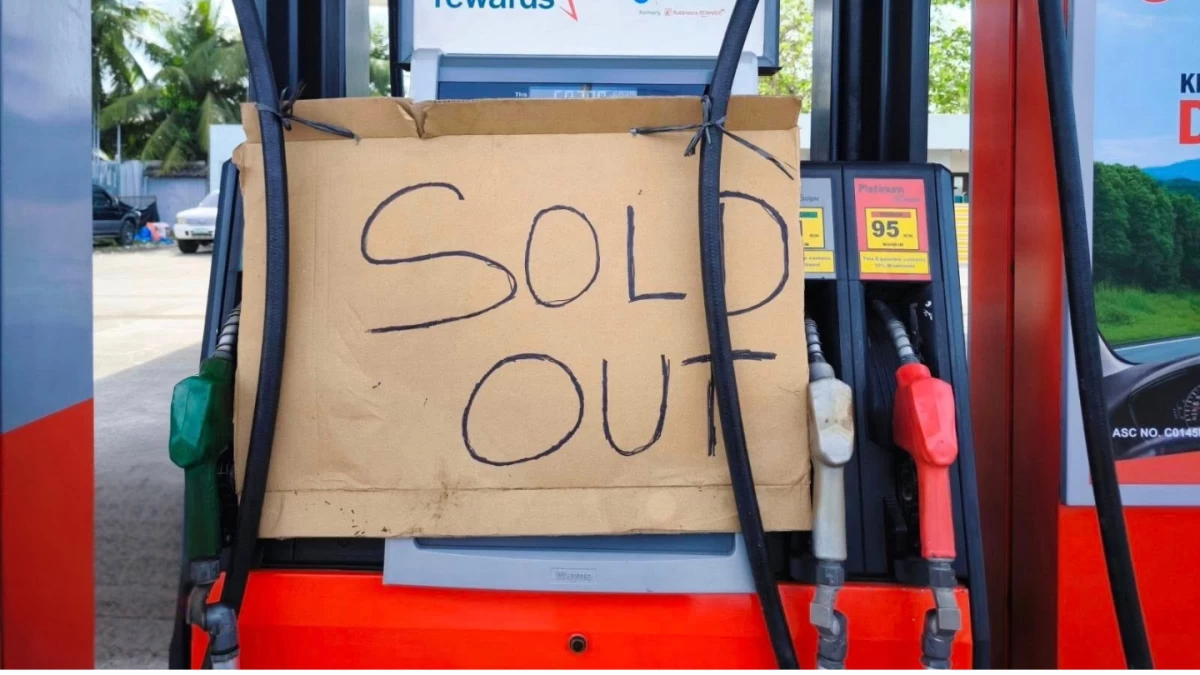
Amid a prolonged global oil crisis, the Philippines is poised to secure fresh grant and loan financing from bilateral as well as multilateral partners to support power-sector reforms and the transition to more renewable energy (RE) sources. United States (US) aid agency Millennium Challenge Corp....
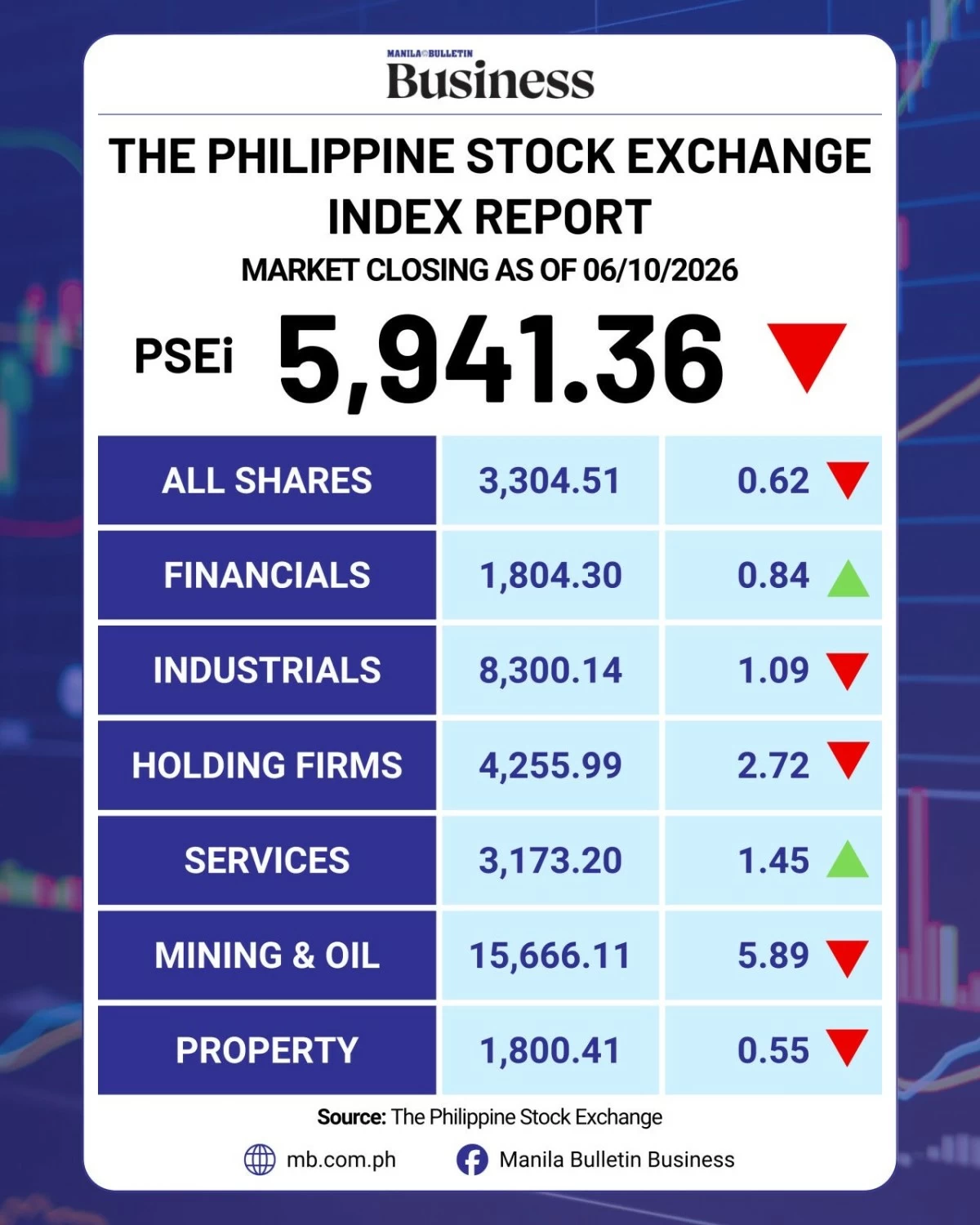
The Philippine Stock Exchange index (PSEi) dipped marginally on Wednesday, June 10, after shots were again fired between the United States (US) and Iran as the prolonged conflict approached its 100th day. The main index shed 4.35 points, or 0.07 percent, to close at 5,941.36. Mining and oil stocks...
The Bangko Sentral ng Pilipinas (BSP) would likely continue hiking interest rates this year despite the lower-than-expected inflation rate in May, even as the pace of monetary policy tightening may be more gradual as economic growth remains subdued, according to Singapore-based United Overseas Bank...
British banking giant Barclays now expects the Bangko Sentral ng Pilipinas (BSP) to deliver just one more interest rate hike this month before eventually returning to monetary policy easing, after inflation in May slowed more than anticipated. In a report obtained by Manila Bulletin,...
Japanese financial giant MUFG Bank Ltd. warned that the Philippine peso could plunge to as low as ₱64.5 against the United States (US) dollar if the Middle East war re-escalates, with the decline worsened further by a global “super” El Niño and a hawkish US central bank. MUFG analysts wrote...
The United States (US)-Association of Southeast Asian Nations (ASEAN) Business Council Inc. (USABC) is urging Southeast Asian governments to accelerate customs digitalization, harmonize trade procedures, strengthen anti-illicit trade enforcement, and deepen public-private cooperation to bolster...
Four global institutions have warned that the prolonged war in the Middle East is posing increasing risks to global energy security, food supplies, and economic growth as oil inventories continue to decline at a record pace. In a joint statement last Friday, May 29, the International Energy...
Philippine economic growth is seen falling to a new post-pandemic low of three percent this year as the lingering impacts of last year’s multi-billion-peso flood-control corruption scandal and the prolonged war in the Middle East weigh on investor and business confidence, according to think tank...
Philippine economic growth needs “a major impetus” after slowing to its weakest pace since the pandemic recovery period, with rising inflation, higher interest rates, and the prolonged Middle East conflict expected to weigh on the country’s property sector, according to property consultancy...