






 Business
The Economy
Peso seen sliding to ₱64.5 per US dollar amid prolonged Middle East war, 'super' El Niño
Business
The Economy
Peso seen sliding to ₱64.5 per US dollar amid prolonged Middle East war, 'super' El Niño
Peso seen sliding to ₱64.5 per US dollar amid prolonged Middle East war, 'super' El Niño
By Derco Rosal


At A Glance
- Japanese financial giant MUFG Bank Ltd. warned that the Philippine peso could plunge to as low as ₱64.5 against the United States (US) dollar if the Middle East war re-escalates, worsened further by a global Super El Niño and a hawkish US central bank.
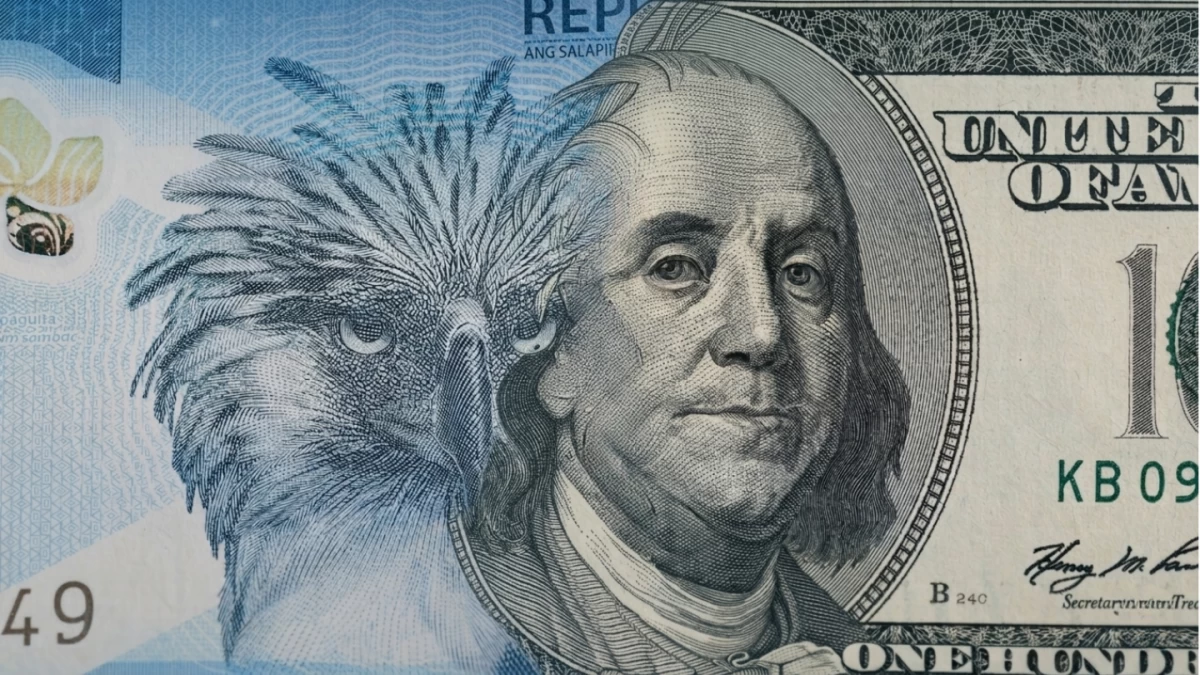
Japanese financial giant MUFG Bank Ltd. warned that the Philippine peso could plunge to as low as ₱64.5 against the United States (US) dollar if the Middle East war re-escalates, with the decline worsened further by a global “super” El Niño and a hawkish US central bank.
MUFG analysts wrote in a June 1 commentary that after the decline of the local currency in May to as low as ₱61.587 per US dollar, the Japanese lender’s base case is for the peso to appreciate to below ₱61:$1, provided the Middle East conflict eases and the greenback retreats.
“We remain comfortable with our baseline expectation for the US dollar-Philippine peso to gradually move lower over time below ₱61:$1 given our base case assumption of de-escalation and a weaker dollar moving forward,” MUFG said.
Beyond this forecast, MUFG also pointed out downside risks to the foreign exchange (forex) market. “We see the US dollar-Philippine peso trading above ₱62:$1 to perhaps as high as ₱64.5:$1 if the Iran conflict re-escalates and with that oil prices rise further,” it said, referring to the worst-case scenario.
Adding to these risks are the local currency’s vulnerability to the agricultural impact of an anticipated super El Niño and the possibility that the US Federal Reserve (Fed) turns more hawkish in the near term, the bank noted.
According to MUFG, the peso’s vulnerability is exacerbated by the country’s status as a current account deficit economy, making it more fragile than lower-yielding Asian currencies.
Last month, the local currency’s trajectory was on a downward trend, swinging between ₱61.463 and ₱61.587 against the greenback. As of the morning of Tuesday, June 2, the peso was poised to tumble past the historic low of ₱61.75 per dollar hit in May.
This decline has forced the Bangko Sentral ng Pilipinas (BSP) into a defensive posture. It hiked the key interest rate to 4.5 percent in its April policy meeting and signaled a more hawkish tilt after April inflation hit a more than three-year high of 7.2 percent.
Domestically, the inflation outlook remains a primary concern for monetary authorities. With the “sharp surge in domestic [price] pressures coupled with some initial signs of second-round effects,” MUFG projects a path for aggressive monetary policy in the coming months.
“We see the BSP hiking rates by at least 75 basis points (bps) more, bringing the policy rate to 5.25 percent, and more so if risks materialize,” it said.
On a positive note, while the monetary outlook appears tight, the fiscal side offers a hint of hope. “The good news from a local perspective is that we are seeing some initial signs of government spending pick-up after the sharp slowdown from the flood-control infrastructure projects scandal,” MUFG said.
However, the bank cautioned that the positive impact on economic growth may not be immediate, noting that the increase was largely driven by transfers to local government units (LGUs) rather than project-related spending.
Looking ahead, the lender does not expect the current period of tighter monetary policy to be permanent, projecting that the central bank could begin reversing the anticipated rate hikes in 2027 if inflation moderates.
This comes as economic growth remained at a five-year low of 2.8 percent in the first quarter of 2026, signaling a slower recovery throughout the year.