Further increasing the key borrowing cost to five percent is needed to curb still-elevated price pressures that are hurting consumers’ pockets, Frankfurt-based Deutsche Bank AG said. Deutsche Bank Research joined the hawkish consensus, pricing in a quarter-point hike at the monetary...
Private-sector economists are divided over the trajectory of Philippine inflation in July, though they broadly agree that lingering climate risks, geopolitical tensions, and a weaker peso will compel the central bank to keep interest rates elevated. Forecasts for July headline consumer prices span...
Philippine economic growth likely picked up above the three-percent level in the second quarter, mainly on improved spending on public goods and services, with most private-sector economists expecting the economy to perform better than in the previous quarter despite lingering headwinds from...
A resurgence in global energy prices is poised to test the resilience of the peso, though aggressive monetary policy from the Bangko Sentral ng Pilipinas (BSP) will likely insulate the currency from extreme volatility, according to DBS Bank. DBS senior economist Radhika Rao wrote in a commentary...
Consumer price growth likely slowed for another month in June, driven by declining global oil and food costs alongside a recovering currency, according to private-sector economists. A median forecast from regional banks and analysts projects headline inflation to have moderated to between 6.5...
While the Philippine peso weakened amid the “more painful” impact of the United States (US)-Iran war, it has suffered smaller losses than the Indonesian rupiah and Indian rupee, not because of Manila’s closer ties with Washington but due to its lower reliance on volatile foreign capital...
The Bangko Sentral ng Pilipinas (BSP) is expected to maintain its hawkish monetary policy stance, according to international lenders, though economists remain divided on how many additional interest-rate increases will be needed to combat persistent supply-side inflation. Japanese financial...
The Philippines’ macroeconomic risk profile has deteriorated to its worst level in a decade, leaving the country increasingly vulnerable to global shocks as its Southeast Asian neighbors outpace it in fiscal health. According to the latest emerging markets macro risk analysis by DBS Bank, which...
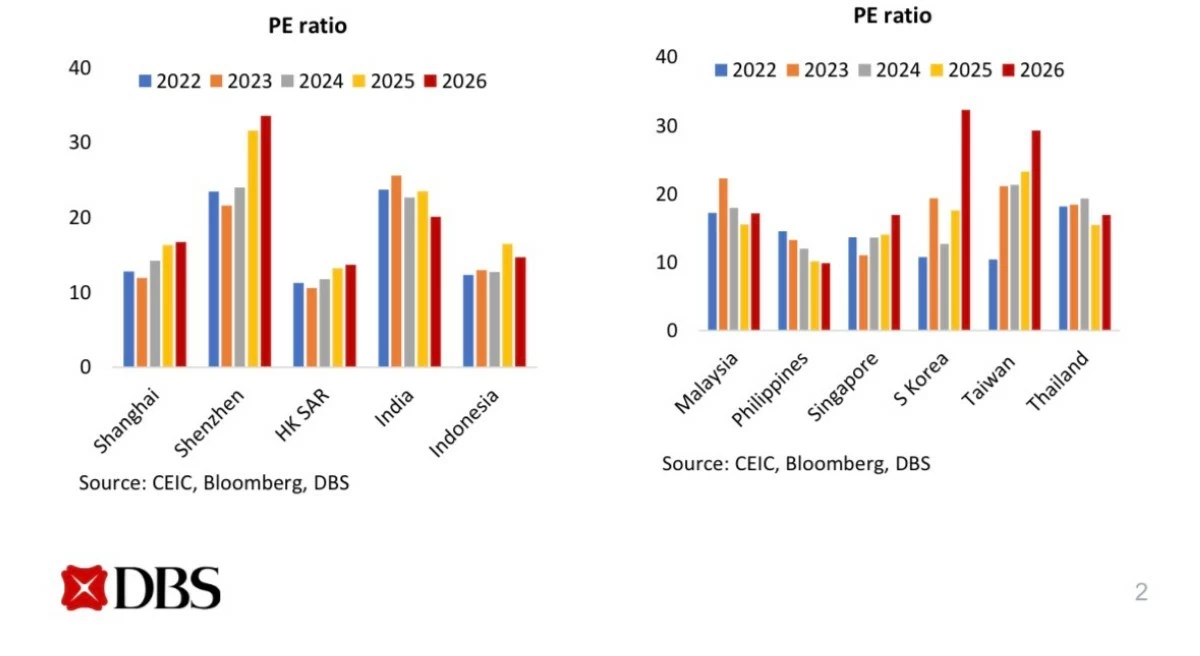
Philippine stocks remain among Asia’s weakest performers as investors continue to favor markets benefiting from the artificial intelligence (AI) boom, while concerns over domestic economic, investment, and policy conditions weigh on sentiment, according to Singapore-based DBS Bank Ltd. In a...
Foreign banks expect Philippine inflation to have picked up further in May, above the already more-than-four-year high of 7.2 percent last April, making room for more interest rate hikes by the Bangko Sentral ng Pilipinas (BSP). In a May 29 report obtained by Manila Bulletin, Goldman Sachs...
Foreign banks are turning more hawkish on domestic consumer prices than the central bank, warning that expiring price freezes and unabsorbed food costs will drive inflation beyond official projections. Frankfurt-based Deutsche Bank AG has an inflation forecast of 8.1 percent for May, breaching the...
The inflation-targeting Bangko Sentral ng Pilipinas (BSP) is expected to continue raising interest rates to contain surging inflation despite the risk of slower economic growth. In a May 22 report, Japanese financial giant MUFG Bank Ltd. said the Philippines is facing one of the most severe...