ADVERTISEMENT

Houthi attacks raise Philippine inflation risks as March rate seen climbing

Published Apr 3, 2026 04:37 pm
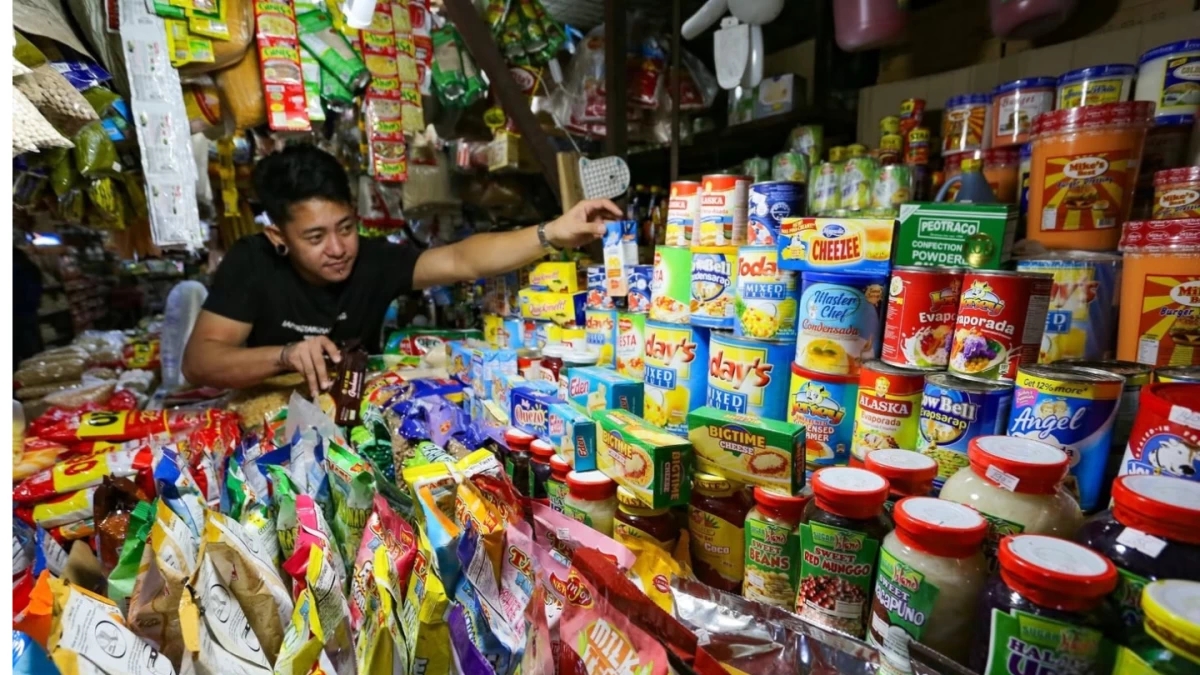
A vendor organizes goods at a public market. Economists warn that the Philippines is at high risk of “stagflation,” where the prices of basic goods continue to rise even as the country’s overall economic growth begins to slow down. (Photo by Santi San Juan I MB)

Renewed Houthi attacks in the Red Sea are seen aggravating oil price- and supply-driven inflation pressures in the Philippines stemming from the ongoing war in the Middle East.

“While the direct effect of renewed strikes on shipping in the Red Sea on aggregate world trade is likely to be limited, the impact on Asian economies that rely more heavily on oil imports from Saudi Arabia would be more significant. Pakistan, the Philippines, and Japan are particularly vulnerable,” Capital Economics senior global economist Ariane Curtis and climate and commodities economist Hamad Hussein said in a March 31 report seen by Manila Bulletin.

Capital Economics warned that the three countries “would be at greatest risk of experiencing fuel shortages” if oil shipments cannot pass through the Bab el-Mandeb Strait. The think tank’s data showed that nearly half of Philippine crude oil imports are sourced from Saudi Arabia.

For Capital Economics, the closure of the Bab el-Mandeb Strait would pose a major risk to the global economy by disrupting key oil trade routes, tightening supply, and pushing oil prices higher—potentially triggering a global recession under an adverse scenario.

It would also force longer, costlier shipping routes—especially for Asia-bound oil—and strain logistics, as alternative pathways like the Suez Canal have capacity limits, the think tank said.

Based on Capital Economics estimates, simultaneous disruptions in the Strait of Hormuz and the Bab el-Mandeb Strait could tighten global oil supply enough to push Brent crude prices up by $15 to $20, potentially keeping them above $100 per barrel.

In a separate April 2 report, Capital Economics deputy chief emerging markets economist Shilan Shah said the Houthi attacks on Israel could open a new front in the war, disrupt alternative oil shipping routes around the Strait of Hormuz, and further tighten the global oil market.

The United States (US)-backed war in Iran, which forced Tehran to shut the Strait of Hormuz and triggered an energy shock in Asia, was already reflected in weaker manufacturing purchasing managers’ index (PMI) readings in the region, Capital Economics noted.

Philippine manufacturing growth slowed in March, with its PMI dropping to a three-month low of 51.3 as rising energy costs tied to the Middle East war drove up input prices and dampened output and new orders.

“The moderation in manufacturing PMIs was sharper in Indonesia, India, the Philippines, and Vietnam, likely reflecting their greater exposure to supply constraints and the impact of fuel rationing measures,” Nomura India and Asia ex-Japan chief economist Sonal Varma and Asia ex-Japan economist Si Ying Toh said in a report this week.

Similar to the concerns of Capital Economics, the Nomura economists said the closure of the Strait of Hormuz has already worsened global supply chain delays and costs, and any further disruption in Red Sea shipping could intensify what is already shaping up to be the most severe supply shock since the Covid-19 pandemic.

Singapore-based DBS Bank Ltd. recently flagged a “dual inflationary shock” risk for Southeast Asia, where soaring energy costs could trigger a surge in global food prices, similar to the inflation spike in 2022 after Russia invaded Ukraine.

This could already be reflected in the Philippines’ March inflation rate, which DBS projected in an April 3 report to jump to 3.8 percent year-on-year, which, if realized, would mark the fastest pace of annual price increases since July 2024’s 4.4 percent. The Philippine Statistics Authority (PSA) will release its March consumer price index (CPI) report on Tuesday, April 7.

Also Singapore-based United Overseas Bank Ltd. (UOB) forecast a similar March headline inflation rate as DBS, even as it noted in an April 2 report that the consensus estimate was slightly lower at 3.7 percent.

Despite rising inflation expectations, UOB research head Suan Teck Kin and economist Ho Woei Chen said in an earlier April 1 report that the Bangko Sentral ng Pilipinas (BSP) and Bank Indonesia (BI) “appear more likely to stay put” with their policy rates while awaiting second-round effects—such as higher transport fares and wages—to materialize.

The BSP’s policy-setting Monetary Board (MB) will next tackle the key interest rate, which it kept at 4.25 percent during a rare off-cycle meeting last month, on April 23.

Meanwhile, Deutsche Bank Research projected Philippine inflation for March at 3.6 percent, even as it warned in an April 2 report that “second-round effects could soon emerge.”

As Manila Bulletin earlier reported, Deutsche Bank Research economist Junjie Huang sees up to three rate hikes by the BSP, although the tightening cycle may be limited as the Philippine economy continues to grow below potential.

Related Tags

inflation rate Houthi Red Sea Saudi Arabia Israel Iran Strait of Hormuz Capital Economics Nomura DBS Bank Ltd. United Overseas Bank Ltd. (UOB) Deutsche Bank Research Bangko Sentral ng Pilipinas (BSP) Monetary Board (MB) interest rates purchasing managers\' index (PMI)
ADVERTISEMENT
.most-popular .layout-ratio{ padding-bottom: 79.13%; } @media (min-width: 768px) and (max-width: 1024px) { .widget-title { font-size: 15px !important; } }

{{ articles_filter_1561_widget.title }}

.most-popular .layout-ratio{ padding-bottom: 79.13%; } @media (min-width: 768px) and (max-width: 1024px) { .widget-title { font-size: 15px !important; } }

{{ articles_filter_1562_widget.title }}

.most-popular .layout-ratio{ padding-bottom: 79.13%; } @media (min-width: 768px) and (max-width: 1024px) { .widget-title { font-size: 15px !important; } }

{{ articles_filter_1563_widget.title }}

{{ articles_filter_1564_widget.title }}

.mb-article-details { position: relative; } .mb-article-details .article-body-preview, .mb-article-details .article-body-summary{ font-size: 17px; line-height: 30px; font-family: "Libre Caslon Text", serif; color: #000; } .mb-article-details .article-body-preview iframe , .mb-article-details .article-body-summary iframe{ width: 100%; margin: auto; } .read-more-background { background: linear-gradient(180deg, color(display-p3 1.000 1.000 1.000 / 0) 13.75%, color(display-p3 1.000 1.000 1.000 / 0.8) 30.79%, color(display-p3 1.000 1.000 1.000) 72.5%); position: absolute; height: 200px; width: 100%; bottom: 0; display: flex; justify-content: center; align-items: center; padding: 0; } .read-more-background a{ color: #000; } .read-more-btn { padding: 17px 45px; font-family: Inter; font-weight: 700; font-size: 18px; line-height: 16px; text-align: center; vertical-align: middle; border: 1px solid black; background-color: white; } .hidden { display: none; }
function initializeAllSwipers() { // Get all hidden inputs with cms_article_id document.querySelectorAll('[id^="cms_article_id_"]').forEach(function (input) { const cmsArticleId = input.value; const articleSelector = '#article-' + cmsArticleId + ' .body_images'; const swiperElement = document.querySelector(articleSelector); if (swiperElement && !swiperElement.classList.contains('swiper-initialized')) { new Swiper(articleSelector, { loop: true, pagination: false, navigation: { nextEl: '#article-' + cmsArticleId + ' .swiper-button-next', prevEl: '#article-' + cmsArticleId + ' .swiper-button-prev', }, }); } }); } setTimeout(initializeAllSwipers, 3000); const intersectionObserver = new IntersectionObserver( (entries) => { entries.forEach((entry) => { if (entry.isIntersecting) { const newUrl = entry.target.getAttribute("data-url"); if (newUrl) { history.pushState(null, null, newUrl); let article = entry.target; // Extract metadata const author = article.querySelector('.author-section').textContent.replace('By', '').trim(); const section = article.querySelector('.section-info ').textContent.replace(' ', ' '); const title = article.querySelector('.article-title h1').textContent; // Parse URL for Chartbeat path format const parsedUrl = new URL(newUrl, window.location.origin); const cleanUrl = parsedUrl.host + parsedUrl.pathname; // Update Chartbeat configuration if (typeof window._sf_async_config !== 'undefined') { window._sf_async_config.path = cleanUrl; window._sf_async_config.sections = section; window._sf_async_config.authors = author; } // Track virtual page view with Chartbeat if (typeof pSUPERFLY !== 'undefined' && typeof pSUPERFLY.virtualPage === 'function') { try { pSUPERFLY.virtualPage({ path: cleanUrl, title: title, sections: section, authors: author }); } catch (error) { console.error('ping error', error); } } // Optional: Update document title if (title && title !== document.title) { document.title = title; } } } }); }, { threshold: 0.1 } ); function showArticleBody(button) { const article = button.closest("article"); const summary = article.querySelector(".article-body-summary"); const body = article.querySelector(".article-body-preview"); const readMoreSection = article.querySelector(".read-more-background"); // Hide summary and read-more section summary.style.display = "none"; readMoreSection.style.display = "none"; // Show the full article body body.classList.remove("hidden"); } document.addEventListener("DOMContentLoaded", () => { let loadCount = 0; // Track how many times articles are loaded const offset = [1, 2, 3, 4, 5, 6, 7, 8, 9, 10]; // Offset values const currentUrl = window.location.pathname.substring(1); let isLoading = false; // Prevent multiple calls if (!currentUrl) { console.log("Current URL is invalid."); return; } const sentinel = document.getElementById("load-more-sentinel"); if (!sentinel) { console.log("Sentinel element not found."); return; } function isSentinelVisible() { const rect = sentinel.getBoundingClientRect(); return ( rect.top < window.innerHeight && rect.bottom >= 0 ); } function onScroll() { if (isLoading) return; if (isSentinelVisible()) { if (loadCount >= offset.length) { console.log("Maximum load attempts reached."); window.removeEventListener("scroll", onScroll); return; } isLoading = true; const currentOffset = offset[loadCount]; window.loadMoreItems().then(() => { let article = document.querySelector('#widget_1690 > div:nth-last-of-type(2) article'); intersectionObserver.observe(article) loadCount++; }).catch(error => { console.error("Error loading more items:", error); }).finally(() => { isLoading = false; }); } } window.addEventListener("scroll", onScroll); });

Sign up by email to receive news.