







DBS: Politics, oil shocks weigh on Philippine peso
Published Apr 14, 2026 06:20 pm
|
Updated Apr 14, 2026 05:02 pm


Not only the Philippines’ vulnerability to global oil price and supply shocks amid the Middle East war but also domestic political instability has pulled the peso down to record-low levels, according to Singapore-based DBS Bank Ltd.
“The Indian rupee, Indonesian rupiah, and Philippine peso have had idiosyncratic drivers of underperformance. While the latest bout of selloff may be attributable to exposure to potentially soaring energy import bills, there are other reasons, too,” DBS chief economist Taimur Baig and senior economist Radhika Rao said in an April 13 report.
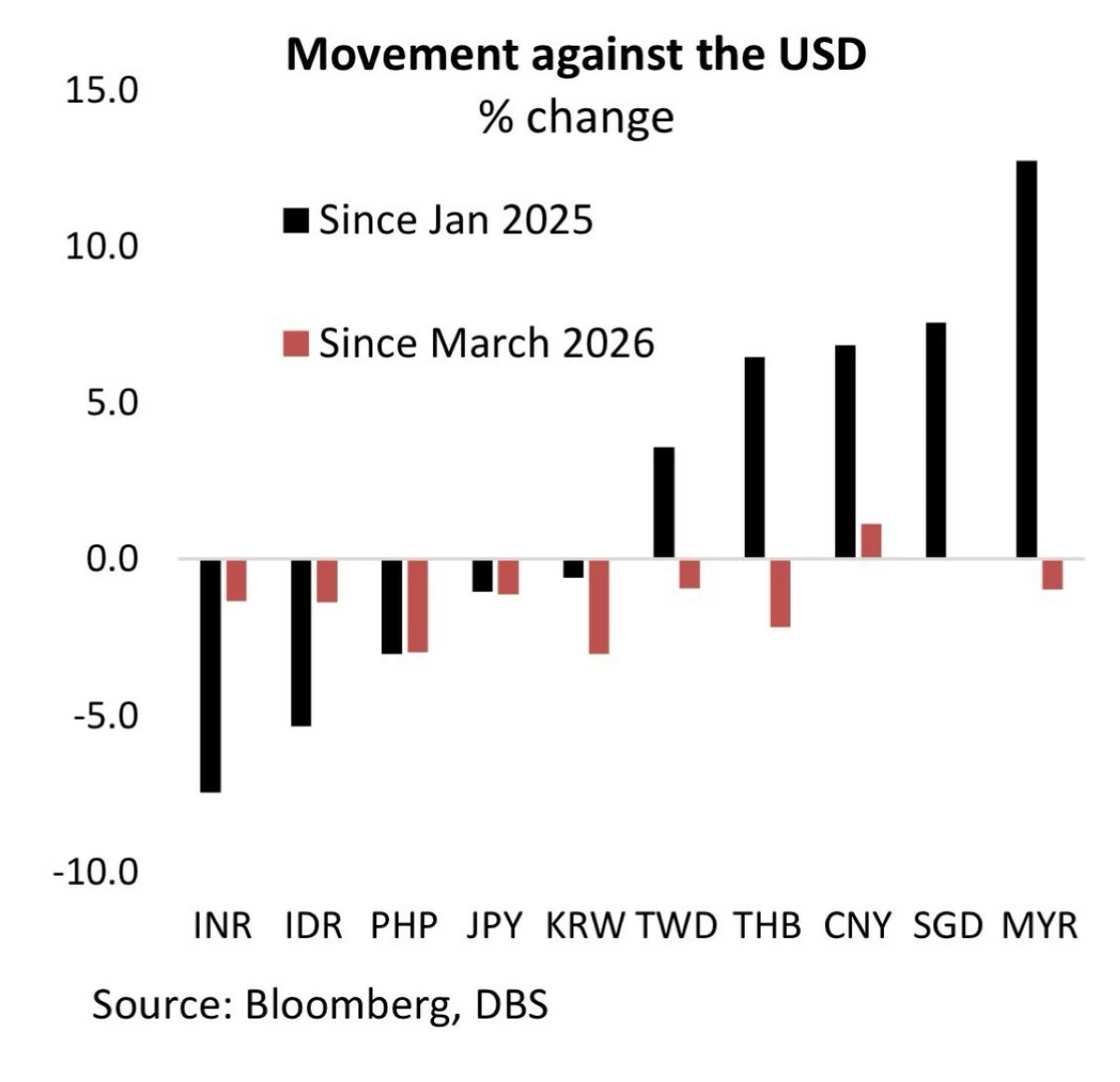
According to DBS, late-cycle capital market dynamics in India, fiscal and governance concerns in Indonesia, and a mix of technological and political disruptions in the Philippines have also contributed, albeit to varying degrees.
Concerns over the President’s health, the Vice President’s impeachment proceedings, and last year’s flood-control corruption scandal are among the political disruptions weighing on the country.
Meanwhile, DBS noted that strong artificial intelligence (AI)-driven demand has boosted electronics exporters like China, Malaysia, and Singapore—lifting their trade surpluses and currencies—while the Thai baht, driven more by gold exports, has weakened recently following a correction in gold prices.
As for Japan, South Korea, and Taiwan—despite being strong exporters—DBS pointed out that their currencies have remained largely flat as they balance robust export performance with pressure from the United States (US) to shift supply chains and increase investments.
“With commodity prices and geopolitical turbulence likely to remain high, these currencies may well continue to behave as per their groupings in this analysis,” DBS said.
After ending the first quarter at the ₱60.1:$1 level, the Singaporean bank expects the peso to appreciate to ₱59.3 against the US dollar in the second quarter, ₱58.5 versus the greenback in the third quarter, and ₱57.8 in the fourth quarter. DBS sees the local currency lingering in the ₱58- to ₱59-per-dollar range next year.
Amid the war in the Middle East, the peso slid to record lows nearing the ₱61:$1 mark last month as oil prices skyrocketed and put pressure on domestic fuel supply, resulting in higher inflation and a potentially wider trade deficit driven by more expensive energy imports.