






Manila Bulletin
 Business
The Economy
Inflation expected to jump in April as Philippine growth stays weak
Business
The Economy
Inflation expected to jump in April as Philippine growth stays weak
Business
The Economy
Inflation expected to jump in April as Philippine growth stays weak
Inflation expected to jump in April as Philippine growth stays weak
By Derco Rosal
Published May 4, 2026 12:00 am
|
Updated May 2, 2026 02:00 pm


At A Glance
- Signs of stagflation are surfacing in early 2026, with private sector economists expecting the Philippine economy to post only a modest recovery from the previous quarter's slump, while inflation is projected to surge past five percent in April amid war-driven supply disruptions.
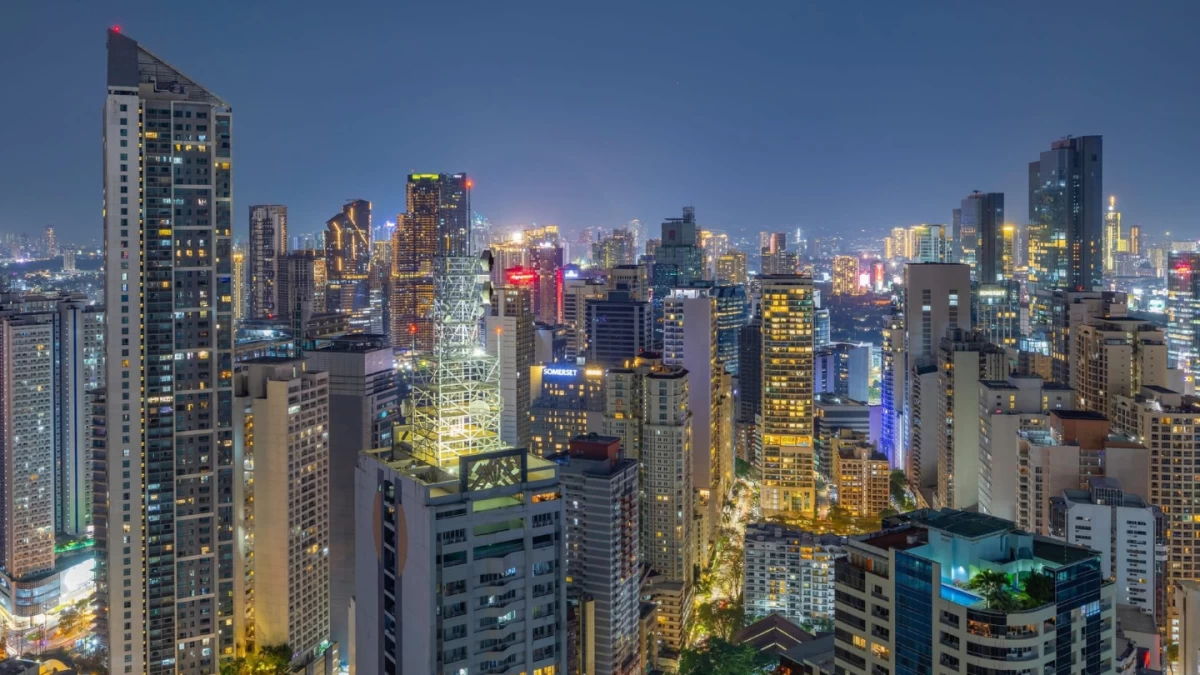
(Photo by Edwin Martinez I Manila Bulletin)
Signs of stagflation are surfacing in the Philippine economy as it enters the second quarter of 2026, with private sector economists warning of a precarious mix of stalled growth and surging consumer prices.
The country’s economic output likely posted only a tepid recovery from the previous quarter’s slump, while inflation is projected to breach the central bank's target ceiling amid supply disruptions exacerbated by conflict in the Middle East.
Of the 10 economists and think tanks polled by the Manila Bulletin, the median forecasts for the Philippines stood at 3.4 percent for first-quarter gross domestic product (GDP) expansion and 5.4 percent for April inflation.
Holding the highest growth forecast of 4.3 percent, Dutch financial giant ING has projected output growth to have modestly improved in the first three months of the year due to “favorable” base effects and a pickup in public spending.
Government spending sharply slowed to three percent in the fourth quarter of 2025, largely caused by dampened confidence following a large-scale flood control corruption scandal.
While a modest quarter-on-quarter rebound is anticipated, Deepali Bhargava, ING regional head of research for Asia-Pacific (APAC), hinged her caveat on soft construction activity and muted household consumption.
“On the industry side, soft construction activity should continue to weigh on growth, while services activity remains relatively resilient,” Bhargava said, adding that consumption growth is “likely to remain subdued as unemployment edges higher.”
British banking giant Barclays, which has a forecast close to the median at 3.5 percent, also wrote in a commentary obtained by the Manila Bulletin that economic growth likely stabilized as of end-March.
“GDP growth likely picked up only modestly in the first quarter of 2026,” Barclays economists said, noting, however, that this could have been “hampered by supply disruptions, government fuel-saving measures, and high global commodity prices arising from the Middle East conflict.”
Think tank Capital Economics shared a similar 3.5-percent growth forecast as that of Barclays, pointing to the easing impact of the flood control corruption probe, which has since been deepening.
Pantheon Macroeconomics, meanwhile, has a relatively higher growth forecast of 3.8 percent. However, it still expects moderating growth due to domestic spillovers from the United States (US)-Iran war.
Those with lower forecasts than the median were the Philippine National Bank (PNB) at 3.3 percent, Singapore-based DBS Bank Ltd. at 3.2 percent, and Union Bank of the Philippines (UnionBank) at 3.2 percent.
Meanwhile, investment banking giant Goldman Sachs and Reyes Tacandong & Co. hold the lowest growth projections at three percent. Goldman Sachs also cited improving government spending as among the engines of economic growth, which it expects to have stagnated at three percent.
“Higher government spending likely provided support to growth momentum in the first quarter,” Goldman Sachs chief China economist Hui Shan wrote in a commentary obtained by the Manila Bulletin.
“However, we think the rise in fuel prices in March likely weighed on activities, keeping the pace of economic expansion below the long-run average of 1.3 percent quarter-on-quarter (seasonally adjusted),” Hui said.
Capital Economics said that while the economy might have picked up early in 2026, “the effects of the Iran war will hold back the recovery over the coming quarters.” ING also noted rising economic tensions, where an output rebound is being slowed by elevated consumer prices and muted consumer spending.
Bhargava penciled in April inflation to clock in at 5.2 percent, overshooting the four-percent ceiling set by the Bangko Sentral ng Pilipinas (BSP).
Bhargava said price pressures will largely be driven by “the continued pass-through of higher global oil prices into domestic prices and emerging second-round effects. Higher rice prices are also likely to contribute to the uptick in food inflation.”
Second-round effects, according to DBS, will be compounded by the tail end of the 2026 flood control controversy inherited from last year.
“While government disbursements continue to be hampered by the graft allegations, domestic firms face higher energy costs and limited supplies,” the DBS research team, which has the highest inflation forecast of 5.8 percent, wrote in a commentary published last week.
Barclays has the second-highest inflation forecast at 5.5 percent, followed by Singapore-based UOB and Hui at 5.4 percent, and Ravelas at five percent.
Capital Economics has the lowest—but still far above the upper end of the target band—at 4.9 percent. “Higher fuel prices caused inflation to leap to 4.1 percent year on year in March, and it is likely to rise further over the coming months, weighing on household real incomes,” it said.
If the median inflation assumption is realized, the April price growth rate could emerge as the fastest since September 2023’s 6.1 percent. Recall that average inflation in 2023, at six percent, was the highest in 15 years since 2008 due to surging food prices, particularly rice.