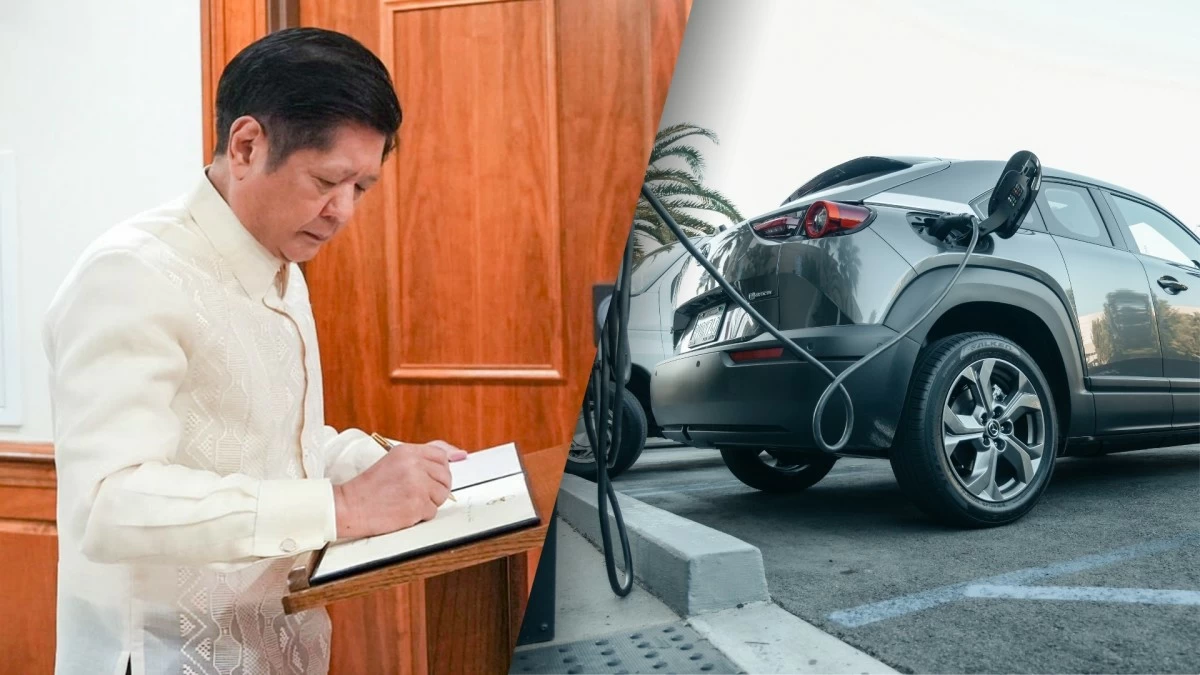
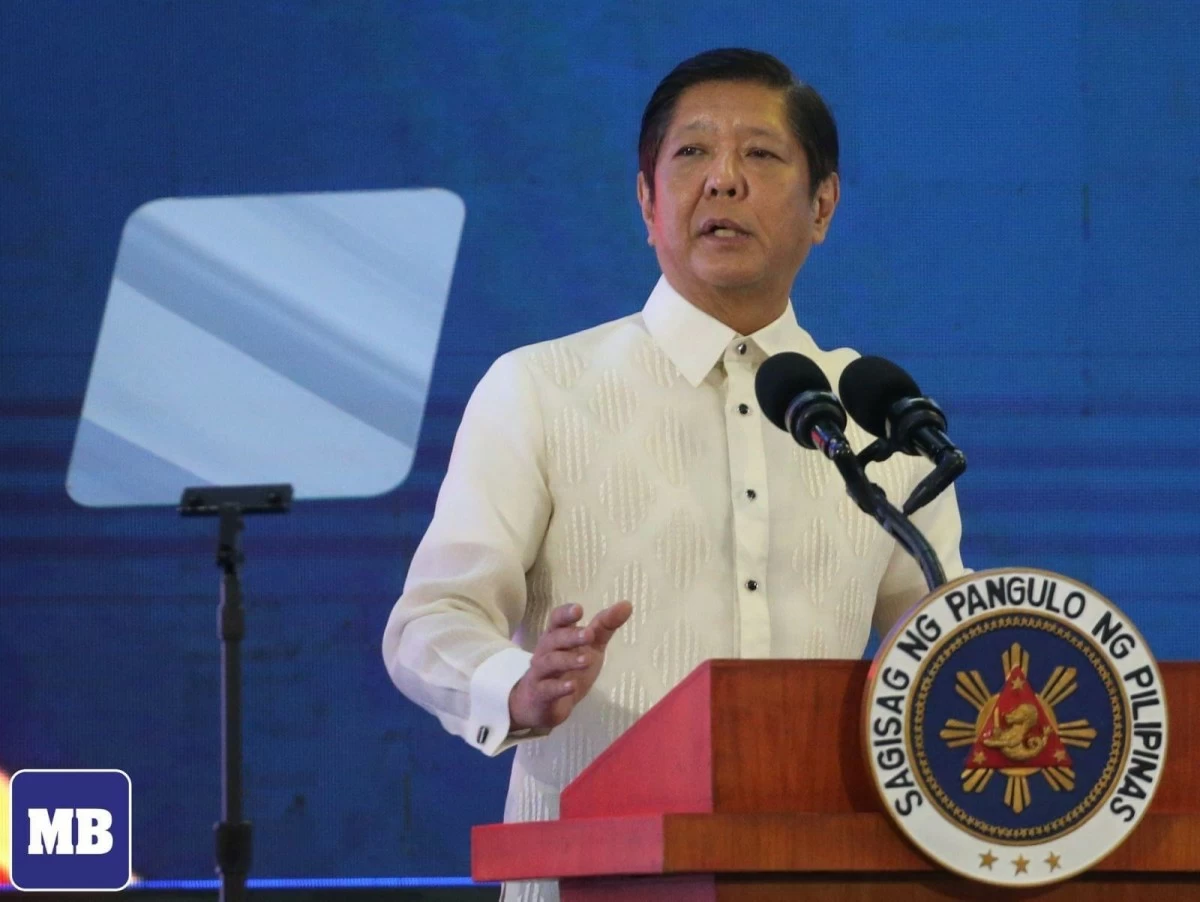
President Marcos has issued Executive Order (EO) No. 121 establishing the Electric Vehicle Incentive Strategy (EVIS) Program, a new incentive scheme designed to encourage electric vehicle (EV) manufacturers to invest and produce vehicles and components in the Philippines. Presidential...
Quezon City has established a multi-sectoral body to coordinate and strengthen the implementation of programs under its three United Nations Educational, Scientific and Cultural Organization (UNESCO) designations. Mayor Joy Belmonte signed Executive Order No. 22, Series of 2026, creating the...
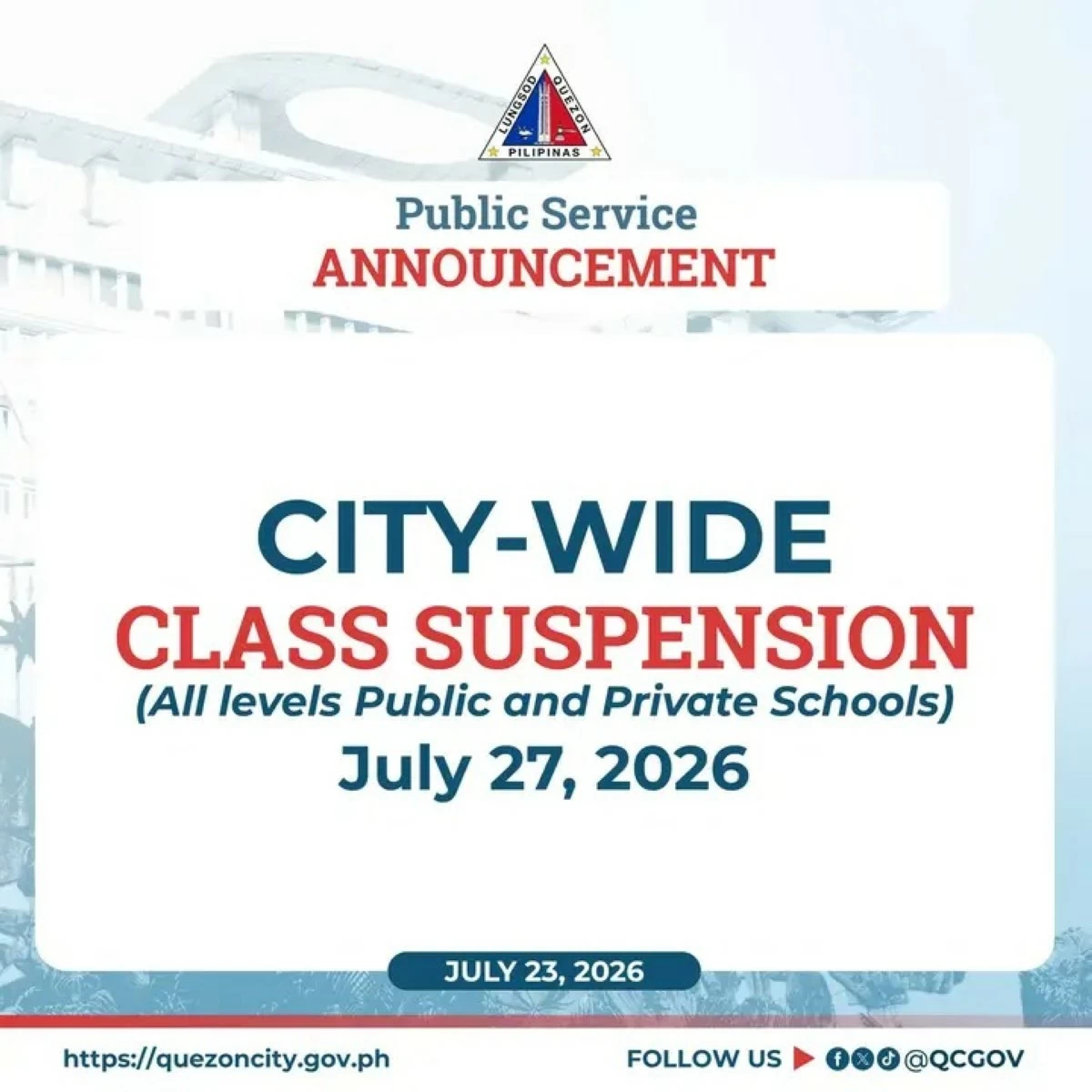
The Quezon City government has declared a citywide suspension of classes at all levels in public and private schools on Monday, July 27, as President Ferdinand Marcos Jr. is set to deliver his State of the Nation Address (SONA). Under Executive Order No. 23, series of 2026, signed by Mayor Ma....
President Ferdinand Marcos Jr. has signed Executive Order No. 119, retiring a 1964 policy on government data classification and replacing it with a modern, risk-based framework built for cloud computing and artificial intelligence. The new order supersedes Memorandum Circular No. 78, a decades-old...
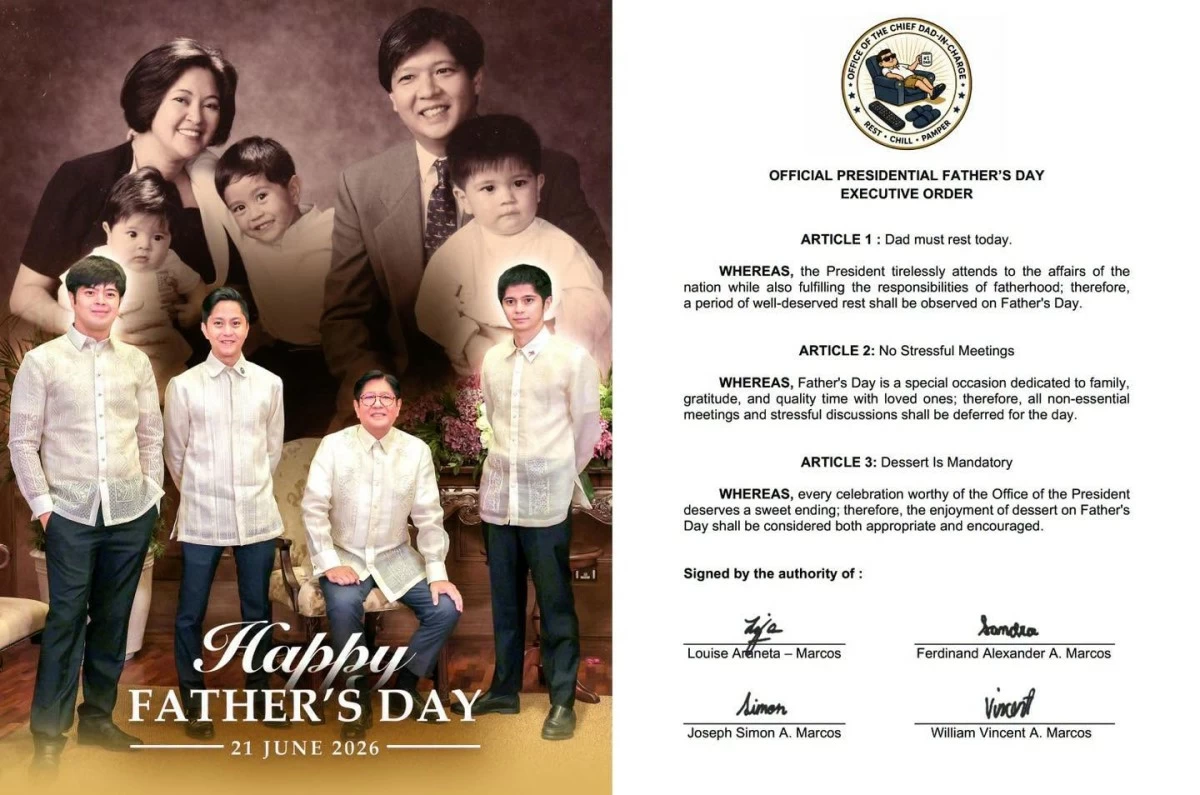
On Father 's Day, President Marcos received an "order" from his family, instructing him to rest, not hold stressful meetings, and enjoy a sweet treat. First Lady Liza Marcos and their sons, Sandro, Simon, and Vincent, gave the President a unique Father 's Day greeting by issuing an...
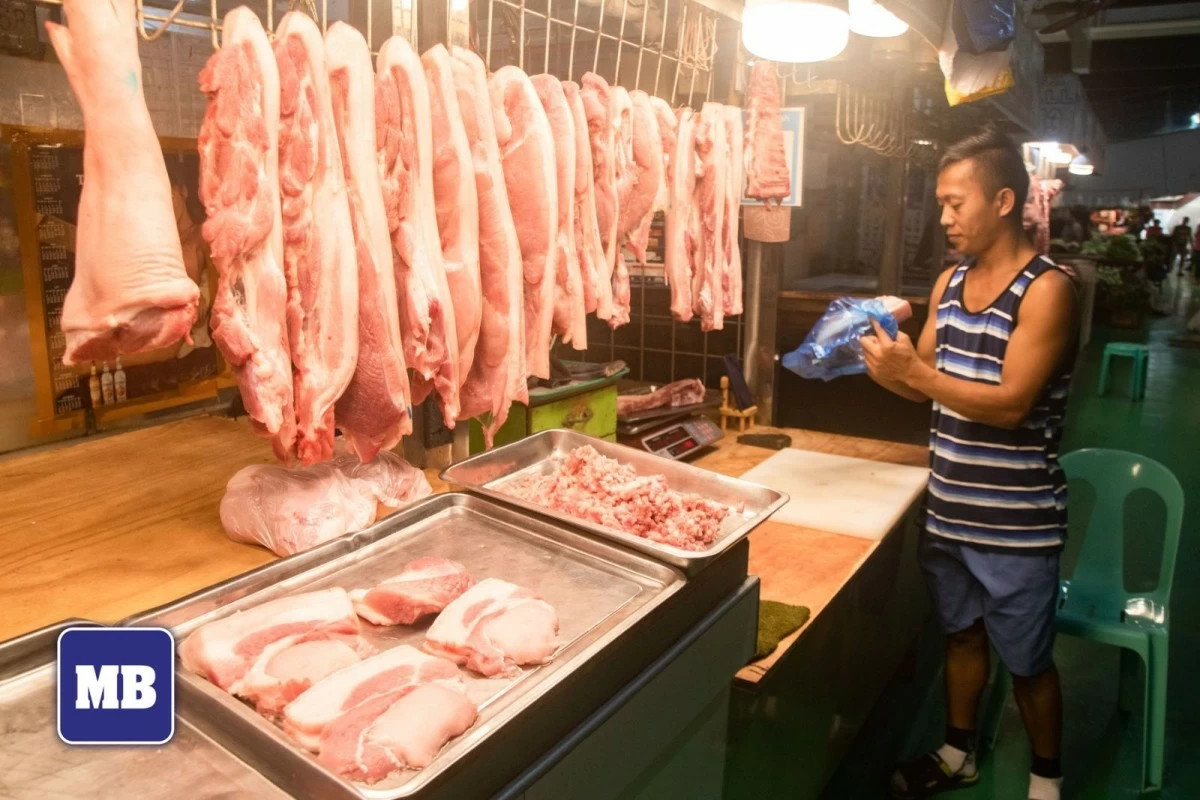
Citing a substantial pork supply shortfall, President Marcos has ordered an increase in the minimum access volume (MAV) for pork this year from 54,210 metric tons (MT) to 204,210 MT. Marcos signed Executive Order No. 116 on May 19, 2026, in response to the existing supply gap. "[T]here is an urgent...
Escalating tensions in the Middle East and the resulting spike in global oil prices could trigger broader economic disruptions in the Philippines, worsening inflation, weakening the peso, and raising costs across transportation, food, tourism, and other energy-intensive industries, according to...
President Marcos has ordered the imposition of a temporary mandated price ceiling on imported rice to address what the government described as unjustified price increases and market abuse. Under Executive Order (EO) No. 118, imported rice with five percent broken content will be subject to a...
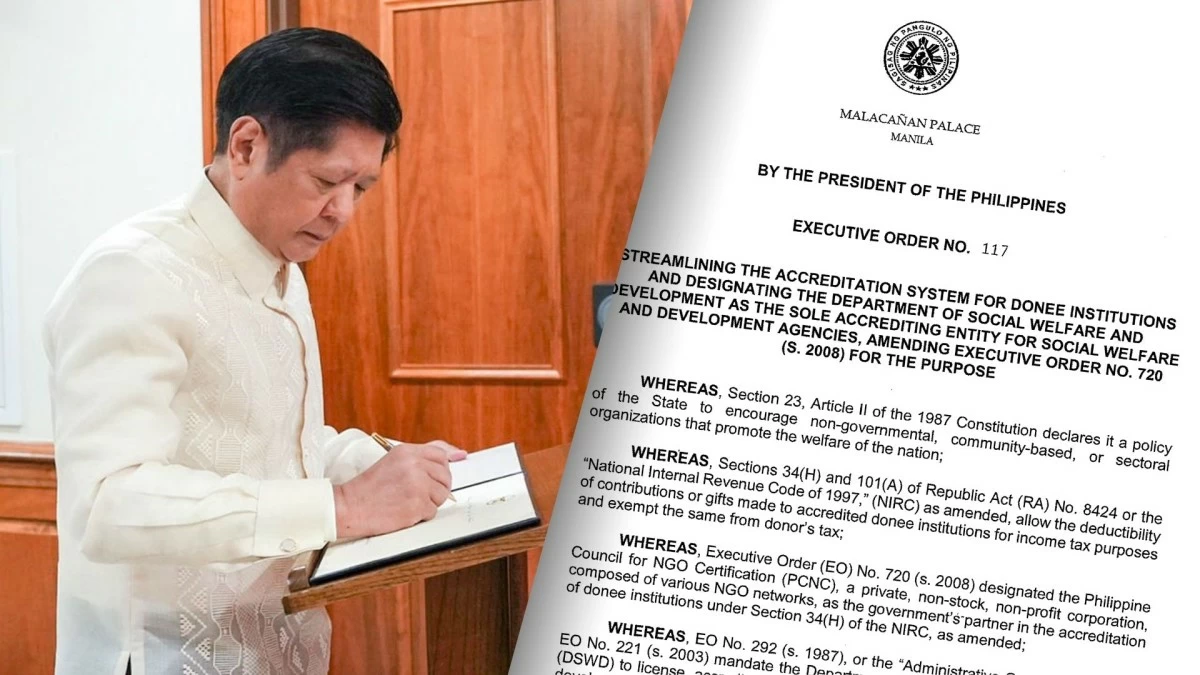
President Marcos has streamlined the accreditation process for social welfare and development agencies (SWDAs) by designating the Department of Social Welfare and Development (DSWD) as the sole accrediting entity for donee institutions. Under Executive Order (EO) No. 117, signed on May 7, the...
President Marcos has signed an executive order that unveils a list of investment areas open to and restricted for foreign investors. Under Executive Order No. 113, dated April 13, the 12th Regular Foreign Investment Negative List (RFINL) is amended. According to the Department of Economy, Planning,...
Muntinlupa Mayor Ruffy Biazon advised the public to stay calm after President Ferdinand Marcos Jr. declared a state of national energy emergency in the country. Executive Order No. 110 states that “the declaration of a state of national energy emergency will enable the government, through the...
President Marcos has ordered the reduction of the real property taxes (RPT) imposed on independent power producers (IPP) for this year. The move was intended to prevent defaults and economic losses that could affect electricity supply and the government’s fiscal stability, according to the...