






Manila Bulletin
 Philippines
National
Marcos orders reduction of real property tax of independent power producers
Philippines
National
Marcos orders reduction of real property tax of independent power producers
Philippines
National
Marcos orders reduction of real property tax of independent power producers
Marcos orders reduction of real property tax of independent power producers
Published Dec 3, 2025 04:13 pm


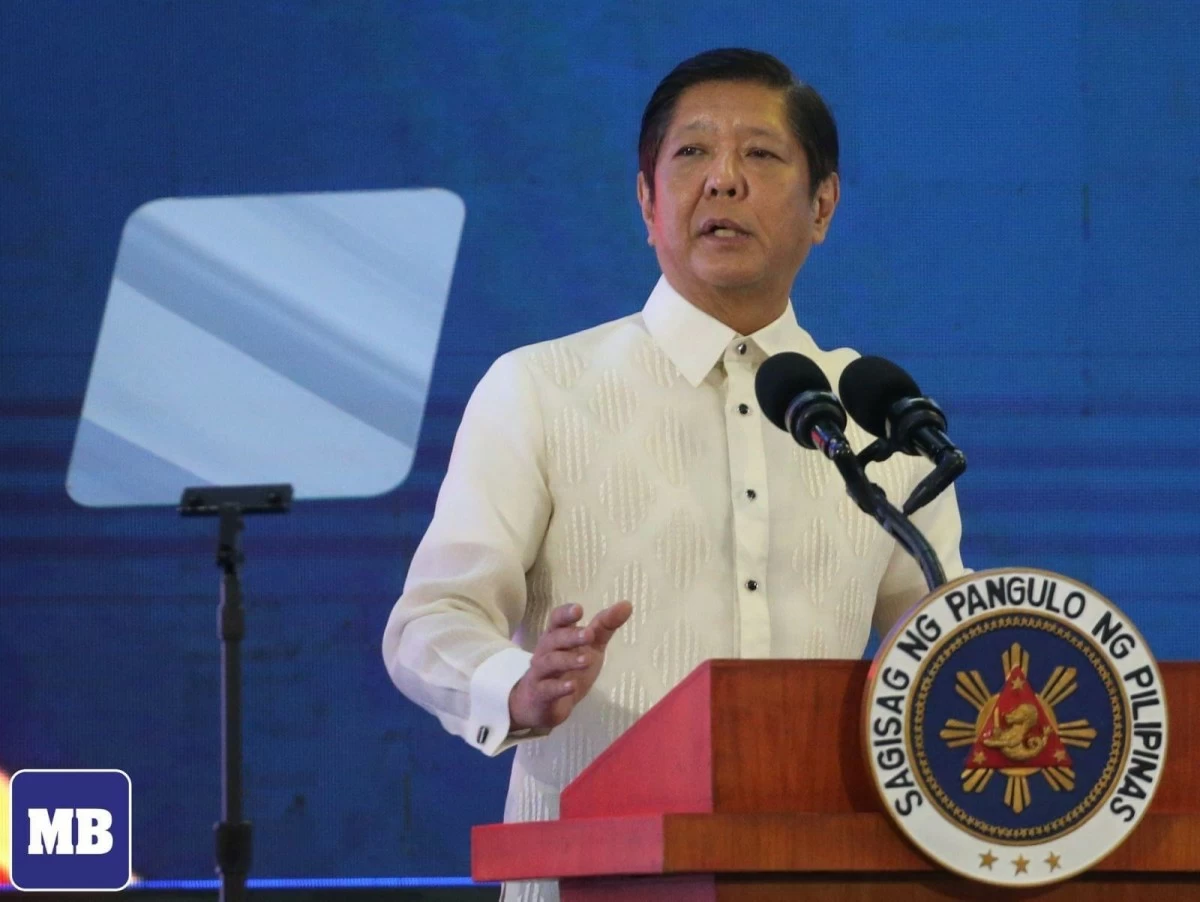
President Ferdinand 'Bongbong' Marcos Jr. (MB File Photo)
President Marcos has ordered the reduction of the real property taxes (RPT) imposed on independent power producers (IPP) for this year.
The move was intended to prevent defaults and economic losses that could affect electricity supply and the government’s fiscal stability, according to the Malacañang.
Executive Order (EO) No. 106 issued on Nov. 28 reduced the amount of all liabilities for real property taxes for Calendar Year (CY) 2025, including any special levies accruing to the Special Education Fund on the power generation facilities of IPPs under a build-operate-transfer (BOT) scheme and similar contracts with government-owned or -controlled corporations (GOCCs), that are assessed by local government units (LGUs) and other authorized entities for all years up to CY 2025.
The liabilities are “hereby reduced to an amount equivalent to the tax due if computed based on an assessment level of 15 percent of the fair market value of said property, machinery and equipment, depreciated at the rate of 2 percent per annum, less any amount already paid by the IPPs,” EO No. 106 stated.
Marcos also condoned all interests and penalties on the deficiency RPT liabilities of the concerned IPPs.
According to the EO, all real property tax payments made by the IPPs over and above the reduced amount shall be applied to their real property tax liabilities for succeeding years.
The EO noted that under the Local Government Code of 1991 or Republic Act 7160, GOCCs engaged in the generation and transmission of electricity enjoy exemptions and privileges with respect to real property taxes.
These include an assessment level of 10 percent on all its lands, buildings, machineries and other improvements, as well as an exemption for all machinery and equipment used in the generation and transmission of electric power, and machinery and equipment used for pollution control and environmental protection.
The EO also stated that various local government units (LGUs) have taken the position that IPPs are not entitled to the exemptions and privileges enjoyed by GOCCs with respect to real property taxes, and have threatened enforcement action against IPPs, including the levy and sale at public auction of affected properties.
According to the EO, while IPPs are liable to pay the real property taxes, a substantial portion of the tax charged has been contractually assumed by the National Power Corporation (Napocor)/Power Sector Assets and Liabilities Management Corporation (PSALM) under a build-operate-transfer scheme and similar contracts, and therefore carry the full faith and credit of the national government.
The EO warned that according to the Department of Finance (DOF), the collection of the subject real property taxes for CY 2025, which were assessed at the maximum assessment level of 80 percent by concerned LGUs “will trigger massive direct liabilities on the part of Napocor/PSALM, thereby threatening their financial stability, the government's fiscal consolidation efforts, the stability of energy prices, and may even trigger further cross-defaults and significant economic losses across all sectors.”
“As the operations of affected IPPs provide an estimated grid capacity of 1,085 megawatts, their closure or non-operation will entail substantial losses to the government and force the public to resort to more costly electric power source alternatives or rotating power outages,” the EO further warned.
Under Section 277 of the Local Government Code of 1991, the President may, when public interest so requires, condone or reduce the real property tax and interest for any province or city, or a municipality within the Metropolitan Manila Area.
The President directed the Department of Interior and Local Government (DILG), in coordination with the DOF, to monitor the compliance of concerned LGUs.
The DOF was also ordered to submit a progress report on the implementation within six months from effectivity of the Order.