






 Philippines
National
Marcos signs EO creating EV incentives program to boost local manufacturing
Philippines
National
Marcos signs EO creating EV incentives program to boost local manufacturing
Marcos signs EO creating EV incentives program to boost local manufacturing


At A Glance
- President Marcos has signed Executive Order No. 121 establishing the Electric Vehicle Incentive Strategy (EVIS) Program to attract EV manufacturing investments.
- The program provides fiscal incentives to qualified manufacturers while imposing strict monitoring and compliance requirements.
- The administration expects the initiative to create jobs, strengthen local manufacturing, reduce dependence on imported fuel, and position the Philippines in the global EV supply chain.
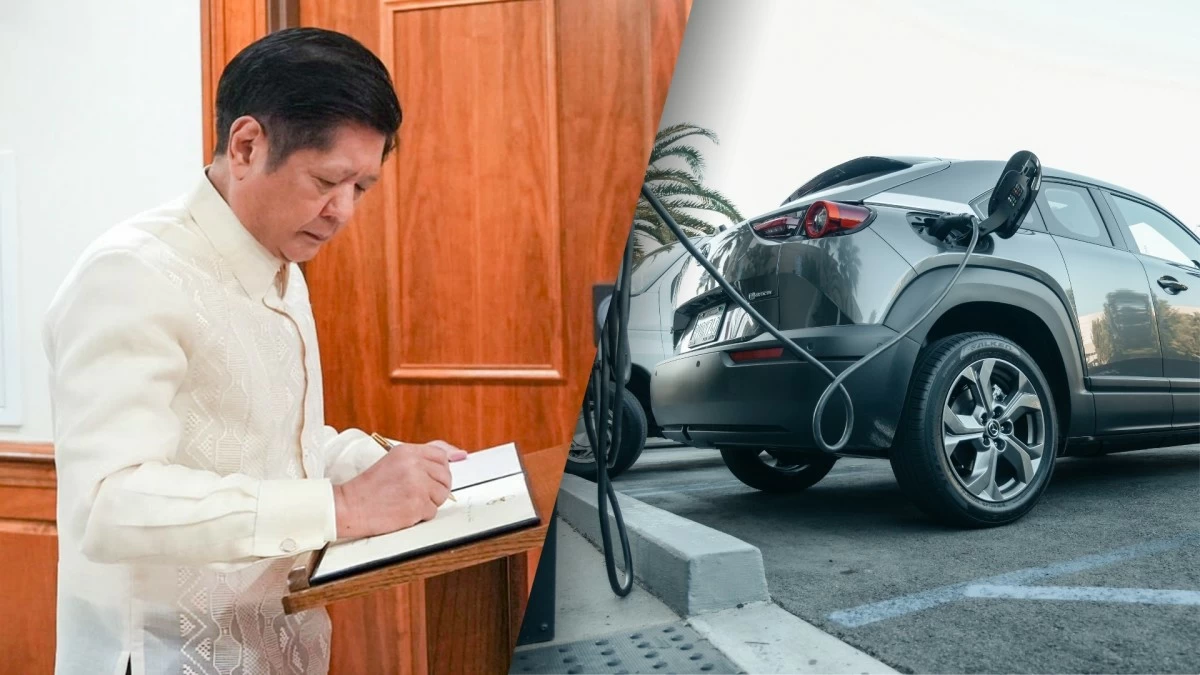
President Marcos has issued Executive Order (EO) No. 121 establishing the Electric Vehicle Incentive Strategy (EVIS) Program, a new incentive scheme designed to encourage electric vehicle (EV) manufacturers to invest and produce vehicles and components in the Philippines.
Presidential Communications Office (PCO) Undersecretary Claire Castro made the announcement during a Palace press briefing on Thursday, July 30, saying the order fulfills one of the President's commitments outlined in his 2026 State of the Nation Address.
According to Castro, the EVIS Program seeks to encourage major companies to establish EV manufacturing and parts production facilities in the country to generate local employment.
“Kapag dito sila nag-invest at gumawa ng sasakyan, mas maraming trabaho para sa mga Pilipino (When they invest and manufacture vehicles here, more jobs will be created for Filipinos),” she said.
Under the order, signed on July 29, the EVIS Program aims to promote domestic manufacturing of EVs, including their parts and components, expand local manufacturing operations, and develop the Philippines into a regional automotive manufacturing hub while supporting the country's greenhouse gas reduction commitments.
The Palace Press Officer said the program forms part of the administration's broader strategy to create employment, attract investments, strengthen domestic manufacturing, reduce dependence on imported oil, and integrate the Philippines into the global EV industry.
EO No. 121 takes effect immediately upon its publication in the Official Gazette or in a newspaper of general circulation.
Fiscal incentives for investors
Castro said the government will provide tax payment certificates to encourage companies to invest in the Philippines.
EO No. 121 provides two major fiscal incentives for qualified participants: Fixed Investment Support, which covers a portion of capital expenditures for tooling, equipment, research and development, engineering changes, and start-up costs, and a Production Volume Incentive for locally manufactured or assembled EVs.
Incentives will be released through non-transferable tax payment certificates that may be used to settle certain national tax and duty obligations.
The order also sets eligibility requirements, including minimum investment commitments, production targets, and compliance with registration conditions under the program.
BOI to lead implementation
The EO designates the Board of Investments (BOI) as the lead implementing and coordinating agency of the EVIS Program.
The BOI will oversee implementation, issue implementing guidelines, evaluate applications, submit annual reports to the Office of the President, and coordinate with other government agencies.
It will be assisted by the Inter-Agency Committee on Electric Vehicle Industry Development, composed of representatives from the departments of Finance (DOF), Energy (DOE), Transportation (DOTr), Budget and Management (DBM), and other agencies.
Strict monitoring and compliance
Castro said companies receiving incentives will be subject to strict monitoring and must comply with program requirements.
“May mahigpit ding monitoring at may mga kondisyon (There will also be strict monitoring, and there are conditions that must be met),” she said.
Under the order, registered participants will undergo periodic audits covering production volume, investment commitments, and compliance with the terms of their registration.
Companies that fail to meet their obligations may face the refund or forfeiture of incentives, cancellation of their registration, and other penalties allowed under existing laws and regulations.