







Why are innocent drivers in vehicular crashes still being detained?
Remnants from an old law
By Inigo Roces
Published Feb 13, 2026 07:01 pm


At A Glance
- A student fell from an LRT-1 station and was struck and dragged by a passing vehicle following the fall to the road below. Video evidence appears to show the driver was not at fault, but was detained anyway. We explain why this happened.
- This is not the first time that a seemingly innocent driver was detained. Police say they are simply following the law.
- Lawmakers are aware of this problem, but bills written to fix this still have not been passed.
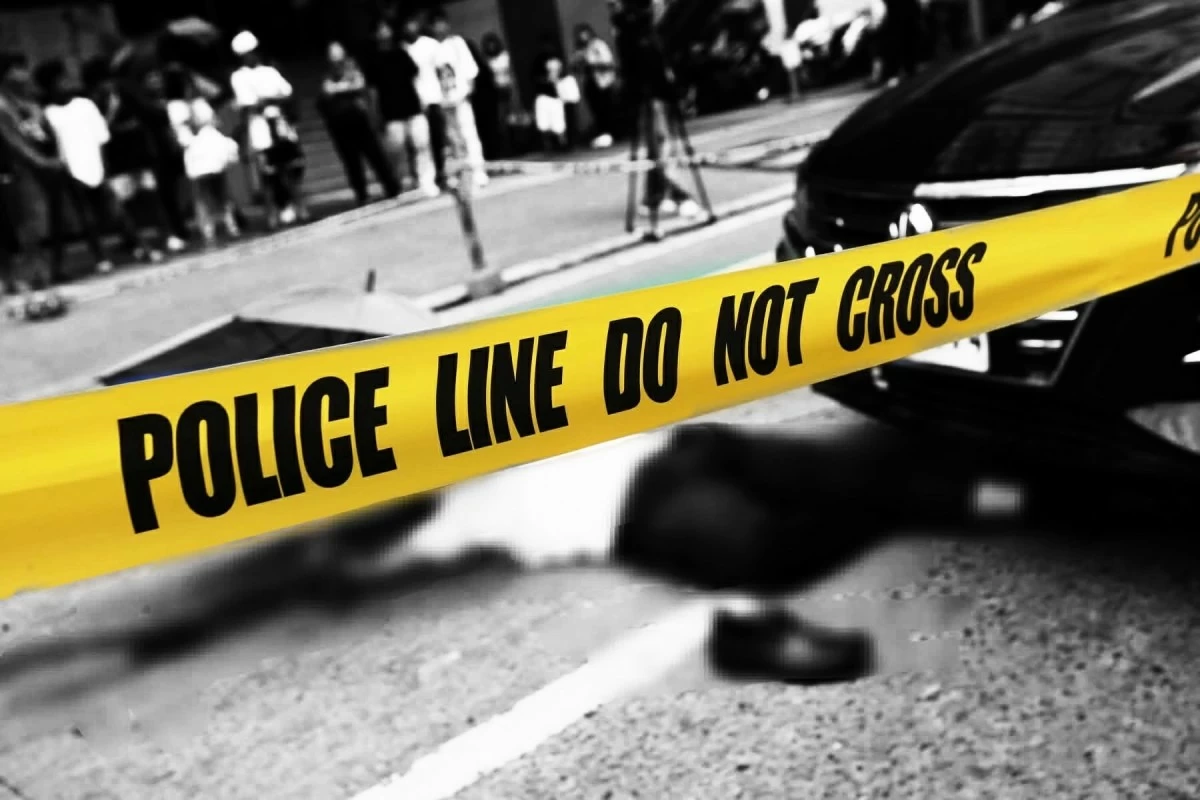
*TRIGGER WARING*
Scene of the Crime Operatives investigates an incident in which a college student reportedly fell from the third level of the LRT Fernando Poe Jr. Station in Quezon City on Wednesday, February 11, 2026. According to witnesses, the student was struck and dragged by a passing vehicle following the fall. (Photo by Santi San Juan)
Earlier this week, on Wednesday, Feb 11, a student fell from the Fernando Poe Jr. (FPJ) Station of the LRT-1 line. The student landed on the road below and was subsequently struck by a car that was traversing the road at the time.
The student unfortunately did not survive the fall. The driver involved in the incident immediately pulled over and stayed at the scene, fully cooperating with the police. He was taken into custody by the Quezon City Police District while an investigation was conducted. The QCPD said he may be charged with Reckless Imprudence resulting in homicide.
During this time, CCTV footage was obtained that showed the student falling from the platform. It was clear that it was too late for the vehicle to avoid the student, after all, no one expects another person to fall from the station above.
It seemed like a clear cut case, but the driver was still kept in detention. A day later, the driver was finally released by the QCPD that had finally completed its investigation.
QCPD said its “investigation found no apparent negligence on the part of the driver.” Police said the driver fully cooperated with authorities and was placed under police custody in accordance with the standard operating procedures (SOP) of the Philippine National Police (PNP), as the case involved a fatality.
Meanwhile, the victim’s father executed a notarized letter stating that he is no longer pursuing a complaint against the driver.
Following these developments, the driver was released from the custody of Traffic Sector 6 at around 4:10 p.m. on Thursday, Feb. 12. This was more than 24 hours after the incident; no doubt the most harrowing experience of this innocent driver's life.
Ramifications
This incident incited a lot of discussion on the internet and social media, particularly with regard to law enforcement’s standard procedure of detaining the driver of the vehicle even if he is clearly not at fault. In fact, some discussions also noted it echoes another incident in the past where yet another innocent driver was detained for a road accident that resulted in a death which he was not responsible for.
Some might remember back in March 2024, a drunk motorcycle rider sped onto the Skyway very early in the morning. He was heading the wrong way at high speed and collided with another vehicle going the right way. In this incident, the rider did not survive. He was found to be intoxicated, operating a motorcycle not allowed on the elevated expressway, and did not have the adequate safety gear. The video evidence came from the Skyway management's own CCTV cameras. Again, it was clear that the driver could not do anything to avoid the speeding motorcycle coming toward him, much less could be blamed for it. Still, he too was detained until a thorough investigation could be concluded. He was released after two days in custody, helped by an affidavit from the brother of the rider, stating the family will not press charges.
So why does this keep happening?
Under current laws, drivers or motorists involved in accidents, road safety incidents, or traffic violations, particularly those that result in a fatality, are immediately presumed at fault even when pedestrians and or other motorists are at fault or share equal fault.
Under Article 365 of the Revised Penal Code, reckless imprudence occurs when a person causes physical injury, death, or damage to property not by intent, but by failing to exercise the necessary care and precaution required by the circumstances.
As such, the standard procedure for law enforcement is to detain these individuals while an investigation is conducted and evidence can be obtained that the parties involved were not at fault. This is done to prevent those involved from possibly fleeing from the law. In some cases, even those not at fault may be unfairly detained.
Unfortunately, the police officers were simply following the law. It is their duty to bring to custody somebody that may have committed an offense, and if they were part of the accident, there is basis to bring them in right then and there. Those innocent of wrongdoing can only hope the investigation is conducted quickly and without bias. And after sufficient evidence of their innocence is obtained, or a letter from the bereaved that they will not press charger, only then can the accused be finally released. However, it doesn't always happen as quickly as it did in this case.
A bill that has not yet passed
Lawmakers have already recognized this problem with the law and are already making an effort to amend it. However a bill that can do so has yet to be passed. There have been three bills drafted regarding this matter, but none has been passed into law yet.
A bill seeking to rectify this was filed in 2019, but was not passed into law. That is House Bill 1987 or the 'Philippine Responsible Driving and Accountability Act.' HB 1987 also intends to update the country's road safety laws and laws on criminal, civil, and administrative culpability and liability of drivers involved in traffic violations/road safety incidents.
A more recent bill was passed in 2024, House Bill (HB) 10679 or the Defensive Driving Act of 2024. Dubbed as the "Anti-kamote Driving" bill, HB 10679 seeks to prohibit the detention of the “person driving a motor vehicle” involved in a traffic incident, provided that he or she can provide proof that he or she is not at fault.
In the wake of this incident, Senator Joseph Victor “JV” Ejercito has called on the Senate to fast track the passage of Senate Bill No. 338 or the proposed Defensive Driving Protection Act of 2024. Like the House version of the bill, this SB 338 allows a driver involved in a traffic or road accident to be let off for defensive driving if he or she can present sufficient proof or evidence of his/her innocence or that he/she was not violating any traffic laws before and during the incident through a dashcam video, a closed-circuit television (CCTV) footage, or any other video footage or still image from other witness.
“Another driver was automatically arrested and detained after being involved in an unexpected incident at the LRT-1 Fernando Poe Jr. Station. The driver was immediately stripped of the presumption of innocence!” Ejercito lamented. “In our view, it’s not right to detain anyone who was not negligent or for simply being in the wrong place at the wrong time. Our laws should not be a contributor to a string of bad luck.”
Ejercito said such incident is the reason why he filed SB No. 338, saying he believes drivers should be protected against unjust detention and arbitrary cases.
“Due process should be followed and drivers who are also victims should not be immediately imprisoned, especially if they have evidence to prove the accident, such as dashcam or CCTV footage,” the lawmaker stressed. “It is high time to update our policies which are clearly detrimental to the public.”
Our lawmakers are already aware that the law is causing more problems that it is solving. The questions is, why have they not passed it into law yet?
What we can do?
It is only by discussing case like this loudly and persistently in social media will they finally realized this problem needs to be addressed urgently. If you feel strongly about how unjust the current law is, discuss it on social media. Cite similar incidents in the past where yet another innocent driver was unfairly detained. Share links of news stories about bills that hope to amend this issue. Most critical off all, tag the social media accounts of the current members of the Senate and Congress who can author a bill or vote on a bill that has already been filed. It is only by discussing this actively and tagging our lawmakers will they be compelled to act and make a change.