






 Business
The Economy
PIDS: Funding bottlenecks slow Philippine climate response despite strong public support
Business
The Economy
PIDS: Funding bottlenecks slow Philippine climate response despite strong public support
PIDS: Funding bottlenecks slow Philippine climate response despite strong public support


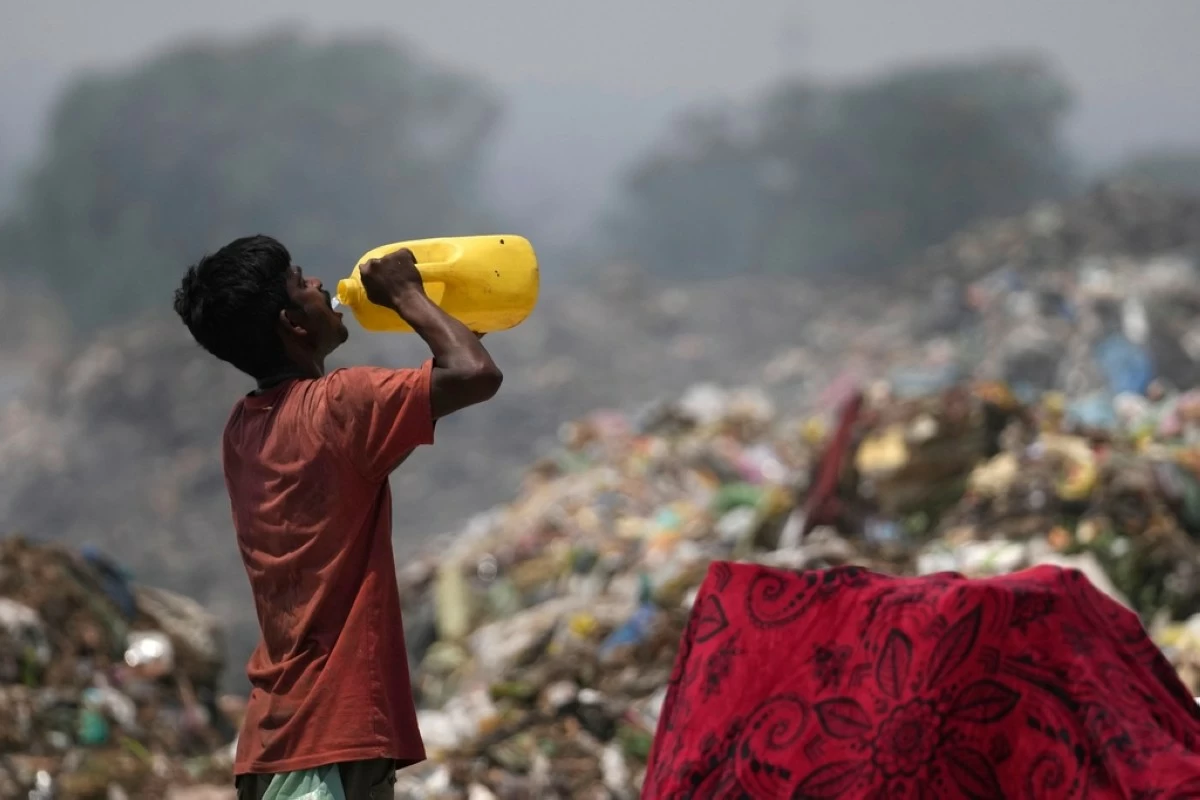
Despite widespread public concern about climate change, financing and institutional constraints continue to hamper the Philippines’ efforts to strengthen climate resilience and adaptation measures, according to state-run policy think tank Philippine Institute for Development Studies (PIDS).
In the study titled “Climate Change Perceptions and Climate Finance Mechanisms in the Philippines: A 2025 Assessment,” PIDS found that Filipinos are among the most climate-conscious populations in Asia, but gaps in financing systems, local government capacity, and policy coordination are slowing the country’s climate response, it noted in a statement on Monday, June 8.
The study combined findings from the Asian Development Bank’s (ADB) 2024 Climate Change Perception Survey with key informant interviews, policy reviews, and assessments of climate finance systems.
Based on the ADB survey, nine in 10 Filipinos consider climate change a serious problem, while 86 percent believe it is already affecting their families or will do so within the next decade.
Flooding emerged as the top climate concern among 71.1 percent of respondents, followed by heat waves at 54.37 percent and unpredictable weather patterns at 45.62 percent.
The findings come as climate risks continue to intensify in the country. Data cited in the study showed that the Philippines has experienced hotter-than-normal temperatures since the 1980s, with annual mean temperature increasing by 0.75 degrees Celsius between 1951 and 2021.
The study noted that rising temperatures and changing rainfall patterns underscore the urgency of strengthening climate resilience, adaptation measures, and financing mechanisms.
Climate change also poses significant risks to the economy.
According to the study, World Bank projections estimate that climate change could reduce Philippine gross domestic product (GDP) by between six percent and eight percent by 2040, with losses potentially reaching as high as 13.6 percent.
Meanwhile, the ADB projects economic losses equivalent to 5.3 percent of GDP by 2040 due to sea-level rise, flooding, and lower labor productivity.
The survey likewise showed strong public support for climate-related investments, with nearly six in 10 Filipinos backing spending on climate-resilient infrastructure, renewable energy (RE), and public transportation systems.
Support was weaker for measures such as carbon taxes and stricter emissions regulations, indicating a preference for visible investments that directly strengthen resilience.
Respondents also favored transparent and accountable financing mechanisms, with 45.55 percent supporting efforts to reduce corruption and tax evasion as a means of funding climate action, while 44.7 percent favored greater support from international climate funds.
Despite this public support, researchers found that many local government units (LGUs) continue to face difficulties accessing and utilizing climate finance.
Interviews conducted for the study showed that limited technical expertise, inadequate project preparation capacity, and complex funding requirements often prevent LGUs from tapping financing mechanisms such as the People’s Survival Fund (PSF) and international climate finance facilities.
The study noted that “even with the increased internal revenue allocation under the Mandanas-Garcia ruling, local funds remain insufficient,” highlighting the need for stronger national government support and capacity-building programs.
PIDS said local governments are expected to play a central role in climate adaptation and disaster resilience efforts but often struggle to convert climate plans into projects that can secure financing and be implemented.
The study also identified broader institutional challenges, including fragmented financing mechanisms, complex funding processes, and coordination issues among agencies involved in climate governance.
It further noted that the Bangko Sentral ng Pilipinas (BSP) faces legal and institutional constraints that limit its ability to directly undertake developmental financing activities used by some central banks in the region to support climate-related investments.
Another challenge cited was the limited availability of climate and environmental data, including insufficient infrastructure for monitoring greenhouse gas emissions and other climate indicators.
According to PIDS, these gaps make evidence-based policymaking more difficult and hinder efforts to assess the effectiveness of climate programs and investments.
“The Philippines is uniquely positioned among Asian economies because Filipinos show exceptionally high levels of climate awareness and concern,” the study noted. “However, institutional barriers continue to limit the country’s ability to mobilize and deploy climate finance effectively.”
PIDS said addressing climate change requires more than increasing financial resources, stressing the importance of strengthening institutions, improving policy coordination, enhancing local government capacity, and expanding access to climate finance.
“Achieving these ambitions will require enhanced multilateral partnerships, domestic regulatory reforms, and inclusive stakeholder engagement to transform commitments into tangible low-carbon outcomes,” PIDS added.