ADVERTISEMENT

Philippines seeking $1.02-billion World Bank energy loan, grant package

Published Jun 2, 2026 06:16 pm  |  Updated Jun 2, 2026 01:25 pm

The Philippines is set to secure another $1-billion loan from the World Bank in June, this time for an energy project follow-through and coupled with a $20-million grant, making the package the largest single financing commitment extended to the country by the Washington-based multilateral lender.

The latest World Bank documents reviewed by Manila Bulletin showed that as of May 31, the Philippines Second Energy Transition and Climate Resilience Development Policy Loan (DPL) has a total commitment amount of $1.02 billion, with the forthcoming International Bank for Reconstruction and Development (IBRD) loan comprising the bulk of the financing plan. IBRD is the World Bank Group’s (WBG) lending arm for developing countries like the Philippines.

A DPL is a fast-disbursing loan that supports government policy and institutional reforms rather than funding specific infrastructure projects. Once approved by the World Bank board on June 25, the newest loan will match the $1 billion for the Department of Agriculture’s (DA) Philippines Sustainable Agriculture Transformation (PSAT) Program, which the lender greenlit last March and for which the Philippine government signed the agreement in May.

Meanwhile, the grant will come from IBRD’s Fund for Innovative Global Public Goods (GPG) Solutions, which is a trust fund “designed to incentivize sovereign states to invest in projects that provide cross-border or global benefits,” including initiatives tackling climate change.

When the World Bank first disclosed the Philippines Second Energy Transition and Climate Resilience DPL in September last year, the financing was estimated at a lower $800 million and was initially scheduled for approval in January this year, which has since been moved several times.

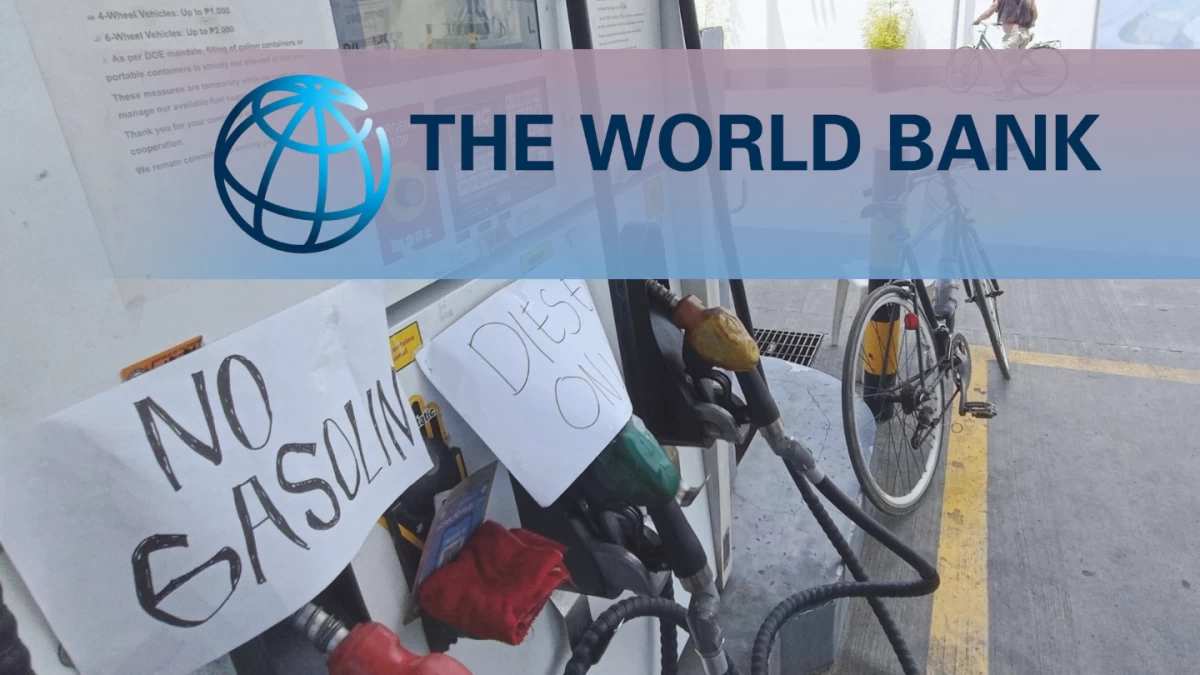
The Philippines is currently under a national energy emergency due to the global oil price and supply shocks wrought by the prolonged war in the Middle East.

Manila Bulletin reported last year that the new loan would build on reforms jump-started by the Philippines First Energy Transition and Climate Resilience DPL, an $800-million financing that the World Bank greenlit in March last year.

Based on World Bank documents, the upcoming DPL would “support [Philippine government] reforms to scale up adoption of clean energy technologies; increase the security, flexibility, and competition of electricity markets; and improve water management across water uses.”

The program will be jointly implemented by the Department of Energy (DOE) and the Department of Environment and Natural Resources (DENR), as well as the Energy Regulatory Commission (ERC).

According to earlier documents, the Department of Budget and Management (DBM), the Department of Economy, Planning, and Development (DEPDev), the Department of the Interior and Local Government (DILG), the Department of Public Works and Highways (DPWH), and the Department of Trade and Industry (DTI) will also be involved in program implementation, with the Department of Finance (DOF) designated to be responsible for overall coordination and monitoring.

This second phase “deepens the policy and institutional framework needed to scale up renewable energy (RE), improve electricity market efficiency, and strengthen water governance and service delivery,” according to the World Bank.

The second DPL would have three pillars, the first of which targets accelerating RE adoption through an RE market, offshore wind auctions, wider electric vehicle (EV) use, stronger local efficiency measures, and more private clean tech investments.

The second pillar aims to deepen competition and flexibility in the power sector by improving reserve and ancillary markets, resolving stranded costs, and advancing competitive procurement to deliver a more reliable, lower-cost grid.

The final pillar involves improving water security and service delivery by professionalizing local utilities, enforcing cost-recovery tariffs, and expanding funding support to underperforming local government units (LGUs).

Meanwhile, separate documents showed that the Manila-based Asian Development Bank (ADB) has two energy-related loan facilities in the pipeline for its host country, both up for approval in 2027.

The ADB is preparing a $461-million loan for the Philippines’ National Total Electrification Support Program, which the lender said aims to provide “access to equitable and affordable energy access to all” Filipinos nationwide.

Through the program, the Philippines plans to extend electricity transmission and distribution networks as well as generate RE, specifically through solar power, in order to achieve 24-hour, seven-day electricity access for all in missionary and off-grid areas.

The ADB is scheduled to conduct a fact-finding mission for this loan financing, which will be implemented by the DOE, in mid-November this year.

The ADB’s lending pipeline for the Philippines likewise includes the $210-million Accelerated Implementation of Government Energy Efficient Projects, also to be implemented by the DOE.

Aimed at promoting energy efficiency and conservation in public buildings, the ADB will conduct its fact-finding mission for this program starting in late August this year.

Related Tags

World Bank World Bank Group (WBG) International Bank for Reconstruction and Development (IBRD) Department of Energy (DOE) state of national energy emergency Asian Development Bank (ADB) Energy Regulatory Commission (ERC) Department of Agriculture renewable energy (RE) electric vehicles (EVs) Philippines Sustainable Agricultural Transformation (PSAT)
ADVERTISEMENT
.most-popular .layout-ratio{ padding-bottom: 79.13%; } @media (min-width: 768px) and (max-width: 1024px) { .widget-title { font-size: 15px !important; } }

{{ articles_filter_1561_widget.title }}

.most-popular .layout-ratio{ padding-bottom: 79.13%; } @media (min-width: 768px) and (max-width: 1024px) { .widget-title { font-size: 15px !important; } }

{{ articles_filter_1562_widget.title }}

.most-popular .layout-ratio{ padding-bottom: 79.13%; } @media (min-width: 768px) and (max-width: 1024px) { .widget-title { font-size: 15px !important; } }

{{ articles_filter_1563_widget.title }}

{{ articles_filter_1564_widget.title }}

.mb-article-details { position: relative; } .mb-article-details .article-body-preview, .mb-article-details .article-body-summary{ font-size: 17px; line-height: 30px; font-family: "Libre Caslon Text", serif; color: #000; } .mb-article-details .article-body-preview iframe , .mb-article-details .article-body-summary iframe{ width: 100%; margin: auto; } .read-more-background { background: linear-gradient(180deg, color(display-p3 1.000 1.000 1.000 / 0) 13.75%, color(display-p3 1.000 1.000 1.000 / 0.8) 30.79%, color(display-p3 1.000 1.000 1.000) 72.5%); position: absolute; height: 200px; width: 100%; bottom: 0; display: flex; justify-content: center; align-items: center; padding: 0; } .read-more-background a{ color: #000; } .read-more-btn { padding: 17px 45px; font-family: Inter; font-weight: 700; font-size: 18px; line-height: 16px; text-align: center; vertical-align: middle; border: 1px solid black; background-color: white; } .hidden { display: none; }
function initializeAllSwipers() { // Get all hidden inputs with cms_article_id document.querySelectorAll('[id^="cms_article_id_"]').forEach(function (input) { const cmsArticleId = input.value; const articleSelector = '#article-' + cmsArticleId + ' .body_images'; const swiperElement = document.querySelector(articleSelector); if (swiperElement && !swiperElement.classList.contains('swiper-initialized')) { new Swiper(articleSelector, { loop: true, pagination: false, navigation: { nextEl: '#article-' + cmsArticleId + ' .swiper-button-next', prevEl: '#article-' + cmsArticleId + ' .swiper-button-prev', }, }); } }); } setTimeout(initializeAllSwipers, 3000); const intersectionObserver = new IntersectionObserver( (entries) => { entries.forEach((entry) => { if (entry.isIntersecting) { const newUrl = entry.target.getAttribute("data-url"); if (newUrl) { history.pushState(null, null, newUrl); let article = entry.target; // Extract metadata const author = article.querySelector('.author-section').textContent.replace('By', '').trim(); const section = article.querySelector('.section-info ').textContent.replace(' ', ' '); const title = article.querySelector('.article-title h1').textContent; // Parse URL for Chartbeat path format const parsedUrl = new URL(newUrl, window.location.origin); const cleanUrl = parsedUrl.host + parsedUrl.pathname; // Update Chartbeat configuration if (typeof window._sf_async_config !== 'undefined') { window._sf_async_config.path = cleanUrl; window._sf_async_config.sections = section; window._sf_async_config.authors = author; } // Track virtual page view with Chartbeat if (typeof pSUPERFLY !== 'undefined' && typeof pSUPERFLY.virtualPage === 'function') { try { pSUPERFLY.virtualPage({ path: cleanUrl, title: title, sections: section, authors: author }); } catch (error) { console.error('ping error', error); } } // Optional: Update document title if (title && title !== document.title) { document.title = title; } } } }); }, { threshold: 0.1 } ); function showArticleBody(button) { const article = button.closest("article"); const summary = article.querySelector(".article-body-summary"); const body = article.querySelector(".article-body-preview"); const readMoreSection = article.querySelector(".read-more-background"); // Hide summary and read-more section summary.style.display = "none"; readMoreSection.style.display = "none"; // Show the full article body body.classList.remove("hidden"); } document.addEventListener("DOMContentLoaded", () => { let loadCount = 0; // Track how many times articles are loaded const offset = [1, 2, 3, 4, 5, 6, 7, 8, 9, 10]; // Offset values const currentUrl = window.location.pathname.substring(1); let isLoading = false; // Prevent multiple calls if (!currentUrl) { console.log("Current URL is invalid."); return; } const sentinel = document.getElementById("load-more-sentinel"); if (!sentinel) { console.log("Sentinel element not found."); return; } function isSentinelVisible() { const rect = sentinel.getBoundingClientRect(); return ( rect.top < window.innerHeight && rect.bottom >= 0 ); } function onScroll() { if (isLoading) return; if (isSentinelVisible()) { if (loadCount >= offset.length) { console.log("Maximum load attempts reached."); window.removeEventListener("scroll", onScroll); return; } isLoading = true; const currentOffset = offset[loadCount]; window.loadMoreItems().then(() => { let article = document.querySelector('#widget_1690 > div:nth-last-of-type(2) article'); intersectionObserver.observe(article) loadCount++; }).catch(error => { console.error("Error loading more items:", error); }).finally(() => { isLoading = false; }); } } window.addEventListener("scroll", onScroll); });

Sign up by email to receive news.