






 Business
The Economy
Deutsche Bank sees BSP rate hike to 5% as necessary to tame inflation, protect incomes
Business
The Economy
Deutsche Bank sees BSP rate hike to 5% as necessary to tame inflation, protect incomes
Deutsche Bank sees BSP rate hike to 5% as necessary to tame inflation, protect incomes
By Derco Rosal


At A Glance
- Further increasing the key borrowing cost to five percent on Thursday is needed to further curb still-elevated price pressures that are hurting consumers' pockets, Frankfurt-based Deutsche Bank AG said.
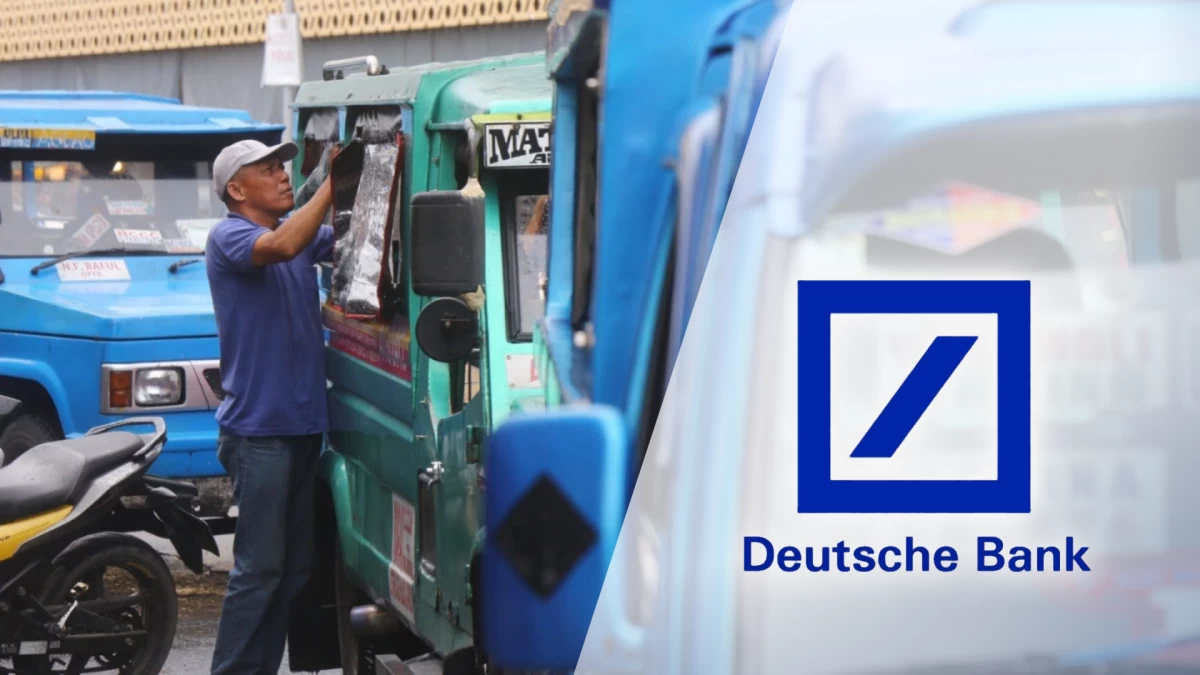
Further increasing the key borrowing cost to five percent is needed to curb still-elevated price pressures that are hurting consumers’ pockets, Frankfurt-based Deutsche Bank AG said.
Deutsche Bank Research joined the hawkish consensus, pricing in a quarter-point hike at the monetary authorities’ fourth policy meeting for 2026 on Thursday, Aug. 27, and citing the broader impact of inflation.
“We see another 25-basis-point (bp) policy rate hike to five percent from the Bangko Sentral ng Pilipinas (BSP) on Aug. 27 as necessary to further dampen the impact of price pressures on consumers and stabilize real incomes,” Deutsche Bank said in a commentary published last week.
Recall that the peso’s purchasing power fell to its weakest level on record in April at 0.73, largely driven by price pressures stemming from the United States (US)-Iran tensions. Filipinos’ buying power has yet to fully recover, as it only picked up to 0.74 from May through July—still hovering near record lows.
Based on Deutsche Bank’s assessment, four-fifths of the Philippine consumer basket by weight “are seeing above-trend inflation.” The lender noted that the index persisted despite headline inflation moderating to a three-month low of 6.2 percent in July from the peak of 7.2 percent in April.
“This suggests that inflationary pressure in the Philippines is still broad-based and that spillover effects are likely still working their way through the economy, in our view,” Deutsche Bank said.
Meanwhile, think tank Capital Economics believes the BSP will shift to a dovish mode after raising the benchmark rate one last time on Thursday, citing the worst output growth—excluding the Covid-19 pandemic—since late 2009.
“BSP officials will have one eye on the weakness of the economy,” said Jason Tuvey, deputy chief emerging markets (EMs) economist at Capital Economics. “Alongside the hit to consumer spending due to the energy shock, the economy is struggling with the effects of President Marcos’ anti-corruption campaign.”
After the expected last quarter-point hike, Tuvey stressed that monetary authorities will revert to easing once oil prices normalize.
Singapore-based DBS Bank Ltd., meanwhile, leaned toward tightening, suggesting there remains no “convincing” trend that would reinforce a pause. “Officials would likely prefer to see a more convincing disinflationary trend before drawing a pause,” DBS chief economist Taimur Baig and senior economist Radhika Rao said.
DBS pointed to the balancing act required to address the above-target inflation prints and below-target gross domestic product (GDP) growth figures. It added that the peso’s drift to record lows, alongside the resurgence of oil price hikes, strengthens the call for a “pre-emptive tightening response.”
“Beyond a likely hike in August, our baseline forecast is for one more hike within the year before slipping into a prolonged pause,” DBS said. “Policymakers will monitor signs of a potential shift in the US Federal Reserve’s (Fed) policy bias as well as US yield movements in the near term.”
In contrast, Pantheon Macroeconomics said the disappointing second-quarter GDP outturn, coupled with sustained disinflation, “will be just about enough to dissuade the BSP from hiking further next week.”
From the dovish camp, Pantheon Macroeconomics expects interest rates to remain steady at the current 4.75 percent level through the end of 2026.
Pantheon Macroeconomics chief emerging Asia economist Miguel Chanco and Asia economist Meekita Gupta lowered their full-year 2026 growth forecast for the Philippines to 2.8 percent—falling short of the already-lowered government growth target of 3.5 to 4.5 percent.
“We have reduced our 2026 growth forecast to 2.8 percent from four percent, and 2027 to four percent from five percent, as the recovery looks set to be even more lackluster than we previously thought,” Chanco and Gupta said. Even their 2027 projection falls short of the revised target.
“Any investment bounce in the second half is likely to be minor, with industry and construction still operating at below-average capacity and, unsurprisingly, surveyed expansion plans remaining depressed amid plummeting business confidence and flat-at-best market sentiment,” they further said, adding that the slump in public construction has yet to show signs of reaching its lowest point.