






Manila Bulletin
 Philippines
National
VP Sara's death threat vs Marcos a national security concern, Palace says
Philippines
National
VP Sara's death threat vs Marcos a national security concern, Palace says
Philippines
National
VP Sara's death threat vs Marcos a national security concern, Palace says
VP Sara's death threat vs Marcos a national security concern, Palace says
Published Jul 15, 2026 04:24 pm


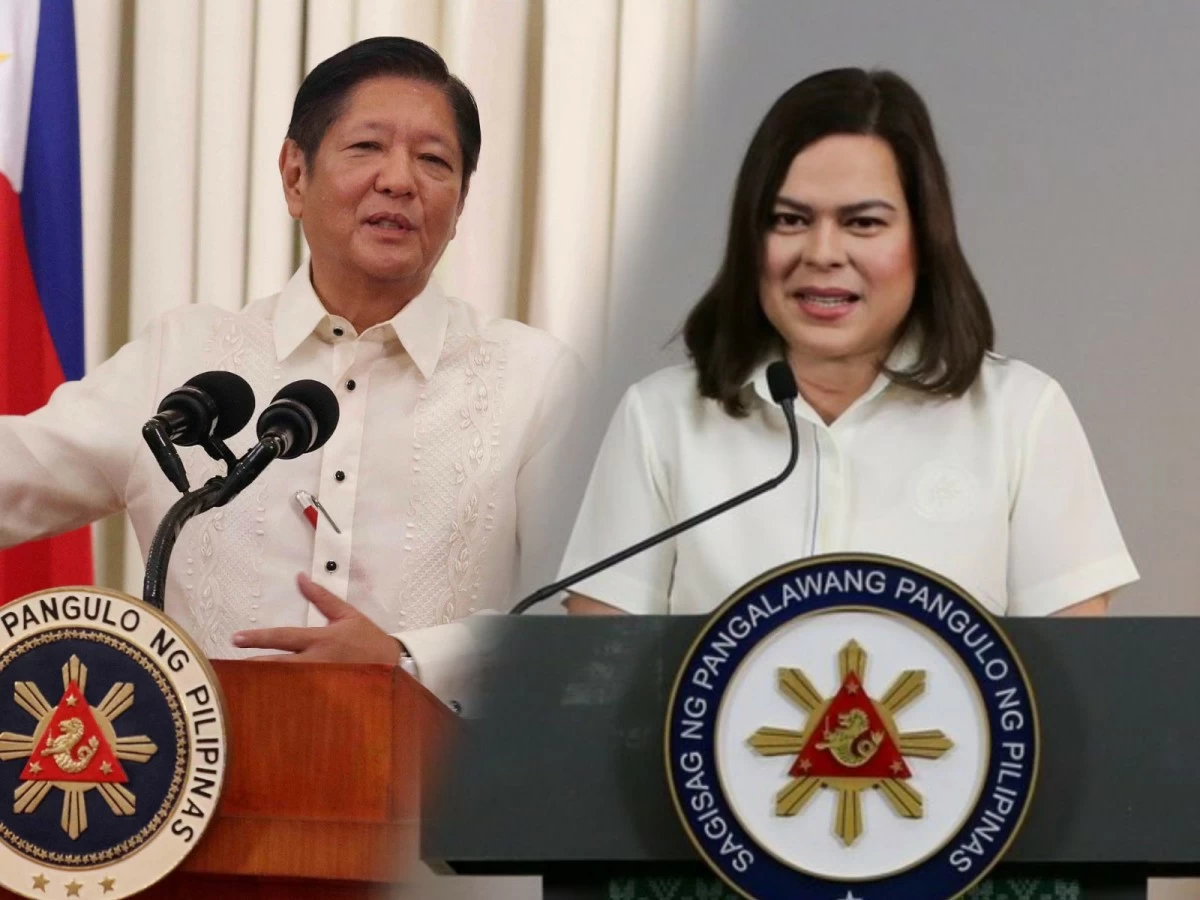
President Ferdinand R. Marcos Jr. and Vice President Sara Duterte (MANILA BULLETIN/Mark Balmores)
Malacañang said Vice President Sara Duterte's death threat to President Marcos was not a mere grave threat, but a national security concern.
"It was not merely a threat," Palace Press Officer and Communications Undersecretary Claire Castro said, stressing that it is na "issue of national security."
"Hindi ito simpleng grave threats na maaaring isampa diyan sa korte. Hindi involved dito ang simpleng tao. Ang pinag-uusapan po natin dito ay pangulo. Ito ay isyu about national security (This is not a simple case of grave threats that can merely be filed in court. This does not involve ordinary private individuals. We are talking about the President. This is an issue of national security)," Castro said in a Palace briefing on Wednesday, July 15.
The Palace spokesperson further said that the Vice President's remarks could only be interpreted as threats.
She also stressed that the threat came from the country's second-highest official and was directed at its highest-ranking official.
"Kung ito ay hindi threats, ano pa ba ang maaari nating i-define sa salitang threats? So, ang ganitong klase na pagresponde ay normal at dapat na i-justify at i-tolerate (If these are not threats, then what else can we define as threats? Should this kind of response be considered normal, justified, or tolerated)?" Castro questioned.
"Tandaan po natin, ang pinagbantaan dito—hindi lang actually pagbabanta dahil may kinausap na na tao na handang pumatay—ang sinabihan, ang tao na nais ipapatay ay ang Pangulo, First Lady at dating House Speaker (Let us remember that this was not merely a threat. There was allegedly a person who had already been approached and was supposedly willing to carry out the killing. The people who were allegedly targeted were the President, the First Lady, and the former House Speaker)," Castro added.
The Palace official also questioned Duterte's reiteration that the complaints against her are not supported by evidence. In a statement, Duterte said that "repeatedly insisting that there is a threat, claiming that there was an assasination plot, and fabricating evidence to support such claims will not make those stories true."
Castro refuted this saying, "her statements, anger, and admission that she spoke with someone who was willing to kill and had an agreement were seen by the whole world."
"Nagkaroon na ng meeting of the minds ang dalawang nagpapapatay at isang willing pumatay (There was already a meeting of the minds between the person allegedly ordering the killing and the person willing to carry it out)," Castro pointed out.
Castro said the existence of the threat should no longer be proven because it came directly from the Vice President.
"Since it was the Vice President who admitted in this video that she had already talked to a person who was willing to kill the President, the First Lady and the House Speaker. Ano pa ba ang dapat na patunayan (What is there to prove)?" Castro said.
"Ang mga pag-amin na ganito ayon sa Rules of Court, kapag may pag-amin at dyina-justify lamang nila dahil mismong ang abogado niya ang nag-justify kung bakit niya nasabi ang ganoong klaseng mga salita, unconventional, hindi normal na pagkilos at pananalita o pag-react, ang burden of evidence ay nagshi-shift sa tao na umamin na siya ay magpapapatay (Under the Rules of Court, admissions such as this, where a person makes an admission and merely justifies it, as her own lawyer did in explaining why she made such statements, are considered unconventional and not a normal way of acting, speaking, or reacting. The burden of evidence then shifts to the person who admitted that she would have someone killed)," Castro explained.
The Palace mouthpiece also dismissed the argument, claiming that the threat was never aimed directly to the President, the First Lady, and the former House Speaker.
"Isang katawa-tawa ang ganiyang mga pahayag. Unang-una, hindi ito lihim; lahat ng tao halos nakapanood, hindi lang sa Pilipinas kung hindi sa buong mundo (Such statements are laughable. First of all, this was not done in secret; almost everyone saw it, not only in the Philippines but around the world)," Castro said.
She further explained that the "grave threats are consummated once the person being threatened becomes aware of them."
Castro added that under grave threats, "even if the person being threatened is not physically present, as long as he becomes aware of the threat, the crime is considered consummated."
"Uulitin natin, hindi ito simpleng grave threats. Ito ay mayroong kaugnayan sa national security ng ating bansa (Let us repeat: this is not merely a case of grave threats. This is an issue that is connected to the national security of our country)," she reiterated.