






Manila Bulletin
 Lifestyle
Food
Spanish chefs and culinary experts bring premium gastronomy to Manila
Lifestyle
Food
Spanish chefs and culinary experts bring premium gastronomy to Manila
Lifestyle
Food
Spanish chefs and culinary experts bring premium gastronomy to Manila
Spanish chefs and culinary experts bring premium gastronomy to Manila
Spain Fusion at The Westin Manila featured cooking demonstrations, wine pairings, and deep dives into Spain's most celebrated ingredients
Published May 15, 2026 12:06 am


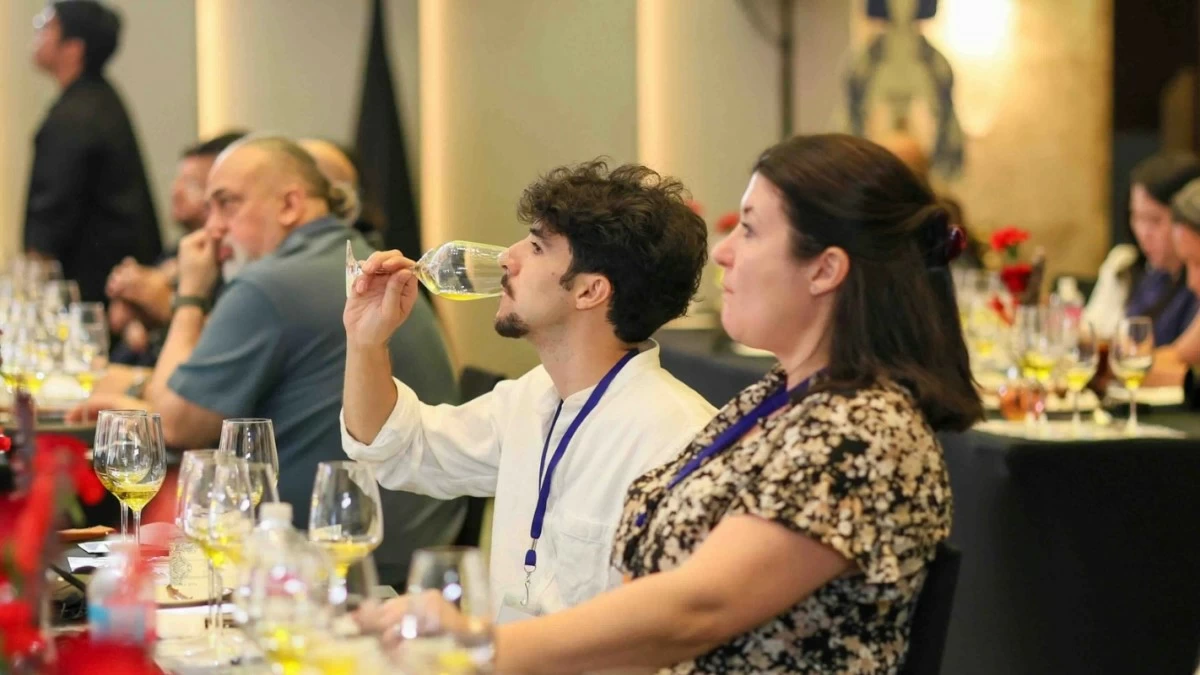
A TASTE OF SPAIN Guests at 'Spain Fusion: The Premium Experience' sample Spanish wines while learning about the country’s rich gastronomic traditions. (Photo: Spain Fusion)
One realizes very quickly, sitting through “Spain Fusion: The Premium Experience” at The Westin Manila, that this was not simply another luxury food showcase where chefs fly in, cook a few pretty plates, smile for photographs, and leave. What unfolded instead was closer to a masterclass on how deeply layered Spanish gastronomy can be, especially when explained by the people who have spent decades shaping it.
And for this author, admittedly already saturated with years of restaurant launches, tasting menus, and chef collaborations, that proved genuinely impressive.
There were flavors here I had hitherto not encountered elsewhere, or at least not presented in quite the same way. What struck me most was a demonstration discussing the use of anchovy not as a dominant ingredient, but as a flavor builder, something that could deepen sauces, sharpen savory notes, and create complexity without announcing its presence. It was one of those deceptively simple culinary lessons that immediately changes how one thinks about food.
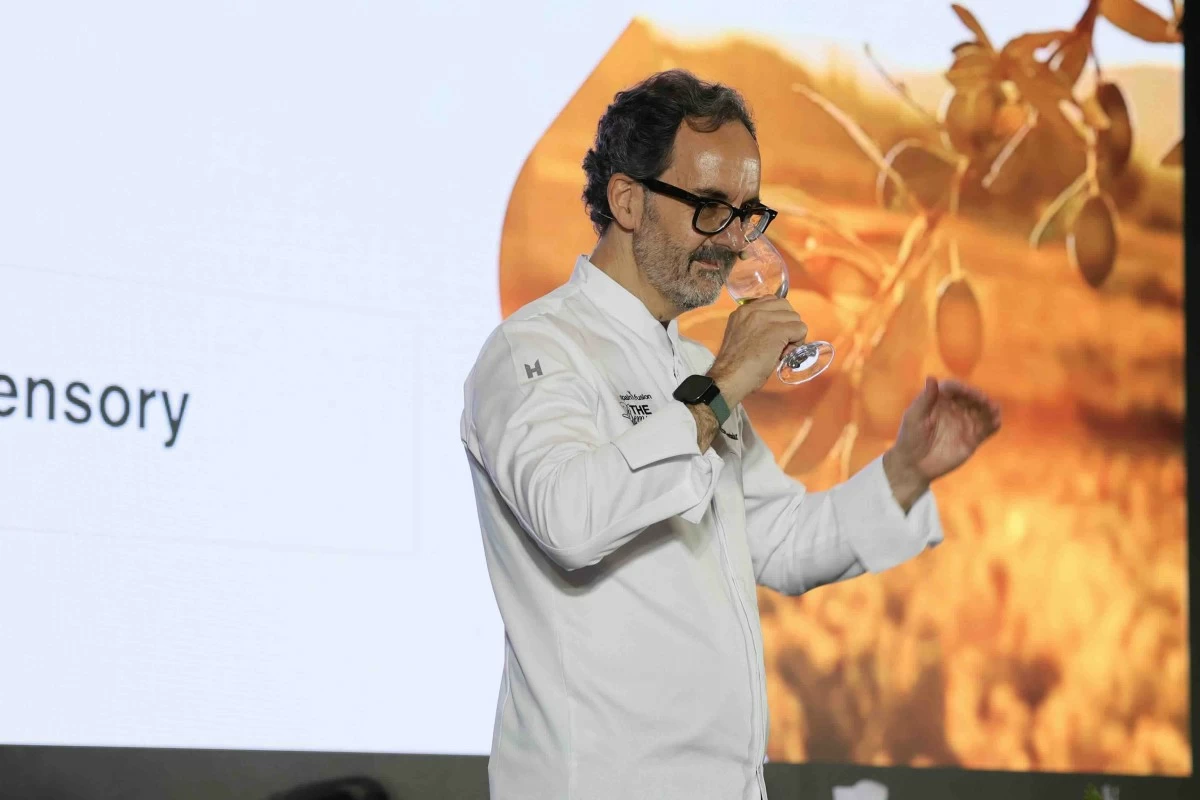
LIQUID GOLD Alfonso Fernández explores the heritage and complexity of extra virgin olive oil through a sensory tasting of Andalusian varieties. (Photo: Spain Fusion)
Organized by Vocento Gastronomía, the group behind Madrid Fusión, and supported by Foods and Wines from Spain, Spain Fusion brought together some of the most respected names in Spanish gastronomy for a day of tastings, demonstrations, and conversations centered on premium Spanish ingredients. The event, held on April 20 at The Westin Manila, gathered chefs, restaurateurs, distributors, journalists, and hospitality professionals in one room, all eager to taste and understand why Spanish cuisine continues to hold such influence in global dining.
Among the biggest draws was Albert Adrià, widely regarded as one of the world’s most influential culinary figures and the former creative force behind the legendary elBulli alongside his brother Ferran Adrià. For many in the culinary world, elBulli remains a historical turning point in modern gastronomy. Seeing him in Manila, discussing creativity and flavor, felt surreal.
Also present was Ricard Camarena of Valencia, whose cuisine centers on local produce and seafood, earning him Michelin stars and national recognition in Spain. Meanwhile, Manila’s own chef José Luis “Chele” González served as a fitting bridge between Spanish culinary traditions and the Philippine dining scene. Chele, whose Gallery by Chele has become one of the country’s most respected restaurants, spoke passionately about ingredients, travel, and his continuing fascination with Filipino flavors and producers.
What made the event compelling, however, was not simply the star power. It was the obsessive attention paid to ingredients often taken for granted.
Olive oil, for instance, was treated not merely as a pantry staple but almost like wine, something to be analyzed, discussed, and tasted carefully. Alfonso Fernández, introduced amusingly yet accurately as a “food fetishist,” led discussions on Spanish olive oils with the precision of a sommelier. One begins to realize how casually most of us use olive oil without truly understanding the range of flavors, textures, bitterness, fruitiness, and aromas different varieties can carry.
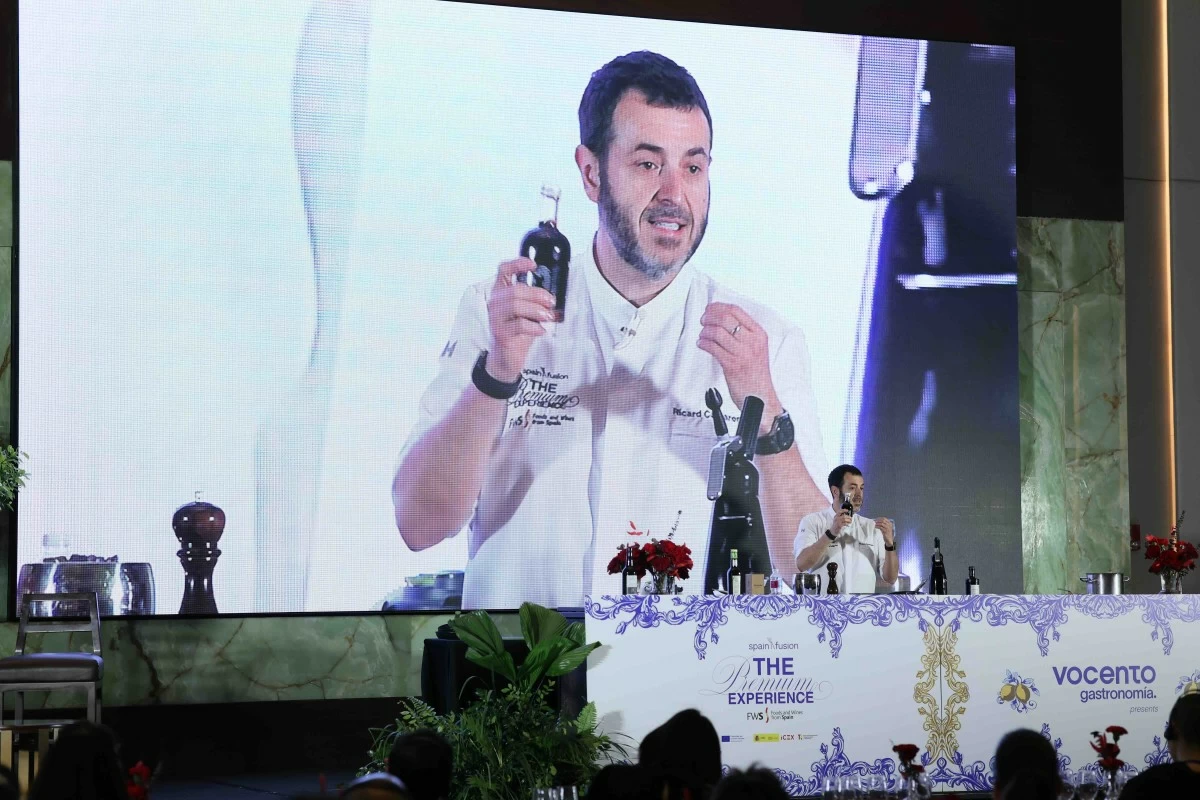
MICHELIN MOVES Ricard Camarena demonstrates his ingredient-driven approach to Spanish cuisine. (Photo: Spain Fusion)
Likewise, the presentation by Rosa Vañó of Castillo de Canena Olive Juice revealed just how competitive and exacting the world of premium olive oil has become. Her company, now distributed in more than 60 countries, has accumulated a staggering list of awards and distinctions, including repeated recognition from international olive oil guides and competitions. Listening to her discuss olive oil with the same reverence others reserve for vintage wine underscored how seriously Spain approaches its culinary heritage.
Wine, naturally, also occupied an important place in the event. Fernando Mora, one of Spain’s few Masters of Wine, spoke about wine not in intimidating technical jargon but as an emotional expression of land and geography.
Beyond the masterclasses and demonstrations, Spain Fusion also reflected the increasingly global direction of the Philippine dining scene itself. The organizers pointed to how Filipino diners are becoming more willing to explore premium ingredients and elevated culinary experiences, especially those centered on quality, freshness, and health. That appetite was clearly visible throughout the event, where chefs, media, restaurateurs, and food enthusiasts moved eagerly between tastings and discussions.
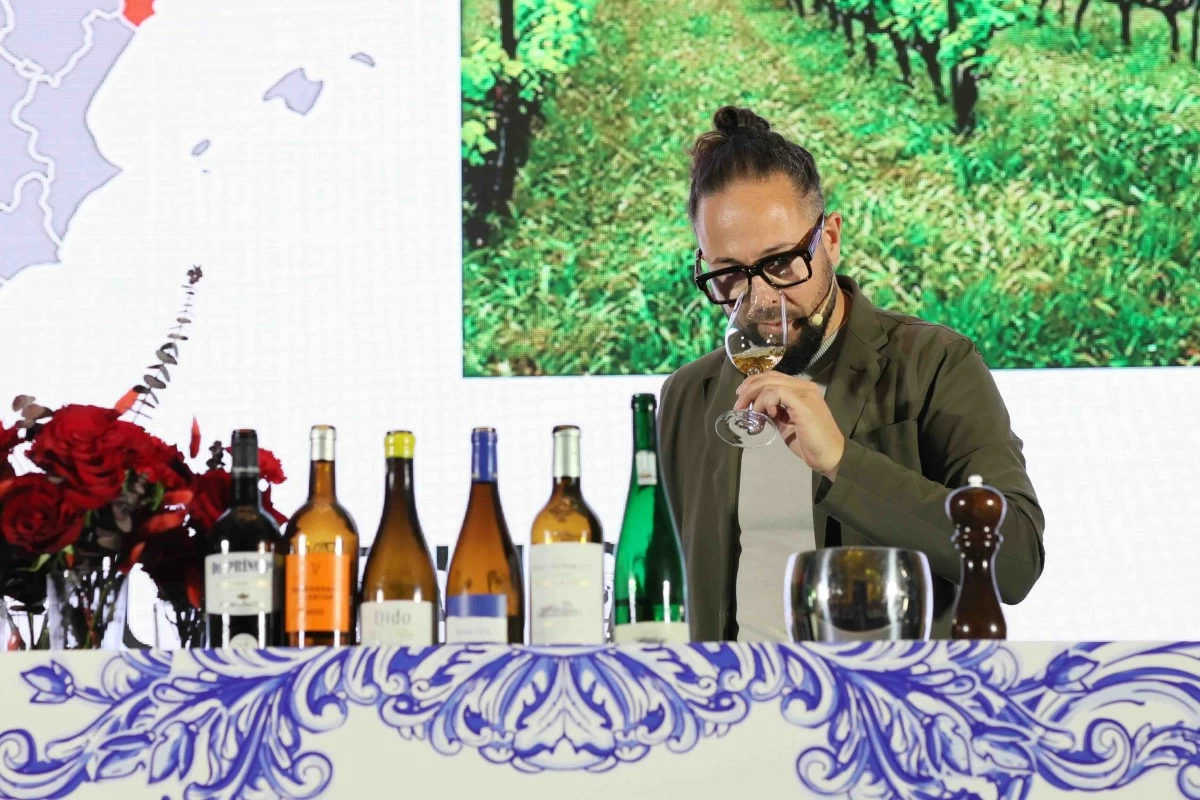
POUR DECISIONS Fernando Mora leads guests through a tasting of Spanish red and white wines during (Photo: Spain Fusion)