






Manila Bulletin
 Philippines
National
Catholic schools flag challenges in DepEd's three-term academic calendar shift
Philippines
National
Catholic schools flag challenges in DepEd's three-term academic calendar shift
Philippines
National
Catholic schools flag challenges in DepEd's three-term academic calendar shift
Catholic schools flag challenges in DepEd's three-term academic calendar shift
CEAP, CBCP-ECCE urge readiness and clear targets in new school calendar for SY 2026–2027
Published Mar 30, 2026 02:59 pm


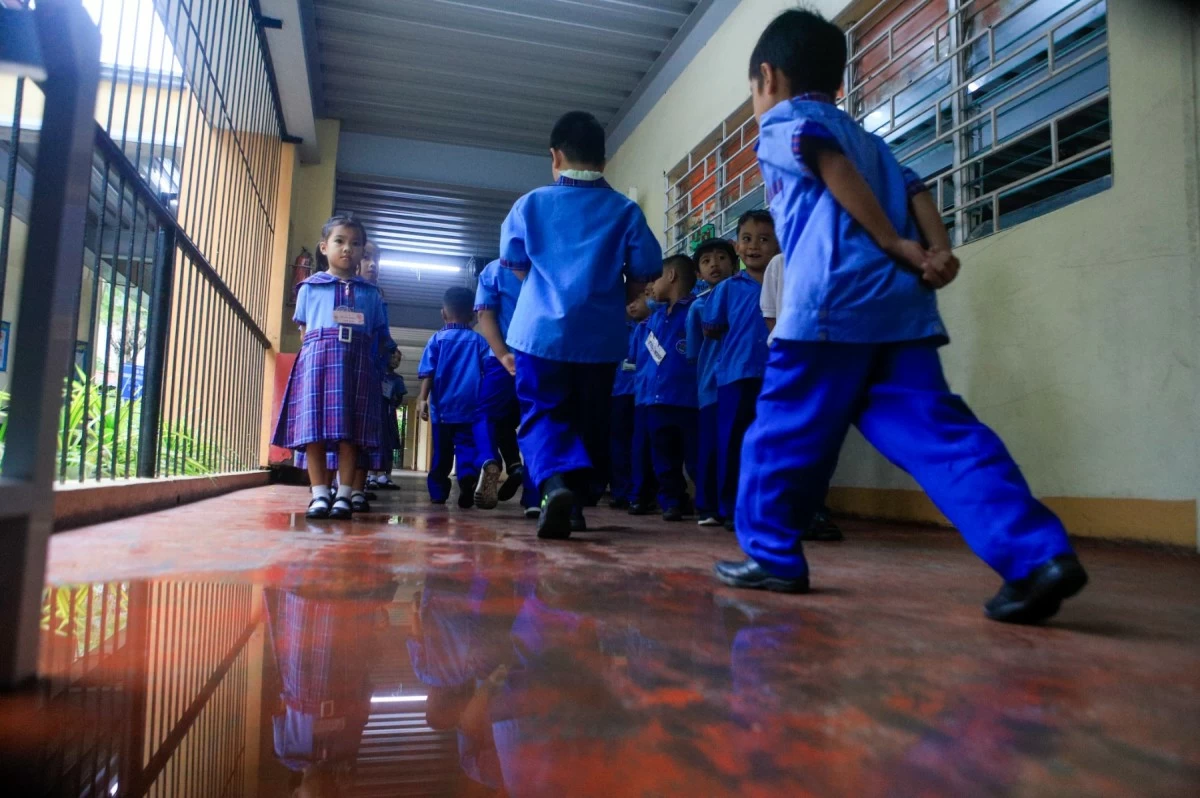
Private school groups urge readiness and clear learning targets as the Department of Education (DepEd) prepares to implement a three-term academic calendar for School Year (SY) 2026–2027. (Manila Bulletin/file)
As the Department of Education (DepEd) prepares to implement a three-term academic calendar for School Year (SY) 2026–2027, Catholic schools are raising concerns over potential challenges.
This has prompted the Catholic Educational Association of the Philippines (CEAP) and the CBCP Episcopal Commission on Catholic Education (CBCP-ECCE) to call for stronger system readiness, well-defined learning targets, and a phased transition.
In a joint statement issued on Monday, March 30, CEAP and CBCP-ECCE expressed cautious support for DepEd’s shift to a three-term academic calendar beginning in the upcoming school year, emphasizing that system readiness—not scheduling—will determine the reform’s success.
READ:
More than a 'schedule adjustment'
The groups acknowledged that the move is part of broader efforts to improve the country’s basic education system and align reforms with national development goals.
However, they stressed that transitioning from the current four-quarter structure to a three-term calendar is “not merely a scheduling adjustment,” but a systemic transformation requiring alignment across curriculum design, teaching strategies, and assessment frameworks.
“While we recognize the intent to recalibrate academic terms in support of learning recovery and system efficiency, we underscore that the true measure of this reform lies not in the calendar itself, but in the system’s readiness to redesign teaching, learning, and assessment around it,” the groups said.
“The shift from a four-quarter to a three-term structure is not merely a scheduling adjustment, but a systemic transformation that demands coherence across curriculum, pedagogy, and assessment,” they added.
The organizations cited discussions from the Second Congressional Commission on Education (EDCOM 2), underscoring that reforms of this scale must be evidence-based, consultative, and supported by sustained capacity-building to ensure that learning outcomes are not compromised.
READ:
Clear learning targets needed
CEAP and CBCP-ECCE warned that restructuring academic time without revising the curriculum could lead to unintended consequences, including compressed lessons, reduced mastery of competencies, and increased pressure on both students and teachers.
“Time redistribution without corresponding curriculum reconstruction risks shallower coverage, accelerated pacing without mastery, increased assessment pressure, reduced remediation time, and heightened teacher fatigue,” the groups said, pointing to real classroom challenges when structural reforms outpace instructional readiness.
The groups called for clearly defined and measurable learning targets, emphasizing that competencies must remain developmentally appropriate and that assessments should meaningfully reflect student learning.
“These risks are not theoretical but reflect the lived realities of classrooms when structural reforms outpace instructional readiness,” CEAP and CBCP-ECCE said.
They added that instructional time must be used strategically to support both academic achievement and student well-being.
“Learning targets must be carefully recalibrated, ensuring that competencies are developmentally appropriate, assessments are meaningful, and instructional time is used strategically,” they added.
Moreover, the groups emphasized that the success of the proposed calendar reform should be measured by improved learning outcomes, stronger teacher effectiveness, and sustained holistic development among learners—not merely compliance with a revised schedule.
“Reform must ultimately be judged not by compliance with a new calendar, but by its capacity to improve learning outcomes, strengthen teacher effectiveness, and sustain student well-being,” the groups said.
READ:
Gradual, coordinated transition urged
CEAP and CBCP-ECCE also highlighted the need for a phased and well-supported transition, noting that schools will require sufficient time to remap curricula, recalibrate assessment systems, and train educators.
“Sufficient transition time is indispensable, allowing schools to engage in curriculum remapping, recalibrate assessment frameworks, invest in teacher formation, and align institutional systems and resources,” the groups said.
While the proposed three-term calendar will be mandatory for public schools and optional for private institutions, CEAP warned of potential disruptions across the broader education ecosystem.
“Divergent academic calendars may create challenges in student mobility, college admissions alignment, teacher deployment, and even household planning,” the groups said.
They further pointed out that private schools often operate within local government contexts that may require participation in community activities, which could conflict with new academic schedules.
“These realities underscore that private schools operate within complex social and regulatory environments,” the groups added.
READ:
Call for dialogue and policy sensitivity
In closing, the groups urged continued dialogue among education stakeholders and policymakers, advocating a research-informed, phased implementation approach that respects institutional diversity.
They also emphasized the need for coordination across sectors to prevent reforms from creating fragmentation within the education system.
“Beyond restructuring time, the reform must be anchored on clear and measurable targets that safeguard depth of learning and holistic development,” the groups said.
CEAP is the largest national association of Catholic schools in the country, representing more than 1,500 institutions across all 17 regions. CBCP-ECCE is the official arm of the Philippine bishops for catechesis and Catholic education.
RELATED STORY: