






Manila Bulletin
 Philippines
National
DepEd: Three-term school calendar aims to improve instructional time, reduce classroom disruptions
Philippines
National
DepEd: Three-term school calendar aims to improve instructional time, reduce classroom disruptions
Philippines
National
DepEd: Three-term school calendar aims to improve instructional time, reduce classroom disruptions
DepEd: Three-term school calendar aims to improve instructional time, reduce classroom disruptions
'Strategic move' to enhance learning continuity, underwent a consultative process
Published Mar 24, 2026 12:33 pm
|
Updated Mar 24, 2026 01:49 pm


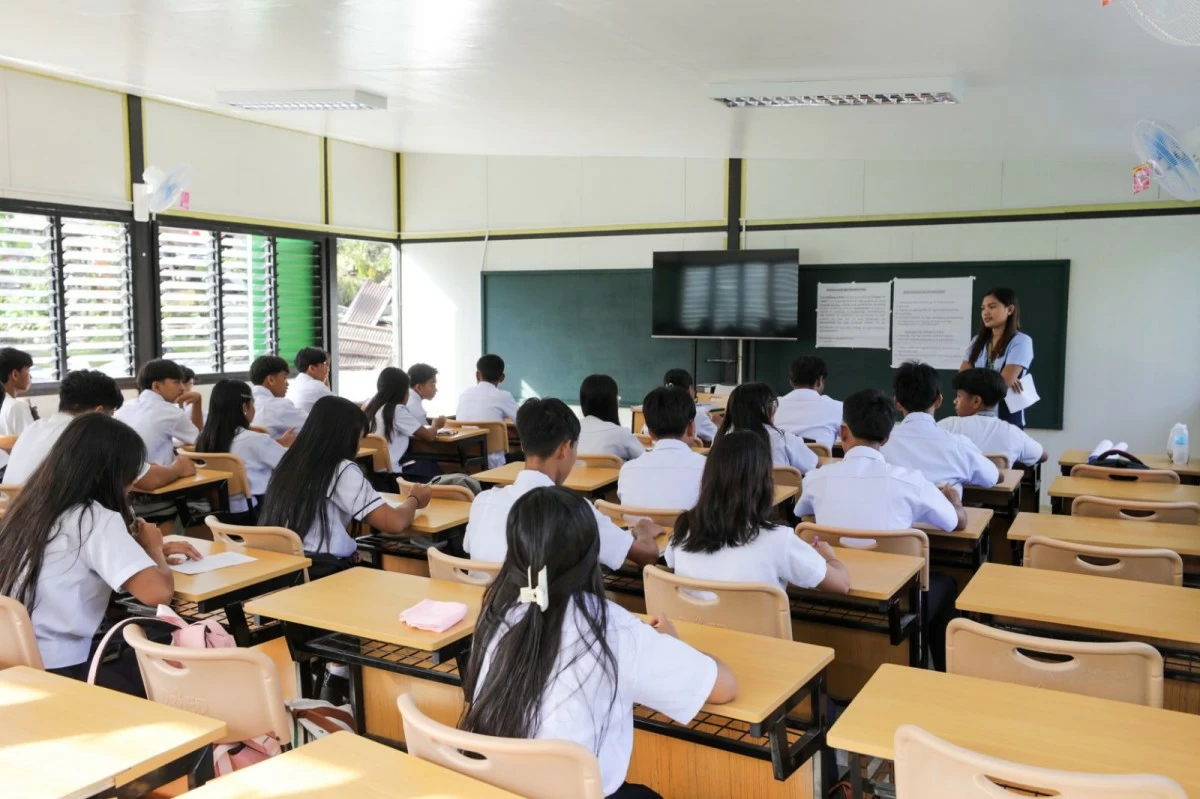
The Department of Education (DepEd) clarified its three-term school calendar reform for SY 2026–2027, citing improved instructional time, reduced classroom disruptions, and stronger learning continuity. (DepEd photo)
The Department of Education (DepEd) on Tuesday, March 24, defended its planned shift to a three-term school calendar beginning School Year 2026–2027, describing the reform as a “strategic move” to maximize instructional time, minimize recurring classroom disruptions, and strengthen learning continuity following an extensive consultative process with key stakeholders.
“The policy is a result of exhaustive, multi-level consultations with teachers, school leaders, parents, learners, and representatives from both the public and private education sectors,” DepEd said in a statement.
DepEd clarified that its planned transition to a three-term school calendar will begin in School Year 2026–2027, with classes set to open in June.
READ:
The agency emphasized that the reform is designed to improve instructional time, ensure learning continuity, and address recurring classroom disruptions.
“DepEd implemented a structured approach, including an orientation cascade from the Central Office down to the division levels, to ensure that field feedback was systematically gathered for policy development,” the agency explained.
DepEd said the shift is grounded in extensive, multi-level consultations involving teachers, school heads, parents, learners, and stakeholders from both public and private education sectors.
The agency adopted a structured approach, including an orientation cascade from the Central Office down to division levels, to systematically gather field feedback and refine the policy.
Data-driven reform to address learning disruptions
DepEd explained that the calendar reform responds to persistent disruptions affecting classroom instruction.
“The shift comes as a response to data highlighting the frequency of disruptions and the uneven pacing of instruction in the current school calendar,” DepEd said.
Citing the Second Congressional Commission on Education (EDCOM II) Year One Report, DepEd noted that in SY 2023–2024, 53 of 180 school days were lost due to weather disturbances and other non-instructional interruptions.
DepEd said this loss—equivalent to nearly three months of schooling—resulted in compressed lessons and reduced opportunities for learners to engage fully with the curriculum.
“To reclaim this lost time, the new three-term school calendar introduces a more structured school year,” DepEd said.
READ:
Three-term structure to improve pacing and organization
To recover lost instructional time, DepEd will introduce a more structured academic calendar composed of three key blocks: Opening Block, which focuses on learner profiling, baseline assessments, and administrative preparation; Instructional Blocks, which are longer, uninterrupted periods dedicated to teaching and learning; and End-of-Term Blocks, which are allocated for targeted interventions, teacher professional development, and wellness activities.
“This structure provides a more organized and predictable flow of instruction, allowing learners to engage more fully with lessons while giving schools clearer space for both teaching and support activities,” DepEd said.
READ:
Teacher welfare and workload management prioritized
Beyond improving student outcomes, DepEd underscored that the reform also seeks to protect teacher welfare by clearly separating instructional and administrative tasks.
Under the new calendar, grading cycles will be streamlined; administrative and reporting requirements will be scheduled within designated periods; and professional development and wellness activities will be institutionalized.
“By designating timeframes for professional development and wellness, DepEd seeks to reduce the overlap of instructional and administrative duties that often leads to teacher burnout,” DepEd said.
Part of broader basic education reforms
DepEd stressed that the three-term school calendar is “not a stand-alone policy” but part of a broader reform agenda to strengthen basic education.
These include accelerated classroom construction, expanded school-based feeding and nutrition programs, strengthened literacy and learning recovery initiatives, improved provision of learning resources, policies supporting continuity of classes, and ongoing consultations and transition planning.
As implementation for SY 2026–2027 approaches, DepEd said it will continue to engage stakeholders, monitor rollout progress, and refine the policy based on field experience.
DepEd also acknowledged proposals such as pilot testing and calibration of digital school forms, noting that these are being considered as part of operational planning to ensure a smooth transition.
READ:
Toward more efficient use of school time
Ultimately, DepEd said the three-term school calendar is intended to optimize the use of time in schools by organizing the academic year into clearly defined periods.
The agency believes this approach will lead to more uninterrupted teaching and learning, structured academic support for struggling learners, and better scheduling of school activities and responsibilities.
With the reform, DepEd aims to create a more resilient and responsive education system capable of adapting to disruptions while maintaining consistent learning delivery.
“By organizing the school year into clearer periods, DepEd aims to ensure uninterrupted teaching and learning, structured academic support for learners, and streamlined scheduling of school activities and responsibilities,” the agency said.
RELATED STORY: