






Manila Bulletin
 Philippines
National
Philippine education roadmap sets 2035 targets: 90% Grade 12 proficiency, 5.5% GDP spending
Philippines
National
Philippine education roadmap sets 2035 targets: 90% Grade 12 proficiency, 5.5% GDP spending
Philippines
National
Philippine education roadmap sets 2035 targets: 90% Grade 12 proficiency, 5.5% GDP spending
Philippine education roadmap sets 2035 targets: 90% Grade 12 proficiency, 5.5% GDP spending
Published Jan 30, 2026 08:22 pm


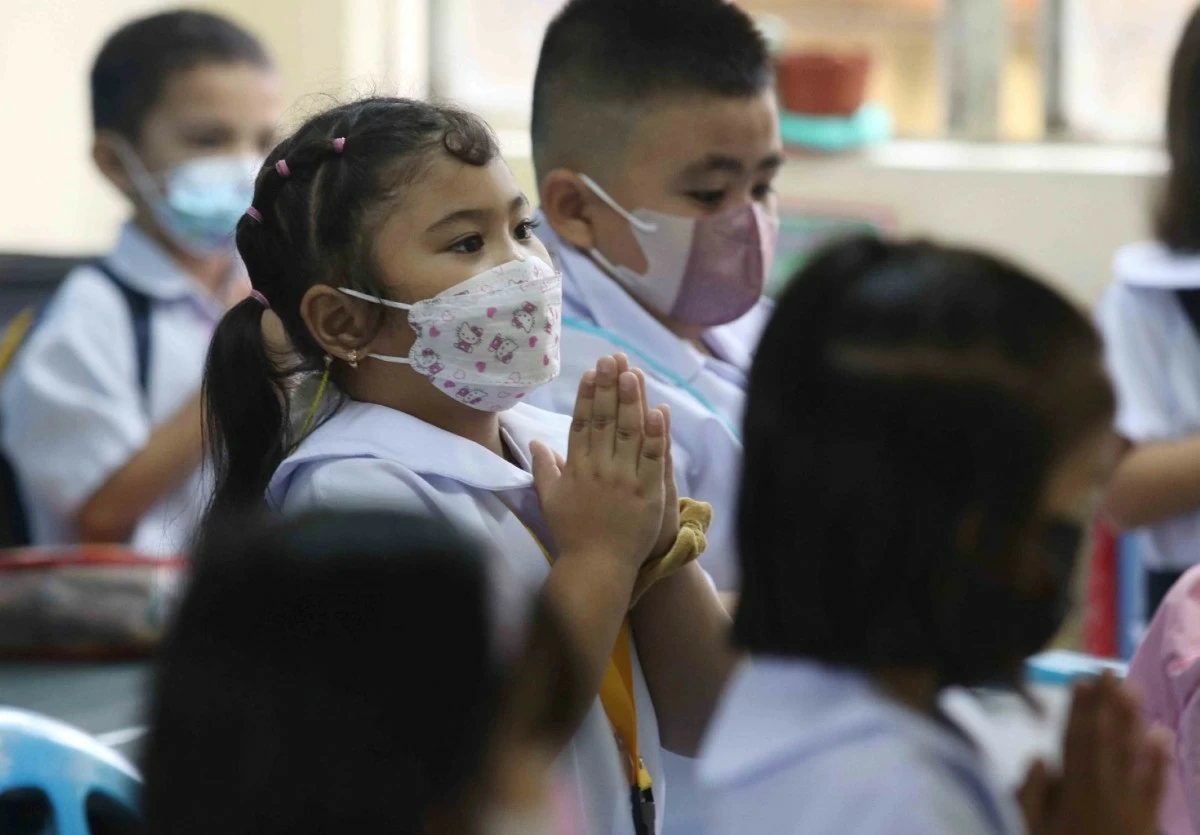
EDCOM II presented the 10-year Philippine education roadmap to President Marcos, targeting 90% Grade 12 proficiency and increased education funding by 2035. (Manila Bulletin / file photo)
A new ten-year national education roadmap has been formally presented to President Marcos, outlining an ambitious strategy to address the Philippines’ deepening learning crisis.
In a statement issued Friday, January 30, the Second Congressional Commission on Education (EDCOM II) said it formally turned over its Final Report, Turning Point: A Decade of Necessary Reform, to the President, presenting a ten-year strategic plan to tackle the country’s education challenges.
At the heart of the plan are bold 2035 targets: raising student proficiency rates to 90 percent and increasing education spending to 5.5 percent of the country’s Gross Domestic Product (GDP).
EDCOM II noted that the National Education and Workforce Development Plan (NatPlan) establishes aggressive, concrete goals to be achieved by 2035, including raising student proficiency rates and boosting education spending.
What the data reveals
Citing national data, EDCOM II revealed a “proficiency collapse,” with only 0.40 percent of Grade 12 students currently passing the National Achievement Test (NAT) at proficient levels.
The roadmap aims to reverse this trend, ensuring that 90 percent of Grade 12 students reach proficiency by 2035, EDCOM II said.
At the primary level, the plan also targets foundational skills: reading proficiency for Grade 3 learners is expected to rise from 47.74 percent to 95 percent, numeracy from 40.49 percent to 85 percent, and overall Early Language, Literacy, and Numeracy Assessment (ELLNA) proficiency from 30.52 percent to 90 percent.
Ending mass promotion, improving learning delivery
EDCOM II emphasized that achieving these targets will require ending the culture of “mass promotion.”
Key interventions include full implementation of the Academic Recovery and Accessible Learning (ARAL) Program, phasing out grade transmutation policies, and revising the Office Performance Commitment and Review (OPCR) metrics of the Department of Education (DepEd), which currently incentivize zero dropouts.
EDCOM II Executive Director Karol Mark Yee said ending “mass promotion” should not be simplistically interpreted as “retaining” students.
“It means vigilantly monitoring struggling students, improving daily lesson delivery, and providing robust remediation and learner support,” Yee said.
“However, it also means enforcing accountability and responsibility: if students have missed too many classes, failed to submit requirements despite repeated reminders, or refused to participate in remediation programs, they should not be automatically promoted. Current practices penalize teachers for giving failing marks, which must change,” he added.
Progressive increase in education funding
The roadmap also addresses decades of chronic underinvestment in education.
While the 2026 budget reaches a historic 4.5 percent of GDP, EDCOM II said the plan calls for a gradual increase to 5.0 percent by 2031 and 5.5 percent by 2035 to align with global benchmarks.
Key financial targets include: an incremental investment of P2.66 trillion over the next decade to fund reforms; closing a projected annual investment shortfall of P623.1 billion by 2035; and reallocating funds toward early childhood and primary education, where per-capita funding is lowest but economic returns are highest.
A decade of institutional discipline
EDCOM II emphasized that the roadmap is a blueprint for action, not just policy recommendations.
“This turning point is not self-executing,” the report noted. “It demands institutional discipline to prioritize functional literacy, learner nutrition, and sustainable investments over non-essential activities,” it added.
The report also stressed that “the learning crisis we now confront is not an inevitable fate” and “requires a decade of unwavering commitment so that the education system once again becomes a credible engine of opportunity for every Filipino child.”
RELATED STORY: