






Manila Bulletin
 Philippines
National
From school feeding to teacher promotions: How record funding is transforming DepEd in 2026
Philippines
National
From school feeding to teacher promotions: How record funding is transforming DepEd in 2026
Philippines
National
From school feeding to teacher promotions: How record funding is transforming DepEd in 2026
From school feeding to teacher promotions: How record funding is transforming DepEd in 2026
Record P1.3-trillion education budget fuels historic DepEd reforms under Marcos, Angara
Published Jan 30, 2026 03:16 pm


At A Glance
- DepEd launched nationwide feeding for all Kindergarten and Grade 1 students to boost learning readiness
- Over 16,000 teachers have been promoted, with 100,000 targeted in 2026 under the Expanded Career Progression System
- DepEd addresses shortages via LGU partnerships, doubled Last Mile Schools funding, and bamboo-made furniture
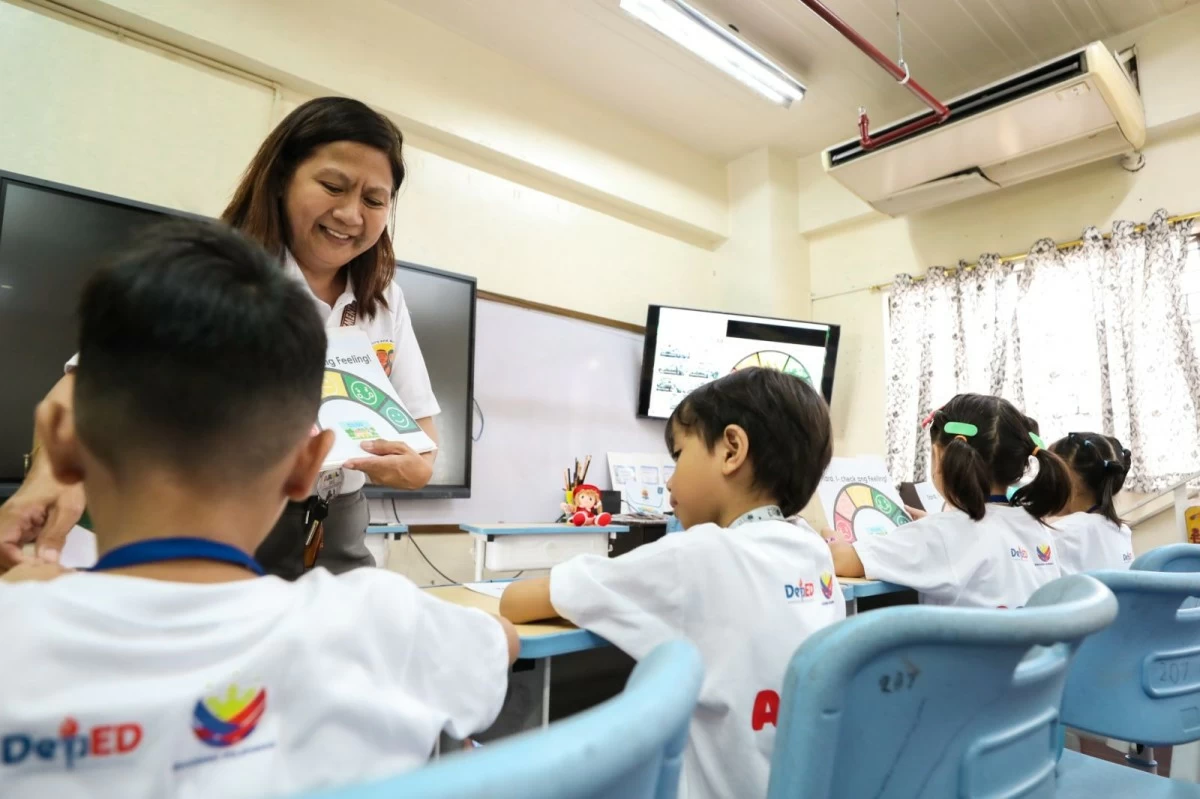
The Department of Education (DepEd) rolls out historic reforms in basic education, prioritizing learner support, school facilities, and professional growth for educators. (DepEd photo)
A historic P1.3-trillion education budget is driving sweeping reforms across the Department of Education (DepEd) this year—empowering programs from expanded school feeding and classroom support to accelerated teacher promotions and higher pay under the administration’s push to strengthen basic education and improve learning outcomes nationwide.
In a statement issued Friday, January 30—a day after EDCOM II turned over its Final Report to President Marcos—DepEd said that long-identified reforms in Philippine basic education are now moving into full-scale implementation.
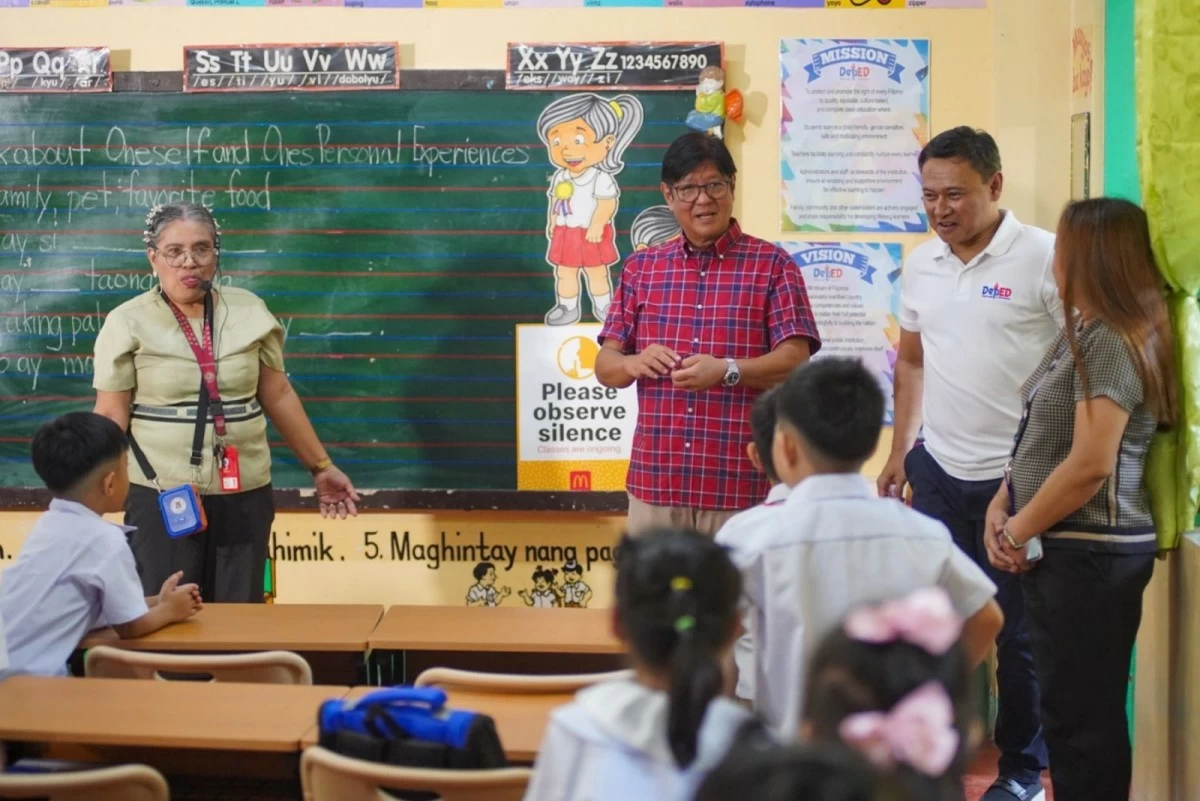
DepEd Secretary Sonny Angara spearheads long-awaited education reforms under President Marcos, leveraging record funding to boost learning recovery, teacher development, and school infrastructure. (DepEd photo)
DepEd said it is rolling out sweeping structural changes backed by the largest education budget in the country’s history under President Marcos and DepEd Secretary Sonny Angara.
Record funding
DepEd noted that with the start of Fiscal Year 2026, the education sector received a record P1.3 trillion national allocation—equivalent to 4.36 percent of the country’s Gross Domestic Product (GDP)—marking the first time the Philippines has surpassed global benchmarks for education spending.
DepEd said its budget alone rose by around 30 percent, the biggest year-on-year increase in its history.
Universal school feeding launched for youngest learners
Given its increased funding, DepEd said one of the major reforms now fully underway is the expansion of the School-Based Feeding Program (SBFP), which has grown from P3.3 billion in 2022 to P25.7 billion in 2026.
The funding jump enables the first-ever universal feeding coverage for all Kindergarten and Grade 1 students nationwide, effectively institutionalizing nutrition as a core part of basic education, DepEd said.
The move, DepEd added, addresses malnutrition’s direct impact on learning readiness and long-term academic performance.
ARAL Program shifts learning recovery into system reform
Learning recovery has also transitioned from a short-term intervention into a nationwide program through the Academic Recovery and Accessible Learning (ARAL) Program, implemented across public schools in School Year 2025–2026, DepEd said.
Focused primarily on improving reading skills, DepEd said early results within three months already showed measurable gains in reading readiness among students in Grades 3 to 10.
For more on the ARAL program’s early impact, read:
To sustain momentum, the government allocated P8.93 billion for ARAL in School Year 2026–2027, according to DepEd.
The funding will support the training and compensation of over 440,000 DepEd and non-DepEd tutors, targeting an estimated 6.7 million learners in reading and mathematics.
Historic teacher promotions rolled out
Teacher career reform has also advanced at scale with the Expanded Career Progression (ECP) System—a long-awaited policy aimed at clearing years-long promotion backlogs while recognizing classroom excellence, DepEd said.
So far, more than 16,000 teachers have been promoted, with another 41,000 applications currently being processed.
The department earlier said it is targeting around 100,000 promotions this year, marking what officials describe as a historic milestone in teacher career advancement.
For more details on the promotion rollout, read:
Classroom gap addressed through flexible infrastructure programs
The 2026 education budget also prioritizes closing the country’s classroom shortage, DepEd said.
Under Angara’s leadership, DepEd pushed for greater flexibility, allowing local government units (LGUs) and civil society organizations to participate directly in classroom construction—an “all-hands-on-deck” approach to school infrastructure development.
More on the DepEd-LGU partnership for classroom construction here:
Funding for the Last Mile Schools Program, which supports geographically isolated and disadvantaged communities, doubled to P3 billion in 2026 from P1.5 billion in 2022, according to DepEd.
In another first, DepEd said it has begun implementing a 16-year-old executive order promoting the procurement of bamboo-made school furniture to speed up classroom equipping, reduce costs, and support local manufacturers.
More on the bamboo furniture initiative:
Health services expanded in schools
Beyond academics, the administration has strengthened school-based access to health services through expanded YAKAP caravans in partnership with PhilHealth, DepEd said.
The program brings primary healthcare services closer to students and school personnel, particularly in underserved and remote communities.
From plans to classroom impact
Amid these developments, Angara emphasized that the reforms are no longer theoretical.
“Ang mahalaga ngayon ay tuloy-tuloy ang pagpapatupad (What is important now is the continuous implementation),” Angara said.
DepEd noted that its reform agenda closely aligns with recommendations from the Second Congressional Commission on Education (EDCOM 2), which earlier flagged the severity of the country’s learning crisis and called for sustained investment in nutrition, learning recovery, teacher support, and school infrastructure.
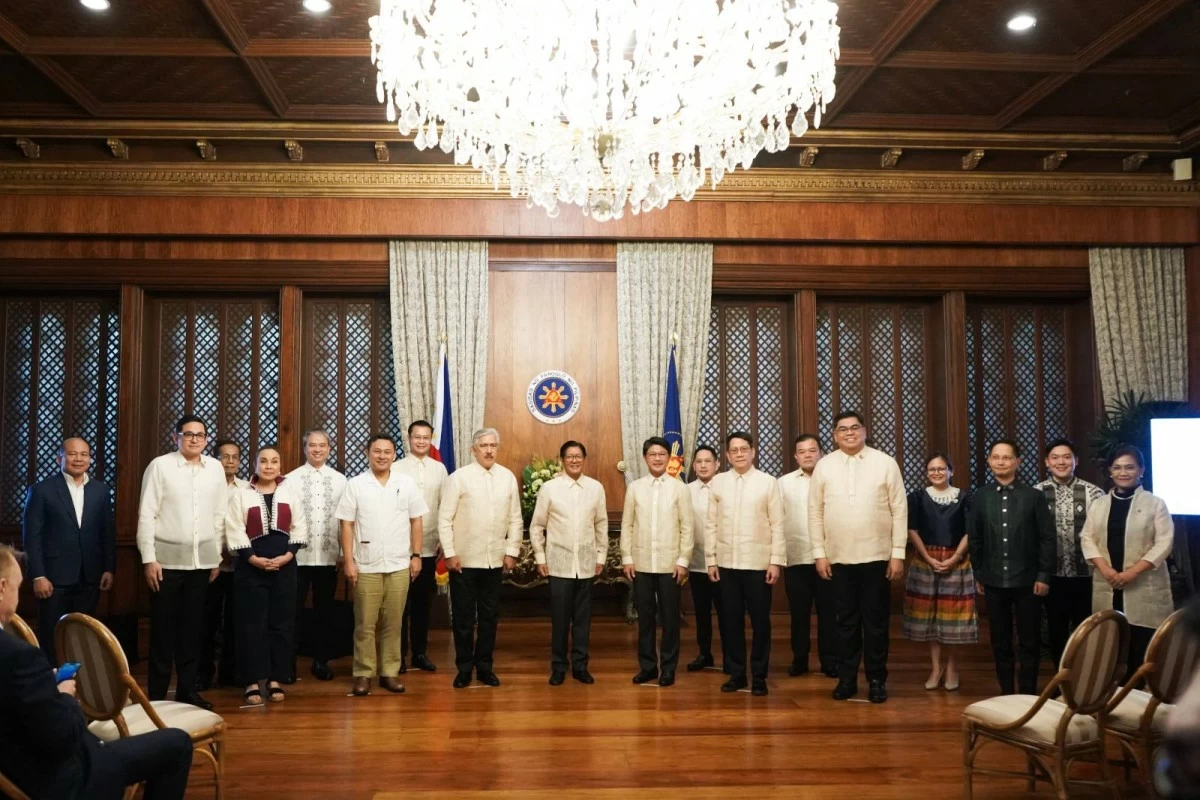
DepEd welcomes EDCOM II recommendations, turning years of policy planning into action with a focus on nutrition, classroom improvements, and teacher career progression. (DepEd photo)
For more details on DepEd’s call to address the learning crisis, read:
For DepEd, the combination of record funding and long-overdue policy implementation signals a turning point for Philippine basic education—shifting from stalled reforms to concrete, funded action with measurable impact.
“Hindi na ito plano lamang—nasa silid-aralan na ang reporma, ramdam ng guro, at may malinaw na epekto sa pagkatuto ng bata (This is no longer just a plan—it is already in the classroom, felt by teachers, and has a clear impact on children’s learning),” Angara said.
RELATED STORY: