






Manila Bulletin
 Philippines
National
Public schools see dramatic reading gains as DepEd's ARAL program takes hold
Philippines
National
Public schools see dramatic reading gains as DepEd's ARAL program takes hold
Philippines
National
Public schools see dramatic reading gains as DepEd's ARAL program takes hold
Public schools see dramatic reading gains as DepEd's ARAL program takes hold
Learning recovery initiative delivers early wins as schools record 30–40% rise in reading proficiency
Published Jan 25, 2026 10:58 am
|
Updated Jan 25, 2026 03:11 pm


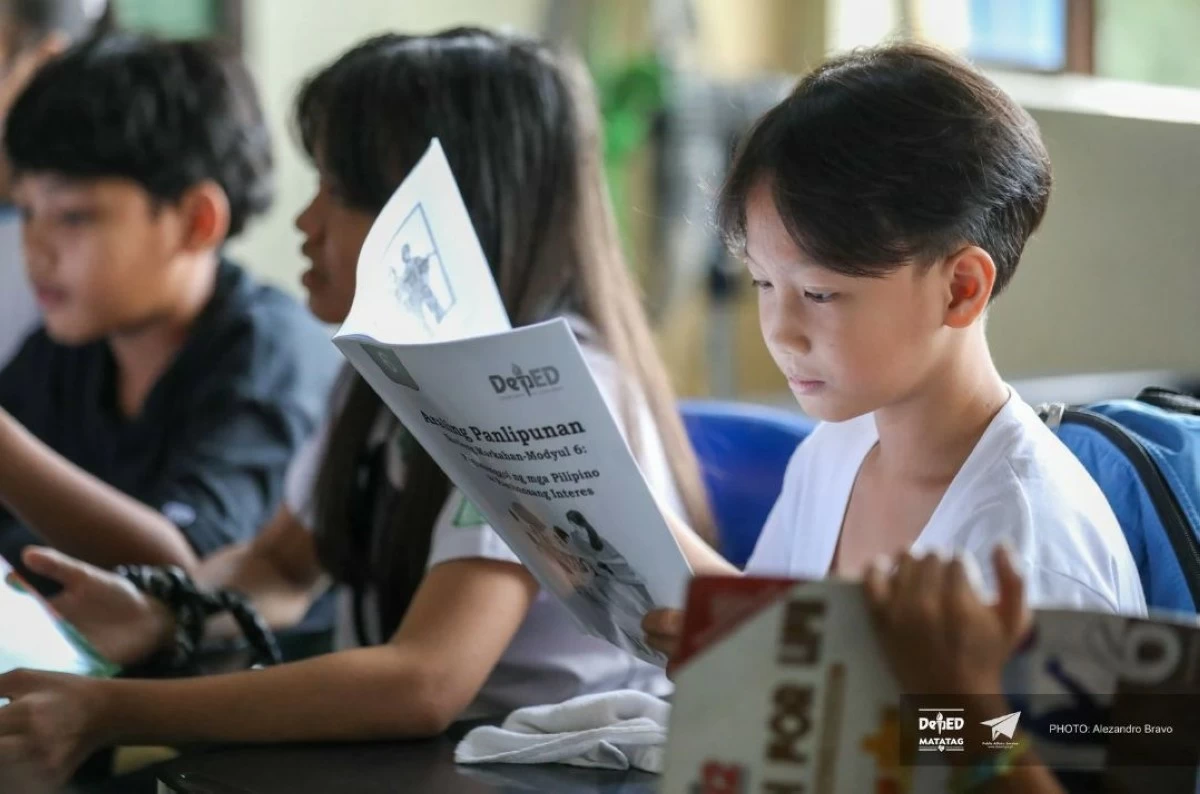
The early success of DepEd’s ARAL Program, EDCOM 2 said, offers a hopeful glimpse into what sustained investment and focused intervention can achieve. (DepEd / file photo)
Just months after its nationwide rollout, the government’s Academic Recovery and Accessible Learning (ARAL) Program is already delivering promising results --- with several public schools across the country posting 30 to 40 percent increases in student reading proficiency and grade-level readiness, according to the Department of Education (DepEd).
Based on the initial analysis of the Middle-of-School-Year (MOSY) assessments for School Year (SY) 2025–2026, DepEd identified the nation’s “Most Improved Schools,” highlighting how targeted learning interventions are rapidly closing long-standing academic gaps—particularly those worsened by the pandemic.
The early success of the ARAL Program, institutionalized through Republic Act No. 12028, offers renewed optimism for the Philippine education sector, which has struggled with learning loss in basic literacy, numeracy, and science skills in recent years. It was rolled out in September 2025.
READ:
From learning gaps to grade-ready learners
At the heart of the ARAL Program is a simple but powerful goal: to ensure that no learner is left behind.
By providing free tutorials, structured remediation, and accessible learning resources to students in Grades K to 10, the program directly targets pupils who fall below grade-level standards.
These efforts are now reflected in tangible improvements across elementary and secondary schools.
In Grades 1 to 3 (Key Stage 1), where foundational reading skills are formed, Malanday Elementary School in Marikina City emerged as the top-performing school nationwide.
At the beginning of the school year, DepEd data showed that only 57.26 percent of its learners were classified as “Developing, Transitioning, and Grade-Level Ready.” By the middle of the year, that figure surged to 94.03 percent—representing a remarkable 36.77 percent increase in reading readiness.
Similar progress was recorded in other parts of the country.
Don Gregorio Evangelista Memorial School in Zamboanga City, for instance, improved its readiness rate by 19.06 percent, while Mamatid Elementary School in Cabuyao City and Juan Sumulong Elementary School in Antipolo City also ranked among the most improved.
Near-universal readiness in upper elementary
The momentum continued in Grades 4 to 6 (Key Stage 2), where Melencio M. Castelo Elementary School in Quezon City set a new benchmark by achieving 100 percent readiness in the “Total Grade-Ready + Two Levels Down” category.
This represented an improvement of nearly 30 percent from the start of the school year, underscoring how focused interventions can lead to near-universal learning recovery within a short period.
DepEd noted that these improvements are crucial, as the upper elementary years serve as a bridge between basic literacy and more complex academic skills.
High schools post dramatic turnarounds
Perhaps, the most striking gains were seen at the secondary level.
In Grades 7 to 10 (Key Stage 3), DepEd data showed that San Jose National High School in Antipolo City recorded a 38.30 percent increase in learner readiness—rising from 61.70 percent in the Beginning-of-School-Year (BOSY) assessments to 100 percent by MOSY.
Meanwhile, Tanza National Comprehensive High School in Cavite posted the largest percentage growth among high schools, with a 42.85 percent jump in readiness metrics.
These improvements suggest that even older students, who were among the hardest hit by learning disruptions, can rebound quickly when provided with targeted academic support, DepEd noted.
Proof that the learning crisis can be solved
For education reform advocates, the early MOSY results serve as a powerful validation of evidence-based interventions.
In a statement issued Sunday, January 25, Second Congressional Commission on Education (EDCOM 2) Executive Director Dr. Karol Mark Yee said the improvements tell a “story of resilience” and effective policymaking.
“The initial analysis of the 2025–2026 MOSY assessments reveals a compelling story of resilience and progress in our public schools,” Yee said, adding that it is “encouraging” to see schools not only improve but drive learner readiness in Key Stage 1 to over 94 percent.
“Their performance proves that with the right interventions, we can successfully bridge the gap from ‘emerging’ to ‘grade-ready,’” Yee said. “This clearly demonstrates that we have the capacity to put an end to this learning crisis—if we act urgently, learn how to prioritize, and invest properly,” he added.
Nationwide reading scores rise
EDCOM 2 noted that DepEd has also reported broader improvements beyond the top-performing schools.
Across the country, reading readiness scores increased by about five points in Grades 3 to 6, benefiting 3.42 million learners.
For Grades 7 to 10, scores rose by six to nine points, helping 1.72 million students move closer to grade-level proficiency.
These nationwide gains reinforce the idea that the ARAL Program’s impact is not limited to isolated success stories but is beginning to reshape learning outcomes at scale.
Scaling up support for millions more learners
Building on the early wins, EDCOM 2 said DepEd plans to significantly expand the program.
By SY 2026–2027, DepEd aims to reach 6.7 million learners—more than double the number served in 2025. To support this expansion, over 440,000 tutors, including DepEd teachers and volunteer educators, will be mobilized nationwide.
DepEd said the move will not only accelerate learning recovery but also reduce the heavy workload of regular classroom teachers.
A reform gaining momentum
As schools continue to post gains in reading proficiency and grade-level readiness, one thing is becoming clear: learning recovery in Philippine public schools is not only possible—it is already happening.
The encouraging results come as EDCOM 2 prepares to release its Final Report, concluding three years of in-depth study on the state of Philippine education.
While the report lays out urgent challenges—from classroom shortages to teacher deployment—it also highlights reform initiatives already delivering results. Among the most notable is the ARAL Program, championed by Senator Win Gatchalian and Representative Roman Romulo.
Created under Republic Act No. 11899, EDCOM 2 was tasked with evaluating the education system and crafting long-term legislative solutions to address the country’s learning crisis.