

ADVERTISEMENT

DepEd rolls out ARAL Program to strengthen literacy, learning recovery

Launch highlights President Marcos' birthday and 2025 International Literacy Day celebration

Published Sep 13, 2025 01:25 pm

At A Glance

  • DepEd launches ARAL Program on Sept. 13 to strengthen literacy and address learning gaps nationwide
  • 6.7 million learners targeted starting with ARAL-Reading in SY 2025–2026, supported by 447,000 tutors and 45,000 school heads
  • Tutor training, parent orientations, and EduKahon kits rolled out to ensure effective implementation and continuous learning
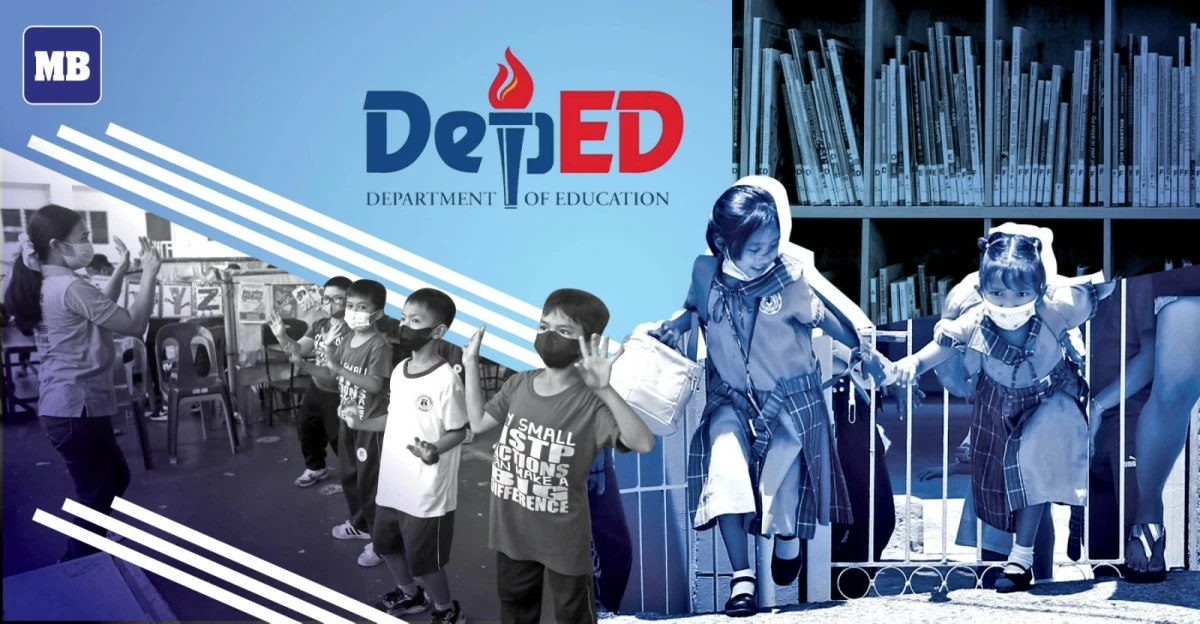
The Department of Education (DepEd) launched the ARAL Program on Sept. 13, 2025, to strengthen literacy and learning recovery for over 6.7 million Filipino students. (De[Ed / MB Visual Content Group)
Recognizing the urgent need to address the country’s learning crisis and strengthen the foundational skills of Filipino learners, the Department of Education (DepEd) officially launched the Academic Recovery and Accessible Learning (ARAL) Program on Saturday, September 13.
The initiative, launched in line with President Marcos’ birthday and the celebration of this year’s International Literacy Day on September 8, underscores the administration’s priority to improve foundational skills and address learning gaps among Filipino students.
What is the ARAL Program?
The ARAL Program, mandated under Republic Act No. 12028, provides tutorial support for Kindergarten to Grade 10 learners in Reading, Mathematics, and Science.
It aims to help students catch up on grade-level competencies, particularly those who struggled with learning losses during the pandemic years.
“Layunin natin sa ARAL na hindi lamang tiyakin na makakahabol ang ating mga mag-aaral na nahuhuli sa klase (Our goal in the ARAL Program is not only to ensure that students who are falling behind can catch up)—we are also committed to building stronger foundational skills, because Key Stage 1 is the most critical stage in every child’s development,” DepEd Secretary Sonny Angara said.
“Kaya’t lubos ang pasasalamat natin sa ating mahal na Pangulo na tiniyak na maisasabatas ang programang ito (That’s why we are deeply grateful to our beloved President for ensuring that this program was enacted into law),” he added.
Nationwide implementation
DepEd rolled out the program simultaneously nationwide, with members of its Executive Committee (ExeCom) leading activities across different regions.
The program will begin with ARAL-Reading in the second quarter of School Year 2025–2026, prioritizing learners who are low, high-emerging, or frustrated readers.
DepEd has already identified 6.7 million learner-beneficiaries, who will be supported by more than 447,000 tutors and 45,000 school heads. In future phases, ARAL will expand to ARAL-Mathematics (Grades 1–10), ARAL-Science (Grades 3–10), and ARAL-Summer Programs.
Training and support for tutors
To ensure effective delivery, DepEd has conducted nationwide tutor training, distributed learning resources, and implemented the ARAL School Readiness and Responsiveness Audit (ASRRA).
Tutors will include teachers, para-teachers, pre-service teachers, and other trained individuals, all of whom will receive training and compensation, DepEd said.
Parents and guardians will also undergo orientations to strengthen their role in reinforcing lessons at home.
‘EduKahon’ distribution, continuity of learning
During the launch, DepEd also distributed “EduKahon” — its standardized school recovery kit — underscoring the agency’s commitment to ensuring continuous learning even during disruptions.
DepEd said the ARAL Program builds on previous literacy initiatives such as the Bawat Bata Makababasa Program (BBMP) and the Nationwide Learning Recovery Program (NLRP), both of which yielded improvements in student reading and comprehension.

Related Tags

DepEd ARAL Program 2025 ARAL-Reading tutorial support Philippines learning recovery program DepEd literacy initiatives DepEd Secretary Sonny Angara
ADVERTISEMENT
.most-popular .layout-ratio{ padding-bottom: 79.13%; } @media (min-width: 768px) and (max-width: 1024px) { .widget-title { font-size: 15px !important; } }

{{ articles_filter_1561_widget.title }}

.most-popular .layout-ratio{ padding-bottom: 79.13%; } @media (min-width: 768px) and (max-width: 1024px) { .widget-title { font-size: 15px !important; } }

{{ articles_filter_1562_widget.title }}

.most-popular .layout-ratio{ padding-bottom: 79.13%; } @media (min-width: 768px) and (max-width: 1024px) { .widget-title { font-size: 15px !important; } }

{{ articles_filter_1563_widget.title }}

{{ articles_filter_1564_widget.title }}

.mb-article-details { position: relative; } .mb-article-details .article-body-preview, .mb-article-details .article-body-summary{ font-size: 17px; line-height: 30px; font-family: "Libre Caslon Text", serif; color: #000; } .mb-article-details .article-body-preview iframe , .mb-article-details .article-body-summary iframe{ width: 100%; margin: auto; } .read-more-background { background: linear-gradient(180deg, color(display-p3 1.000 1.000 1.000 / 0) 13.75%, color(display-p3 1.000 1.000 1.000 / 0.8) 30.79%, color(display-p3 1.000 1.000 1.000) 72.5%); position: absolute; height: 200px; width: 100%; bottom: 0; display: flex; justify-content: center; align-items: center; padding: 0; } .read-more-background a{ color: #000; } .read-more-btn { padding: 17px 45px; font-family: Inter; font-weight: 700; font-size: 18px; line-height: 16px; text-align: center; vertical-align: middle; border: 1px solid black; background-color: white; } .hidden { display: none; }
function initializeAllSwipers() { // Get all hidden inputs with cms_article_id document.querySelectorAll('[id^="cms_article_id_"]').forEach(function (input) { const cmsArticleId = input.value; const articleSelector = '#article-' + cmsArticleId + ' .body_images'; const swiperElement = document.querySelector(articleSelector); if (swiperElement && !swiperElement.classList.contains('swiper-initialized')) { new Swiper(articleSelector, { loop: true, pagination: false, navigation: { nextEl: '#article-' + cmsArticleId + ' .swiper-button-next', prevEl: '#article-' + cmsArticleId + ' .swiper-button-prev', }, }); } }); } setTimeout(initializeAllSwipers, 3000); const intersectionObserver = new IntersectionObserver( (entries) => { entries.forEach((entry) => { if (entry.isIntersecting) { const newUrl = entry.target.getAttribute("data-url"); if (newUrl) { history.pushState(null, null, newUrl); let article = entry.target; // Extract metadata const author = article.querySelector('.author-section').textContent.replace('By', '').trim(); const section = article.querySelector('.section-info ').textContent.replace(' ', ' '); const title = article.querySelector('.article-title h1').textContent; // Parse URL for Chartbeat path format const parsedUrl = new URL(newUrl, window.location.origin); const cleanUrl = parsedUrl.host + parsedUrl.pathname; // Update Chartbeat configuration if (typeof window._sf_async_config !== 'undefined') { window._sf_async_config.path = cleanUrl; window._sf_async_config.sections = section; window._sf_async_config.authors = author; } // Track virtual page view with Chartbeat if (typeof pSUPERFLY !== 'undefined' && typeof pSUPERFLY.virtualPage === 'function') { try { pSUPERFLY.virtualPage({ path: cleanUrl, title: title, sections: section, authors: author }); } catch (error) { console.error('ping error', error); } } // Optional: Update document title if (title && title !== document.title) { document.title = title; } } } }); }, { threshold: 0.1 } ); function showArticleBody(button) { const article = button.closest("article"); const summary = article.querySelector(".article-body-summary"); const body = article.querySelector(".article-body-preview"); const readMoreSection = article.querySelector(".read-more-background"); // Hide summary and read-more section summary.style.display = "none"; readMoreSection.style.display = "none"; // Show the full article body body.classList.remove("hidden"); } document.addEventListener("DOMContentLoaded", () => { let loadCount = 0; // Track how many times articles are loaded const offset = [1, 2, 3, 4, 5, 6, 7, 8, 9, 10]; // Offset values const currentUrl = window.location.pathname.substring(1); let isLoading = false; // Prevent multiple calls if (!currentUrl) { console.log("Current URL is invalid."); return; } const sentinel = document.getElementById("load-more-sentinel"); if (!sentinel) { console.log("Sentinel element not found."); return; } function isSentinelVisible() { const rect = sentinel.getBoundingClientRect(); return ( rect.top < window.innerHeight && rect.bottom >= 0 ); } function onScroll() { if (isLoading) return; if (isSentinelVisible()) { if (loadCount >= offset.length) { console.log("Maximum load attempts reached."); window.removeEventListener("scroll", onScroll); return; } isLoading = true; const currentOffset = offset[loadCount]; window.loadMoreItems().then(() => { let article = document.querySelector('#widget_1690 > div:nth-last-of-type(2) article'); intersectionObserver.observe(article) loadCount++; }).catch(error => { console.error("Error loading more items:", error); }).finally(() => { isLoading = false; }); } } window.addEventListener("scroll", onScroll); });

Sign up by email to receive news.