

ADVERTISEMENT

Philippines to repay ₱55-billion World Bank loans until 2053

Published Apr 6, 2025 09:43 pm

The Philippines will repay until 2053 two of the four loans greenlit by the Washington-based World Bank last month, worth a total of $950.54 million or about ₱54.6 billion, that will finance health services and transport connectivity in Mindanao and other poor provinces in the country.

World Bank documents over the weekend showed that Finance Secretary Ralph G. Recto, on behalf of the Philippine government, signed the loan agreement for the $454.94-million Mindanao transport connectivity improvement project on April 3.
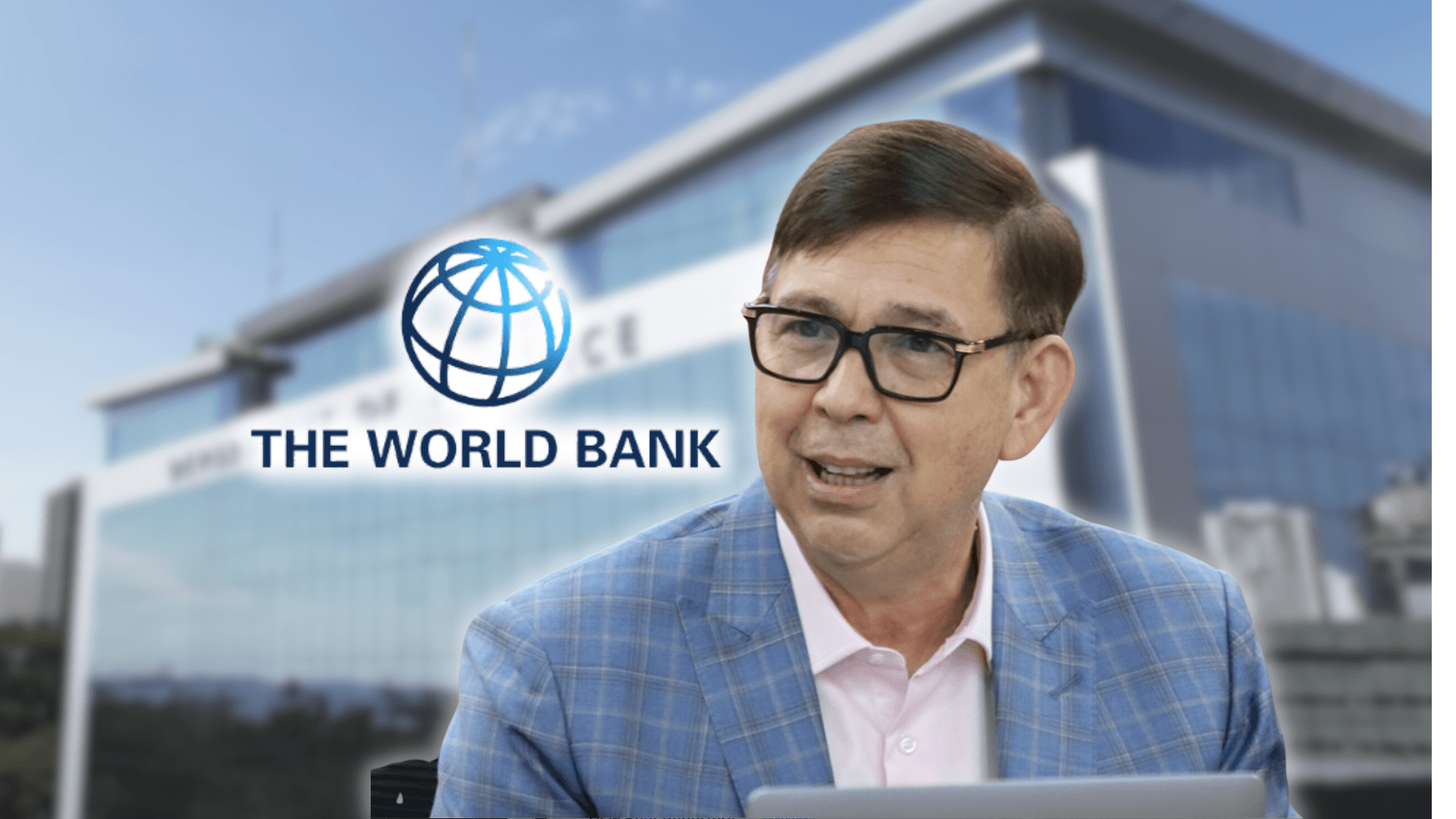
Recto World Bank.png

On April 4 or a day later, Recto also signed the loan terms for the $495.6-million Philippines health system resilience project.

For the International Bank for Reconstruction and Development (IBRD), the World Bank's country director for the Philippines, Zafer MustafaoÄŸlu, signed the two loan agreements much earlier, on March 13 and March 12, respectively. The IBRD is the World Bank's lending arm for developing country-clients like the Philippines.

The World Bank board approved these two loans on March 5. They will take effect 90 days after Recto signed their loan agreements.

The Philippines will begin amortization repayments for both loans in 2036.

The two loans were denominated in euros, equivalent to 437.02 million euros for the Mindanao transport connectivity improvement project and 476.08 million euros for the Philippines health system resilience project.

To be implemented by the Department of Public Works and Highways (DPWH), the Mindanao transport connectivity improvement project is aimed at improving connectivity, climate resilience, and safety of selected roads on the southern island.

In particular, it will finance the improvement of selected local roads in Mindanao, as well as enhance the capacity, climate resilience, and road safety of the Cagayan de Oro-Davao-General Santos corridor, which spans three of the biggest cities south of the country.

The World Bank said earlier that this would benefit around 1.16 million residents living close to the key road corridor.

The Philippines health system resilience project, meanwhile, shall strengthen climate-resilient provincial health systems as well as health emergency prevention, preparedness and response systems in 17 provinces, including 11 in Mindanao, that currently have low healthcare access capacity.

To be implemented by the Department of Health (DOH), this project is expected to benefit 17.9 million people.

In all, the Philippines obtained a total of close to $1.82 billion, or approximately ₱103.9 billion, in World Bank financing during the month of March.

The World Bank approved the $67.34-million Philippines civil service modernization project on March 21, and then the $800-million first energy transition and climate resilience development policy loan on March 31.

The Philippines is awaiting the approval of five additional World Bank loans worth a combined total of over $2.54 billion for the rest of 2025: $4 million for the Bangsamoro Autonomous Region in Muslim Mindanao's (BARMM) roads to development project, up for board approval on April 30; a record $1 billion for the Philippines sustainable agricultural transformation program on June 24; $240.6 million for the accelerated water and sanitation project in selected areas on June 27; $700 million for the Philippines community resilience project on July 28; plus $600 million for the project for learning upgrade support and decentralization on Sept. 26.

Related Tags

World Bank LOAN AGREEMENT ralph recto
ADVERTISEMENT
.most-popular .layout-ratio{ padding-bottom: 79.13%; } @media (min-width: 768px) and (max-width: 1024px) { .widget-title { font-size: 15px !important; } }

{{ articles_filter_1561_widget.title }}

.most-popular .layout-ratio{ padding-bottom: 79.13%; } @media (min-width: 768px) and (max-width: 1024px) { .widget-title { font-size: 15px !important; } }

{{ articles_filter_1562_widget.title }}

.most-popular .layout-ratio{ padding-bottom: 79.13%; } @media (min-width: 768px) and (max-width: 1024px) { .widget-title { font-size: 15px !important; } }

{{ articles_filter_1563_widget.title }}

{{ articles_filter_1564_widget.title }}

.mb-article-details { position: relative; } .mb-article-details .article-body-preview, .mb-article-details .article-body-summary{ font-size: 17px; line-height: 30px; font-family: "Libre Caslon Text", serif; color: #000; } .mb-article-details .article-body-preview iframe , .mb-article-details .article-body-summary iframe{ width: 100%; margin: auto; } .read-more-background { background: linear-gradient(180deg, color(display-p3 1.000 1.000 1.000 / 0) 13.75%, color(display-p3 1.000 1.000 1.000 / 0.8) 30.79%, color(display-p3 1.000 1.000 1.000) 72.5%); position: absolute; height: 200px; width: 100%; bottom: 0; display: flex; justify-content: center; align-items: center; padding: 0; } .read-more-background a{ color: #000; } .read-more-btn { padding: 17px 45px; font-family: Inter; font-weight: 700; font-size: 18px; line-height: 16px; text-align: center; vertical-align: middle; border: 1px solid black; background-color: white; } .hidden { display: none; }
function initializeAllSwipers() { // Get all hidden inputs with cms_article_id document.querySelectorAll('[id^="cms_article_id_"]').forEach(function (input) { const cmsArticleId = input.value; const articleSelector = '#article-' + cmsArticleId + ' .body_images'; const swiperElement = document.querySelector(articleSelector); if (swiperElement && !swiperElement.classList.contains('swiper-initialized')) { new Swiper(articleSelector, { loop: true, pagination: false, navigation: { nextEl: '#article-' + cmsArticleId + ' .swiper-button-next', prevEl: '#article-' + cmsArticleId + ' .swiper-button-prev', }, }); } }); } setTimeout(initializeAllSwipers, 3000); const intersectionObserver = new IntersectionObserver( (entries) => { entries.forEach((entry) => { if (entry.isIntersecting) { const newUrl = entry.target.getAttribute("data-url"); if (newUrl) { history.pushState(null, null, newUrl); let article = entry.target; // Extract metadata const author = article.querySelector('.author-section').textContent.replace('By', '').trim(); const section = article.querySelector('.section-info ').textContent.replace(' ', ' '); const title = article.querySelector('.article-title h1').textContent; // Parse URL for Chartbeat path format const parsedUrl = new URL(newUrl, window.location.origin); const cleanUrl = parsedUrl.host + parsedUrl.pathname; // Update Chartbeat configuration if (typeof window._sf_async_config !== 'undefined') { window._sf_async_config.path = cleanUrl; window._sf_async_config.sections = section; window._sf_async_config.authors = author; } // Track virtual page view with Chartbeat if (typeof pSUPERFLY !== 'undefined' && typeof pSUPERFLY.virtualPage === 'function') { try { pSUPERFLY.virtualPage({ path: cleanUrl, title: title, sections: section, authors: author }); } catch (error) { console.error('ping error', error); } } // Optional: Update document title if (title && title !== document.title) { document.title = title; } } } }); }, { threshold: 0.1 } ); function showArticleBody(button) { const article = button.closest("article"); const summary = article.querySelector(".article-body-summary"); const body = article.querySelector(".article-body-preview"); const readMoreSection = article.querySelector(".read-more-background"); // Hide summary and read-more section summary.style.display = "none"; readMoreSection.style.display = "none"; // Show the full article body body.classList.remove("hidden"); } document.addEventListener("DOMContentLoaded", () => { let loadCount = 0; // Track how many times articles are loaded const offset = [1, 2, 3, 4, 5, 6, 7, 8, 9, 10]; // Offset values const currentUrl = window.location.pathname.substring(1); let isLoading = false; // Prevent multiple calls if (!currentUrl) { console.log("Current URL is invalid."); return; } const sentinel = document.getElementById("load-more-sentinel"); if (!sentinel) { console.log("Sentinel element not found."); return; } function isSentinelVisible() { const rect = sentinel.getBoundingClientRect(); return ( rect.top < window.innerHeight && rect.bottom >= 0 ); } function onScroll() { if (isLoading) return; if (isSentinelVisible()) { if (loadCount >= offset.length) { console.log("Maximum load attempts reached."); window.removeEventListener("scroll", onScroll); return; } isLoading = true; const currentOffset = offset[loadCount]; window.loadMoreItems().then(() => { let article = document.querySelector('#widget_1690 > div:nth-last-of-type(2) article'); intersectionObserver.observe(article) loadCount++; }).catch(error => { console.error("Error loading more items:", error); }).finally(() => { isLoading = false; }); } } window.addEventListener("scroll", onScroll); });

Sign up by email to receive news.