






Manila Bulletin
 Environment and Sustainability
Monica Lorenzo builds for lasting value, with sustainability at the foundation
Environment and Sustainability
Monica Lorenzo builds for lasting value, with sustainability at the foundation
Environment and Sustainability
Monica Lorenzo builds for lasting value, with sustainability at the foundation
Monica Lorenzo builds for lasting value, with sustainability at the foundation
By Len Amadora
Published Aug 29, 2026 10:43 am


In real estate, what lasts isn’t just concrete and steel. For Monica Lorenzo, director for leisure and business development at Torre Lorenzo Development Corporation (TLDC), lasting value looks like something else entirely. It means developments that strengthen the communities around them, treat the environment as a partner rather than an obstacle, and still make sense to the people living there decades from now. It’s a simple enough principle on paper. Developments shouldn’t come at the expense of the people and places it’s supposed to serve. Living up to it is the harder part.
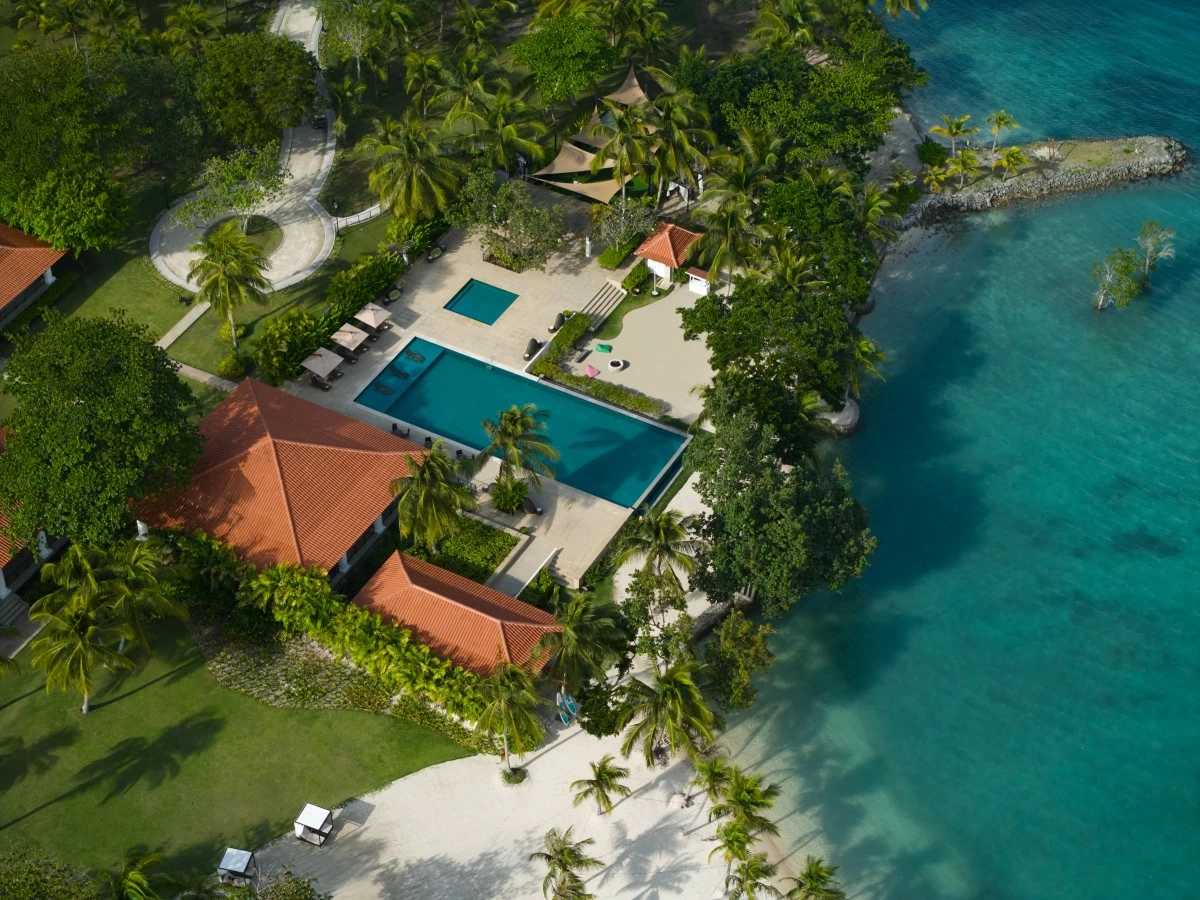
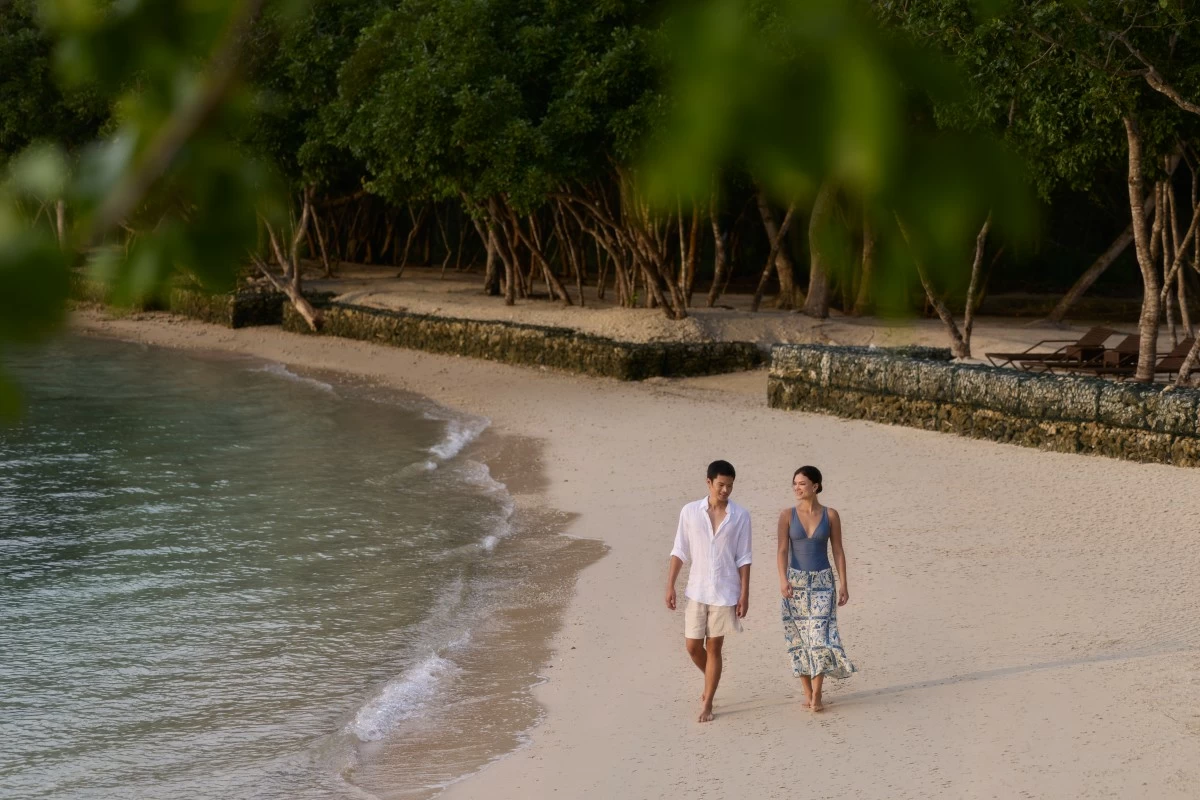
PROTECTING THE ISLAND’S NATURAL BEAUTY. The waters surrounding Dusit Thani Lubi Plantation Resort in Davao De Oro have been designated a protected coral
sanctuary, in partnership with the Philippine Department of Environment and Natural Resources.
A house built on lies falls with the first storm.
The simple, almost proverbial line reflects a philosophy that would be profound in an industry where foundations, structures and promises carry heavy weight. Honesty, then, becomes both a simple and complicated word. And it is the exact word Monica Lorenzo, this year’s PropertyGuru Rising Star Awardee, gave when asked to describe the work virtue she lives by.
“It is my personality. It is who I am,” she said.
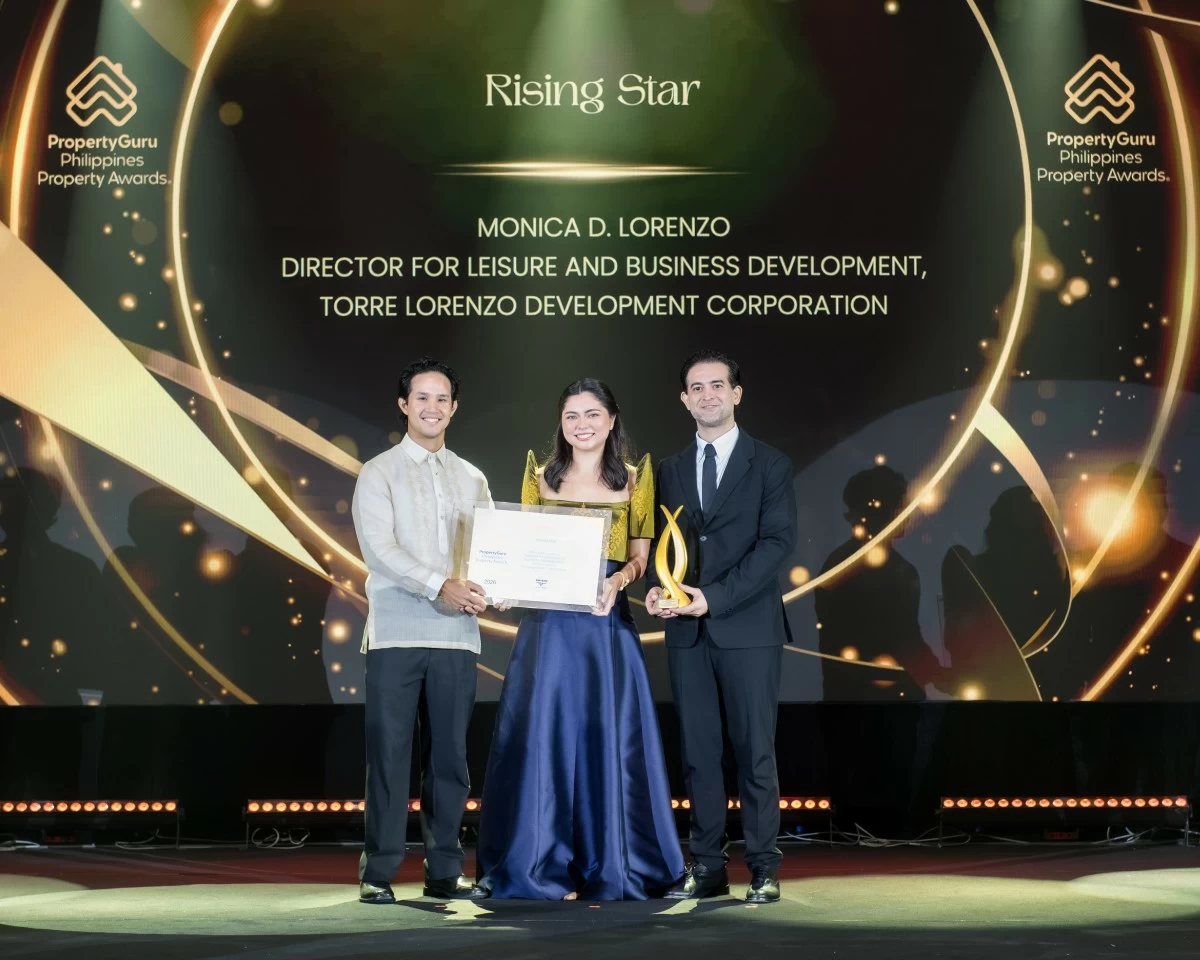
Monica D. Lorenzo received the Rising Star Award at the 14th PropertyGuru Philippines Property Awards.
Monica works and lives by that same virtue. For her, success is not measured only by what is built. It is gauged by what endures; what continues to inspire, uplift and strengthen communities while caring for the planet.
TLDC is the pioneer builder of premium university residences in the Philippines. What began as a desire to improve the cramped, unconducive living conditions of students in Metro Manila has grown into a full-scale residential and hospitality developer with projects across Manila, Lipa and Davao, partnering with Dusit International and The Ascott Limited of Singapore on its hospitality developments.
For Monica, part of the appeal of real estate and hospitality has always been how tangible it is.
“You really see what you created and what you’ve worked on. You see how your ideas are coming to reality.”
But admittedly, that tangibility comes with a constant stream of challenges.
Monica describes the company’s position as often introducing concepts to the Philippines that already existed elsewhere but had never quite landed here. Demanding discipline as much as ambition, the company is selective about where it puts its resources.
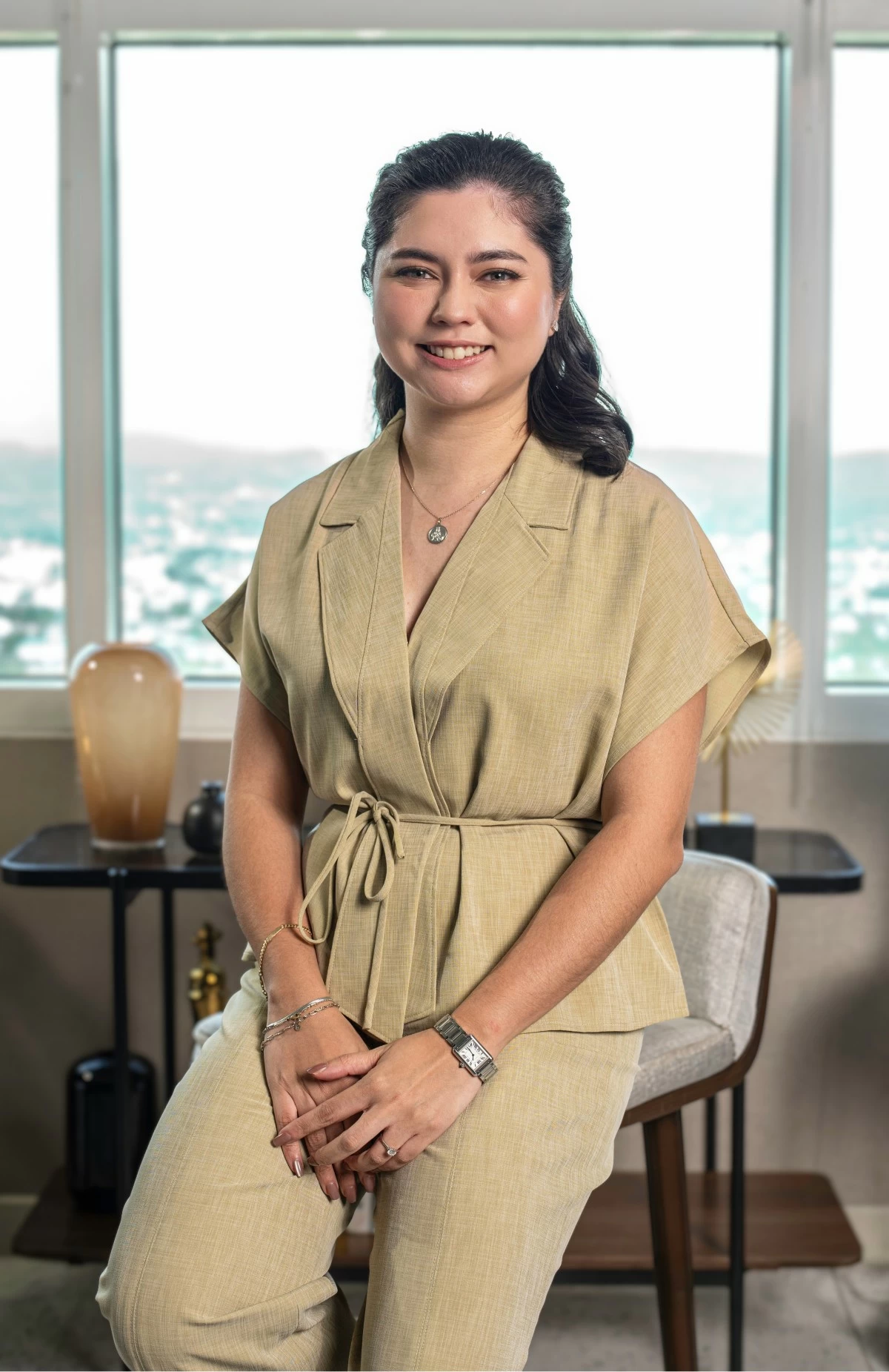
Monica D. Lorenzo, director for leisure and busi-
ness development at Torre Lorenzo Development
Corporation (TLDC).
“We are very choosy and picky as to where we decide to put our resources, investment and energy,” she said. “We operate on the fact that each building is a better version of the last.”
She sees the Philippines’ young, increasingly upward mobile population as an opportunity to build things people never thought possible for themselves. It is a philosophy she traces directly back to her father, who once told her: “You have to show them it can get better. This is what we can give you.”
When asked what motivates her, she said, “It is the sense of responsibility to help the company be the best it can be. I am not just an employee, and ties run deeper. This is something that my father built for the next generation, and I want to do the same. To pass it on and get it through to the next generation.”
Being named PropertyGuru’s Rising Star, she says, is a welcome vote of confidence to that mission.
“It helps build confidence that we are pulling things in the right direction. We are always evolving and changing and we’re not slowing down. There is so much we can do.”
Learnings from the shoreline
Monica’s understanding of environmental stewardship did not come from a classroom. It came from watching a place she loved slowly change.
Her family’s island resort, now known as Dusit Thani Lubi Plantation, was somewhere she visited throughout her childhood. She vividly remembers the lush greenery and the vast shoreline. Over the years, she watched as the shoreline visibly retreated.
She remembers how different the environment on that island was 20 years ago. Watching the changes firsthand raised an unavoidable question: What can be done to prevent further damage, so that the next generation can enjoy these same places?
For her family, the answer was to act.
The waters surrounding the island were designated a protected coral sanctuary, with strict bans on fishing and coral harvesting. Roughly 15 years later, the results speak for themselves. Fish populations have returned and the reefs that were once damaged by overfishing and bleaching are healthy again.
That same resort now runs on the kind of sustainability infrastructure that sounded aspirational. On the island is a solar farm of 1,836 panels that supplies up to sixty percent of the resort’s energy needs.. This cuts roughly 985 metric tons of CO2 emissions a year.
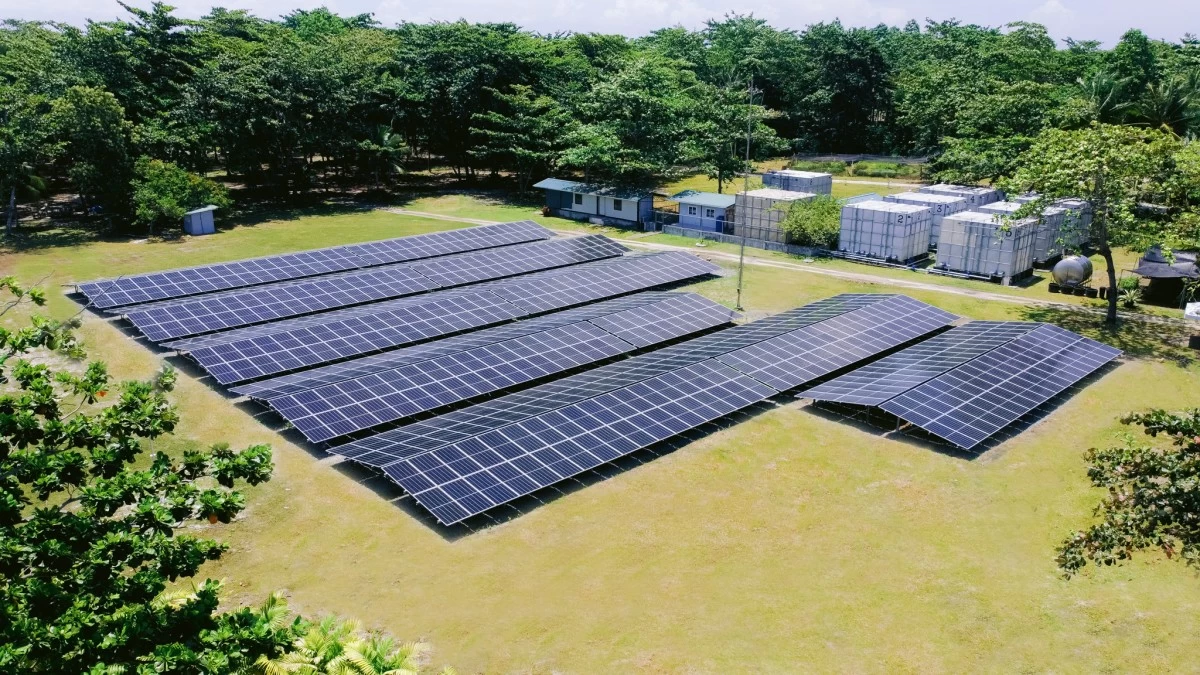
POWERING THE ISLAND WITH THE SUN. The on-island solar farm powers up to 60 percent of the resort’s energy needs.
Heat recovery systems repurpose warmth from air-conditioning units to heat water for every room and villa. Through reverse osmosis and desalination systems, seawater is turned into the island’s drinking supply. Pools, pathways and roads are designed with sustainability in mind.
This is the balance Monica tries to strike across every project: comfort and luxury that does not come at the planet’s expense.
TURNING SEAWATER INTO LIFE-SUSTAINING FRESHWATER. Lubi's Reverse Osmosis and desalination systems convert seawater into clean, drinkable water for the entire island. This reduces reliance on imported water, lowers our carbon footprint, and
supports sustainable water independence.
Listening before building
Ask Monica what role culture and local context play in her projects, and she describes a process that starts long before the ground is broken.
By talking to the people who already bought from them and to residents living in their buildings, and by asking what is working and what is not, the company stays in tune with where they are at. With that, they are able to adapt their plans and designs.
“Flexibility matters,” she says, considering that a single building can take five or six years to complete.
That same philosophy shapes how she thinks about the difference between a development and a destination. For Monica, real estate was never meant to be one-and-done.
“It’s really a whole community; a whole masterplanned development,” she says, “because that is how you’re actually able to build a community.”
In hospitality terms, she frames the challenge simply: getting someone to book that first stay.
“We know, and we are confident enough in our brand, with our developments, and with our projects. Once they stay, they will want to come back.”
Growth and environmental responsibility, in her view, were never meant to be separated.
“It has to go hand in hand,” she says.
She acknowledges that they play a direct role in the community and that it is their responsibility to take care of it. Every project, she says, comes with the same underlying question: How do we integrate ourselves and work together with the people already there to genuinely uplift the towns and barangays we invest in?
Bridging old habits and new standards
Real estate, by nature, is a slow-moving, brick-and-mortar industry, and Monica is candid about the limits that come with that.
Sustainability, she points out, doesn’t only live in construction; it also lives in operations, planning and design.
“Technology hasn’t caught up, “ she admits. “We can’t do things a hundred percent greener and sustainable given there are certain regulations that need to be met, and the environment we are constructing in, the weather, and all other factors.”
Where the technology and the regulatory room exist, though, her team integrates it, steadily pushing each new building to be greener than the one before it.
Building for the generations to come
When Monica talks about legacy, she thinks of generations instead of years as the timeline.
“We at TLDC are building things to last. We are building for the next generation,“ she says.
The goal, as she puts it, is making sure a building still stands for the grandchildren of the people who first bought it.
“If we build, we better do it right. It is a matter of being flexible and open to changes, so that whatever headwinds come, we will be able to adapt.”
Her hope and optimism carry into how she talks about the future, for what these projects leave behind extends beyond the buildings themselves and to the land they are built on.
“There is so much that can be done for the planet,” she says. “It is leaving the planet the same shape and condition it was given to us. We regenerate or replenish what is taken. It should not be a leaky bucket.”
In the end, Monica’s one-word answer, honesty, brings the story back to its foundation. Honest about what a building can deliver. Honest about what a piece of land can and can’t withstand. And honest about what developers leave behind long after the ribbon has been cut.
Because for Monica, building for the future is not only about making something that lasts. It is about making sure that what lasts is worth keeping. That means communities that are stronger, environments that are cared for, and places that future generations can still enjoy.
That, perhaps, is the real foundation of lasting value.