






Manila Bulletin
 Environment and Sustainability
Inside the Philippines' shift from potential to progress in the ASEAN Battery race
Environment and Sustainability
Inside the Philippines' shift from potential to progress in the ASEAN Battery race
Environment and Sustainability
Inside the Philippines' shift from potential to progress in the ASEAN Battery race
Inside the Philippines' shift from potential to progress in the ASEAN Battery race
Published Aug 28, 2026 10:00 am


Four editions into the ASEAN Battery Technology Conference, conversations around batteries, renewable energy, and electric mobility are becoming less about possibility and more about what it takes to make them work at scale.
The ASEAN Battery Technology Conference is one annual event I can hardly pass up, not simply because I have become invested in the subject, or because four years of covering batteries have convinced me that an electric vehicle might eventually be in my future. I keep coming back because of the progress I have been privileged to witness, understand, and, in some ways, embrace.
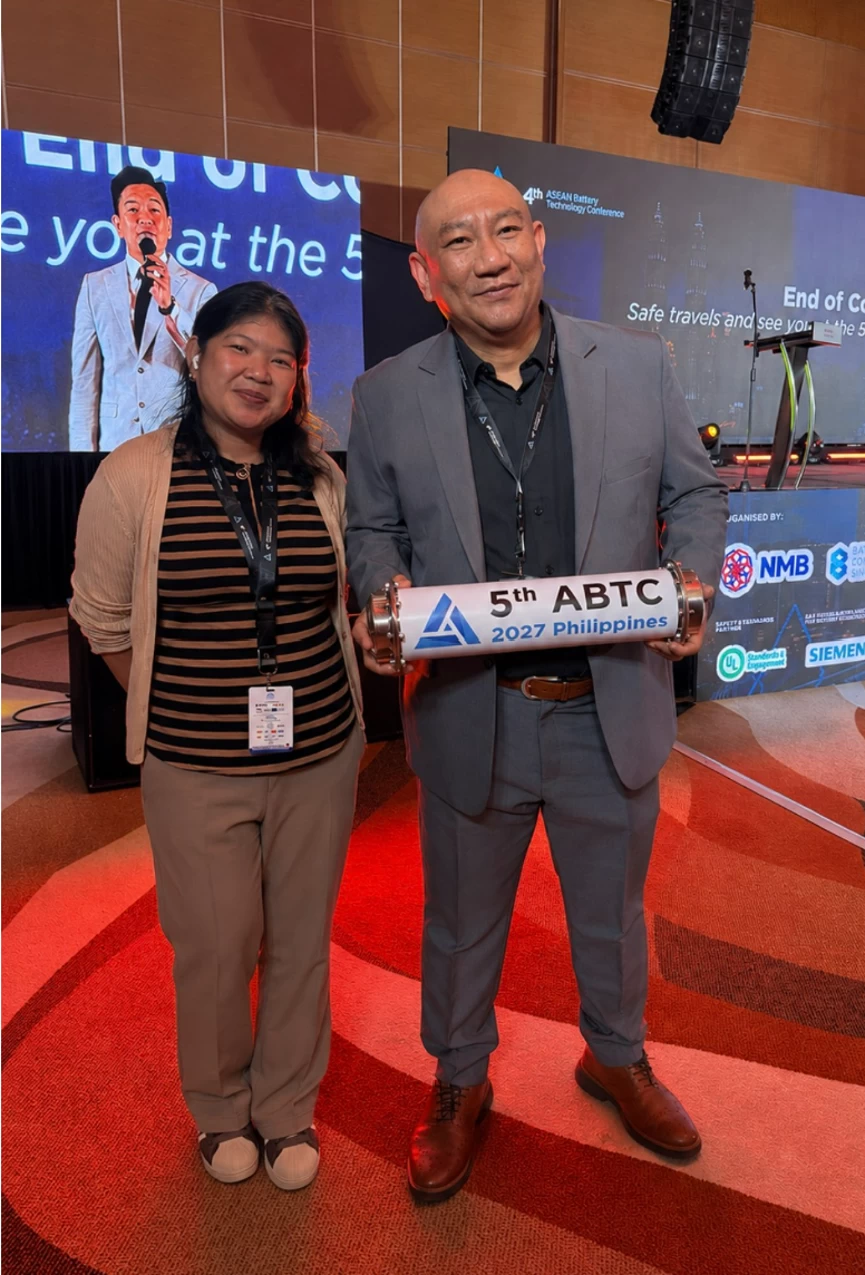
Author Millie Manahan stands with Electric Vehicle Association of the Philippines Executive Director Jose Bienvenido Manuel Biona.
When the conference first gathered industry leaders in Bali, Indonesia, in 2023, I remember asking myself and colleagues a straightforward question: Is the Philippines really ready for this, or are we simply one of the ASEAN countries participating in the conversation? Four editions later, I find myself asking a different one.
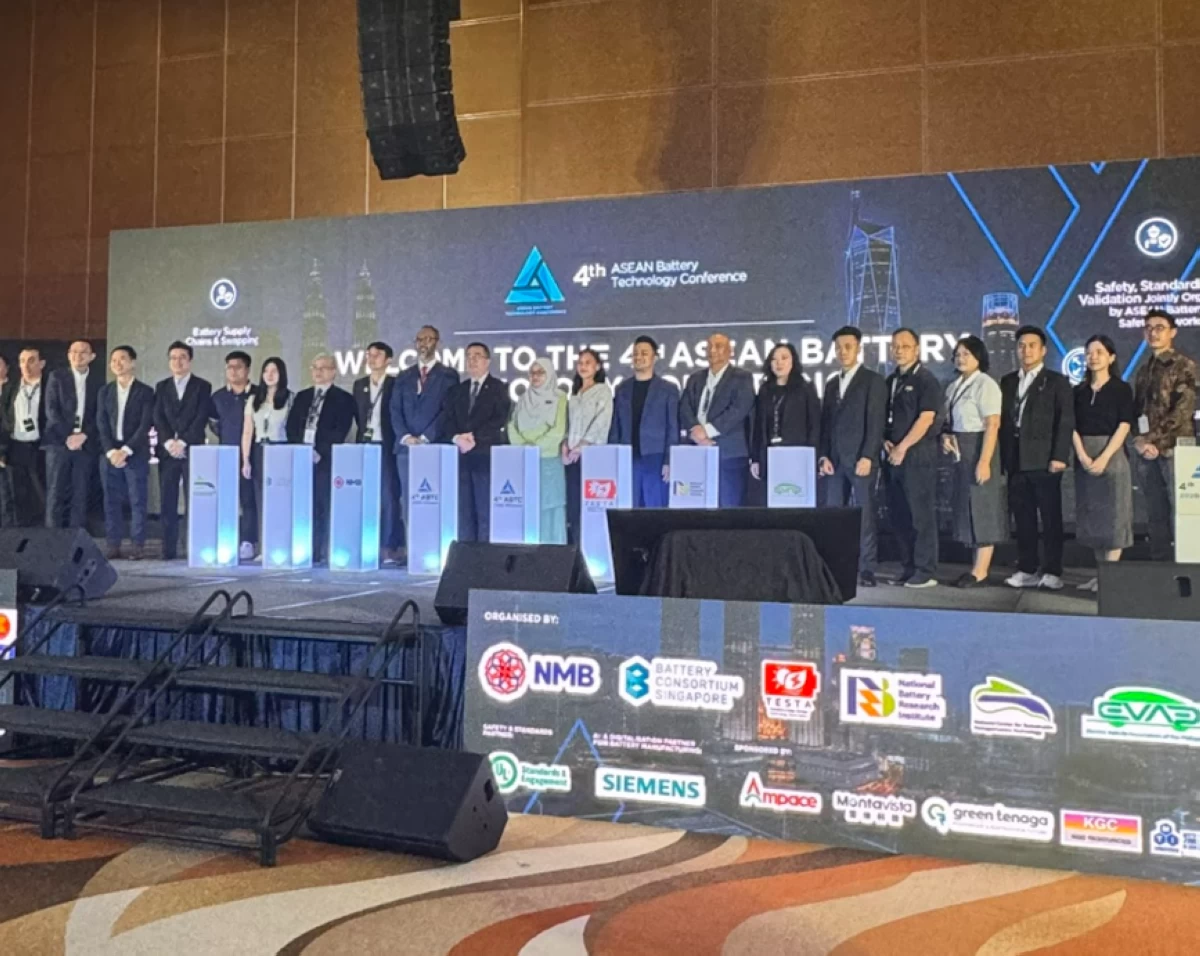
ABTC 2026 brought the regional battery community to Malaysia for three days of discussions. The opening day focused on ASEAN’s shift from research and innovation toward industrialization, manufacturing, safety, investment, and stronger regional collaboration.
The next two days brought that conversation closer to what all of this could mean on the ground, particularly for the Philippines.
Solar is growing. Storage needs to follow.
For Jose Rafael “Ping” Mendoza, president of the Philippine Solar and Storage Energy Alliance (PSSEA), the opportunity is becoming increasingly difficult to ignore.
As more renewable energy, particularly solar, enters power grids, battery storage becomes critical. Solar produces electricity during the day, but batteries store that energy and deploy it when needed. Mendoza expects solar-plus-storage projects to become increasingly common across ASEAN, particularly at utility, commercial, and industrial scales.
In the Philippines, the sustainability argument becomes even more compelling outside major urban centres. Mendoza pointed to island and provincial communities where electricity still depends on diesel generation. These are areas where decentralised solar and battery systems could deliver significant economic and environmental benefits. But geography remains a challenge.
“In the Philippines, it’s cheaper to send something from Shanghai to Manila than Manila to somewhere else in the Philippines,” Mendoza said, A simple line that captured a complicated reality.
Deploying technology across more than 7,000 islands requires logistics, infrastructure, standards, regulation, and, ultimately, money.
When technology is ready, but capital is expensive
Cost of capital emerged as another recurring theme. Mendoza noted it as a barrier preventing existing technologies from reaching consumers at greater scale.
“The consumers are suffering, and there’s a lot of impact that the engineering solutions can provide, but the cost of capital is not going to wait,” he said.
This matters for sustainability. Solar panels, batteries, EVs, and charging infrastructure offer environmental benefits, but those benefits mean little if cleaner technology remains financially out of reach.
“The technology is maturing,” Mendoza said. “We need to capture this moment where everything’s going to change in the next five years, and we have to decide how we want to do it.”
That decision involves financing, incentives, infrastructure, regulation, and the role government chooses to play.
EV growth needs more than vehicles
Prof. Jose Bienvenido Manuel “Manny” Biona, executive director of the Electric Vehicle Association of the Philippines (EVAP), brought a similar reality to the EV discussion.
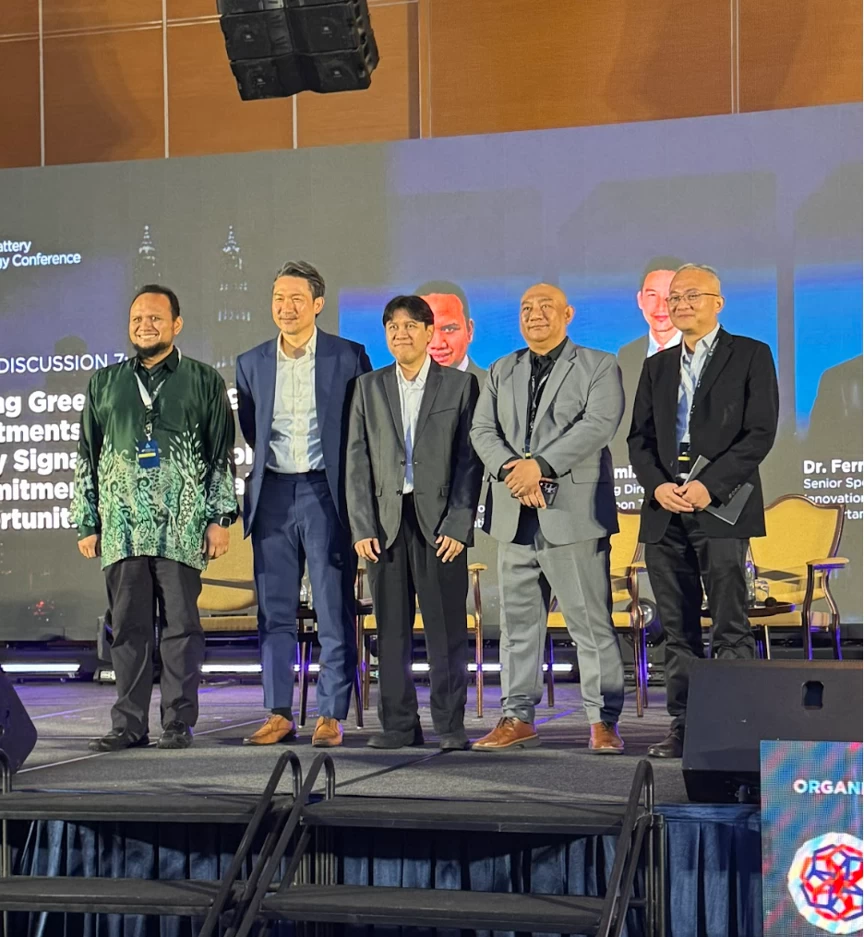
Biona identified three things the Philippines needs for EV investments to grow: consistent policy, investment-grade demand and a functioning EV ecosystem.
“There needs to be a consistent policy,” he said. Investments in manufacturing, charging networks and infrastructure are made over years, not political terms. Companies need confidence that today’s direction will continue beyond the current administration.
The recent approval of the Electric Vehicle Incentive Strategy (EVIS), signed under Executive Order No. 121 in July, is an important development. The program introduces performance-based fiscal support to encourage local EV and component manufacturing. But incentives are only one piece.
Manufacturers and investors also need confidence that Philippine demand will be strong and sustained. Then comes the ecosystem around that demand. It includes financing, charging, infrastructure readiness and ensuring all parts of the system develop at the same pace.
No single company controls all of these elements, which is why coordination and collaboration matter.
Four years later, a different conversation
Hioki E.E. Corporation has been part of ABTC’s journey since its beginnings, supporting the initiative as it grew into a platform connecting battery researchers, manufacturers, policymakers, investors and technology providers across ASEAN.
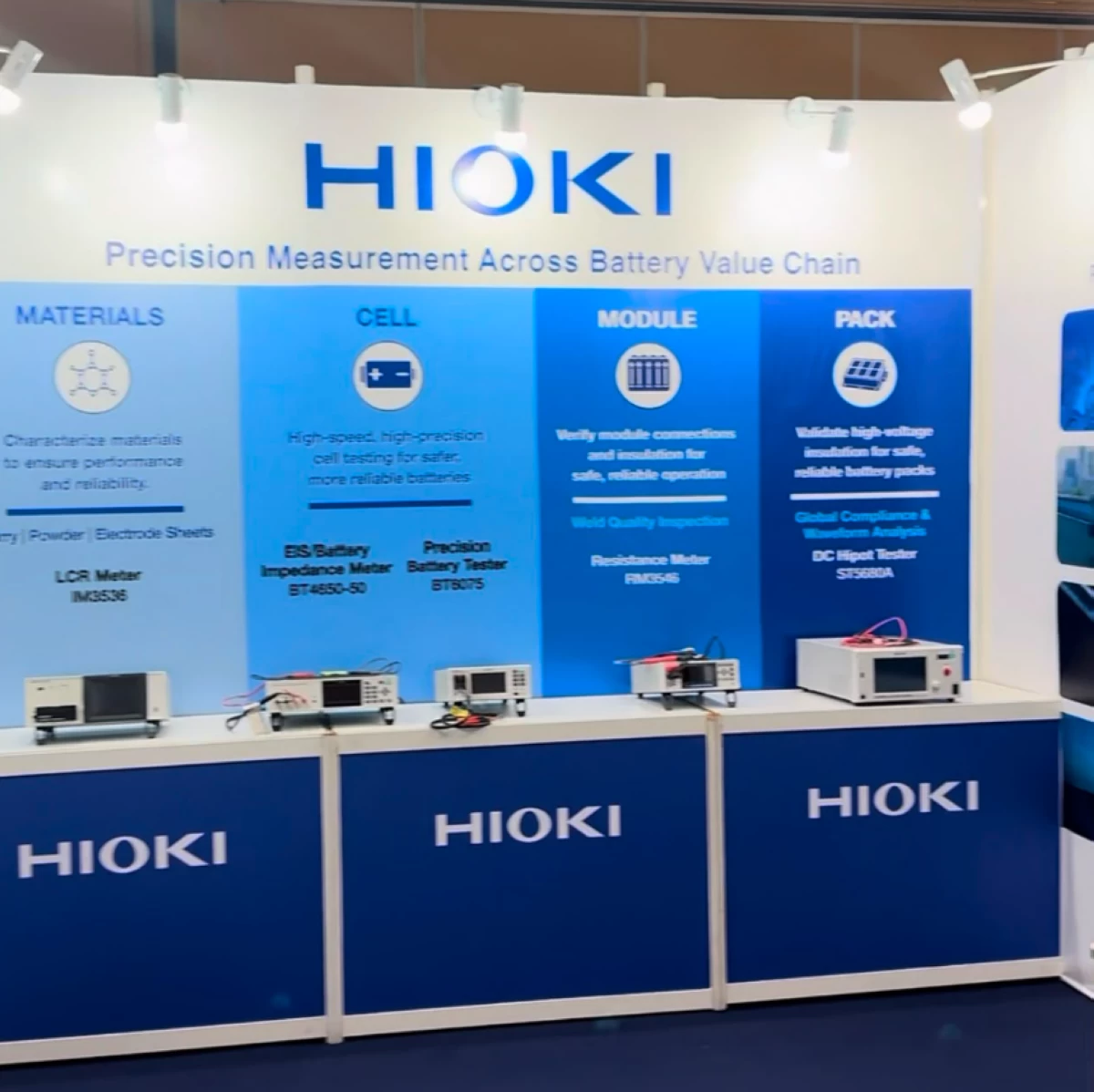
Hioki E.E. Corp.,the Japanese electrical measurement technology company has supported the conference since its inaugural event in Bali, Indonesia, in 2023.
Watching that community grow has made comparisons between countries inevitable. Malaysia has its strengths. Indonesia has resources and manufacturing ambitions. Singapore brings research, capital, and technology capabilities. Thailand has developed its EV and energy storage ecosystem. The Philippines has its own circumstances, opportunities, and challenges.
After four years of covering these conversations, I am less interested in asking who is ahead. The more useful question is whether each country is making meaningful progress with the strengths it already has.
Compared with the conversations I heard a year ago in Phuket, the Philippine discussion in Malaysia felt more concrete. We now have an approved EV incentive strategy. Solar and storage players are talking about scale, not merely potential. Industry is confronting financing, logistics, policy continuity and infrastructure rather than assuming technology alone will solve the transition.
There is still considerable work ahead. That is true not only for the Philippines, but across ASEAN.
But that question I first asked in Bali four years ago, about whether the Philippines was ready or merely participating? I may finally be getting my answer. And perhaps the clearest sign of it came at the very end of ABTC 2026.
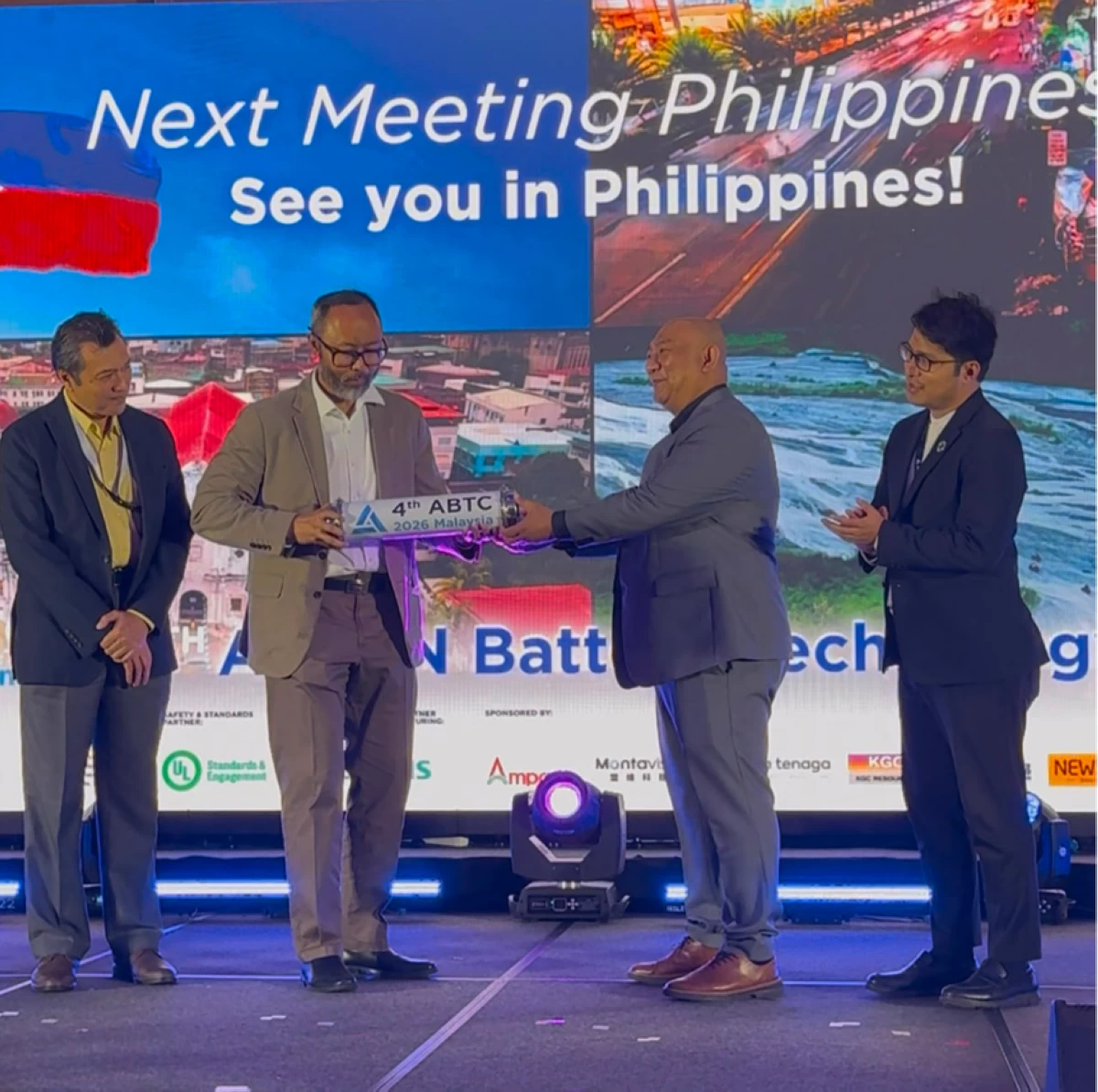
Jose Bienvenido Manuel Biona, executive director of the Electric Vehicle Association of the Philippines, accepts the ceremonial handover from Malaysian officials, designating the Philippines as the host of the 5th ASEAN Battery Technology Conference in 2027.
The handover brings the regional battery conversation to Philippine shores after previous editions in Bali, Singapore, Phuket, and Malaysia. That story deserves an article of its own.