






 Business
The Economy
Greener growth? PIDS warns climate-proofing Philippine farms could raise emissions
Business
The Economy
Greener growth? PIDS warns climate-proofing Philippine farms could raise emissions
Greener growth? PIDS warns climate-proofing Philippine farms could raise emissions


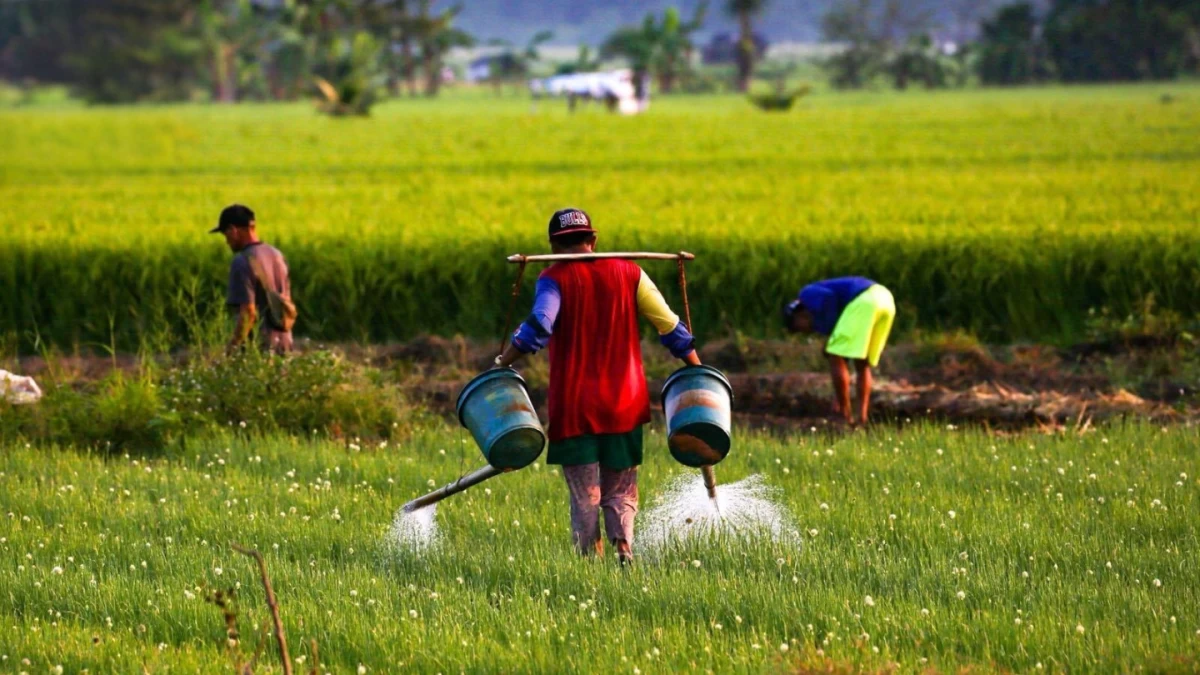
Efforts to climate-proof Philippine agriculture could lift productivity but inadvertently worsen the sector’s carbon footprint unless investments are paired with measures to curb emissions, according to state-run policy think tank Philippine Institute for Development Studies (PIDS).
In a statement last Tuesday, Aug. 25, PIDS said government spending on climate adaptation could help agricultural gross value added (GVA) grow 0.38 percentage points (ppts) faster, but the resulting increase in farm activity could also push greenhouse gas (GHG) emissions higher.
Under an adaptation-only scenario, agricultural GHG emissions are projected to increase by 29 percent from 2025 to 2045, compared with a 24-percent rise if current trends continue.
Adding targeted mitigation measures to climate adaptation, however, could reverse the trajectory and reduce projected agricultural emissions by 18 percent over the same period.
The findings came from the discussion paper “Culprit and Victim: Scenarios for Philippine Agriculture amidst Climate Change,” authored by PIDS senior research fellow Roehlano Briones and former supervising research specialist Ivory Myka Galang.
Originally published in December 2024, the study used a computable general equilibrium model to assess three pathways for Philippine agriculture: continuing current trends, strengthening climate adaptation, and combining adaptation with mitigation.
The study highlights the sector’s dual role in the climate crisis. Agriculture accounts for about 23 percent of the country’s GHG emissions while also suffering heavily from climate-related disasters.
From 2012 to 2022, agriculture sustained an average of ₱44 billion in annual property damage from natural disasters, accounting for 60 percent of the country’s total disaster-related property damage.
Rice cultivation is the largest source of agricultural GHG emissions, followed by enteric fermentation from livestock and manure management.
Among the mitigation measures identified by the researchers is alternate wetting and drying (AWD), which reduces methane emissions by allowing rice fields to dry intermittently rather than keeping them continuously flooded.
The study modeled a 40-percent reduction in GHG emissions from rice production through AWD, which can also conserve water without compromising rice yields.
For livestock, improved manure management, including technologies such as biogas digesters, could cut emissions while converting animal waste into a potential energy source.
The authors recommended strengthening climate adaptation measures for crops, livestock, and fisheries while improving information on agricultural emissions and expanding support for technologies that reduce emissions without compromising farm productivity.
They also called for greater support for farmers, particularly small farmers, in adopting climate-resilient and low-emission technologies to ensure that climate action does not undermine agricultural competitiveness or food security.
Although agriculture has no unconditional emissions-reduction target, the study estimated that 211 million metric tons (MT) of carbon dioxide-equivalent reductions could be achieved through various policies and measures, including AWD, renewable energy (RE), improved livestock manure management, and precision agriculture. - Danielle T. Bayani