







When a Manila poker game became a rescue effort
Mark Sy's 'The Manila Poker Club' revisits the unlikely friendship behind a little-known chapter of wartime history
Published Aug 20, 2026 05:12 pm


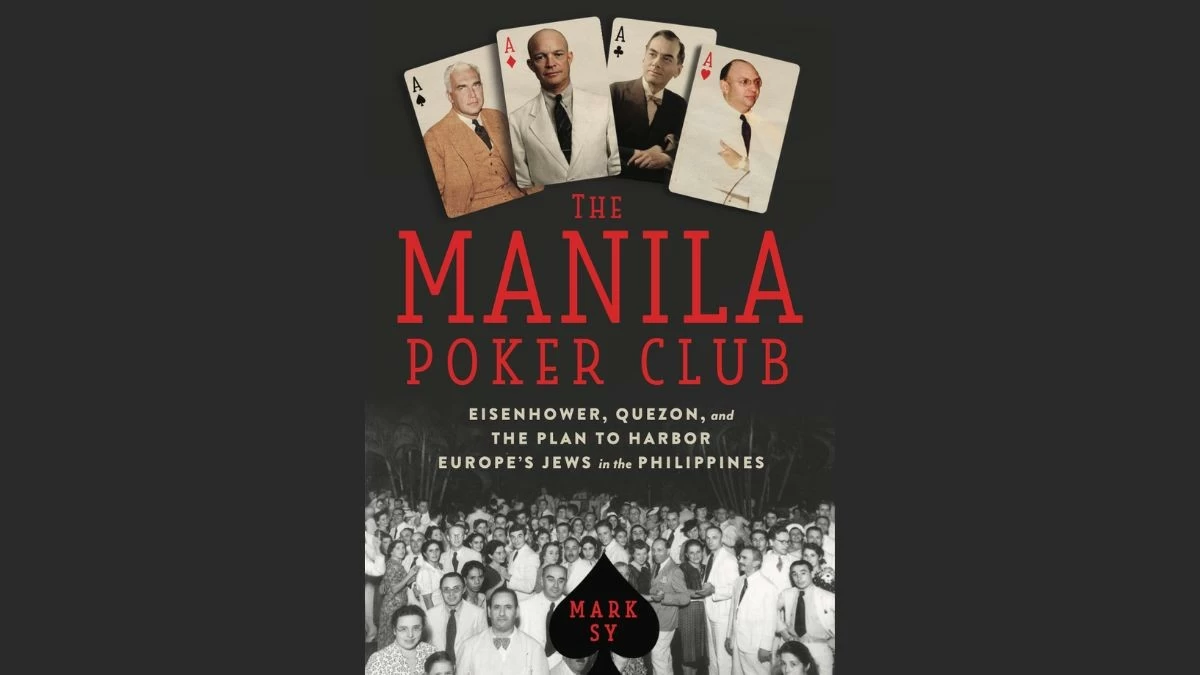
(Photo: Mark Sy)
In late-1930s Manila, five men regularly gathered for poker: Philippine president Manuel L. Quezon, US high commissioner Paul V. McNutt, Lt. Col. Dwight D. Eisenhower, and Jewish American businessmen Alex and Philip Frieder.
They drank whiskey, smoked cigars, and discussed the political events of the day. As Nazi persecution of Jews in Germany and Austria intensified, those gatherings took on a greater significance. The group eventually became involved in an effort to bring Jewish refugees to the Philippines.
That largely unfamiliar chapter of Philippine and World War II history is the subject of journalist Mark Sy’s “The Manila Poker Club: Eisenhower, Quezon, and the Plan to Harbor Europe’s Jews in the Philippines,” published by Chicago Review Press.
The book draws on recently released archives and interviews with Holocaust survivors and others connected to the story.
Mark was born in Vancouver and raised in Manila and Hong Kong. He graduated from Tufts University with a bachelor’s degree in political science. During the summer of 2020, he spent hours speaking with a 93-year-old Holocaust survivor in Jerusalem, an American president’s granddaughter in Washington, D.C., and a Philippine president’s grandson in Manila as part of his research.
The book begins in Graz, Austria, in 1938, as Jewish families confront the growing danger of Nazi persecution. It then moves to Manila, where the relationships among Quezon, McNutt, Eisenhower, and the Frieders develop against the political and social backdrop of the Commonwealth period.
The Manila they inhabited was a privileged colonial society. American expatriates frequented the Manila Hotel and private clubs, while racial divisions excluded Filipinos from some establishments. The Eisenhowers, Frieders and McNutts, however, socialized with Filipinos and developed close relationships with Quezon. Ike also frequented the Wack Wack Golf and Country Club, which had been created for Filipinos excluded from the Manila Golf Club.
Cards were part of that social connection. Eisenhower described Quezon in his diaries as a good but unconventional player, while McNutt had specially made monogrammed mother-of-pearl poker chips for their games. Their long evenings of cards and conversation brought them closer as they discussed the Japanese threat, Nazi persecution and the future of the Philippines.
As the refugee crisis grew, McNutt began exploring whether the Philippines could serve as a safe haven for Jews fleeing persecution. He met with Philippine officials, including Quezon, and then approached Philip Frieder for help from Manila’s Jewish community.
A key development came when McNutt learned that, as US high commissioner, he had the authority to waive visa requirements for people entering the Philippines. After sharing the discovery with the group, he received Quezon’s blessing to admit refugees. Philip was asked to preside over the newly formed Jewish Refugee Committee and help place refugees in homes and find them employment.
The plan also presented practical challenges. Refugees entering the Philippines needed a way to support themselves, and McNutt asked the Jewish community to help guarantee their upkeep.
Mark Sy follows both the rescue effort and the people affected by it. The book traces individual families, including those who escaped Europe and those who did not.
Nearly 1,300 Jews were rescued to the Philippines through the effort. The book states that their descendants number about 8,000, and that the names of the refugees are inscribed on the Open Doors monument dedicated to Quezon at the Holocaust Memorial Park in Rishon Lezion, Israel.
But the story also records those who were unable to escape. Rosalie Lindner Preiss was among 1,065 Jews deported from Breslau to the Theresienstadt ghetto in 1942. She was murdered there.
The rescue effort unfolded as the international situation deteriorated, eventually reaching the Japanese invasion of the Philippines. The book follows the lives of those involved after the war as well.
Eisenhower went on to become president of the United States. The Frieder brothers moved their cigar operation to Philadelphia, while McNutt died in 1955. After McNutt’s death, his widow, Kathleen, gave Alex Frieder McNutt’s monogrammed poker chips as a parting gift.
The research behind the book included interviews with survivors and descendants, as well as archival documents, speeches and other historical sources. The bibliography records interviews with Holocaust survivors Lotte Cassel Hershfield, Margot Pins Kestenbaum, Leonie Kramer, Ralph Preiss and Brigitte Welisch Wachs, among others.
“The Manila Poker Club” puts Manila at the center of a story that connects the Philippines to the history of the Holocaust. At its heart is an unusual friendship formed around a card table, and the decisions that followed when those men confronted the persecution of Jews in Europe.
The story began with poker. Its consequences reached far beyond the game. Read 'The Manila Poker Club' for the full story of the people, relationships and decisions behind the rescue effort.