






 Business
The Economy
Filipino seniors remain vulnerable to poverty despite social safety nets—PIDS
Business
The Economy
Filipino seniors remain vulnerable to poverty despite social safety nets—PIDS
Filipino seniors remain vulnerable to poverty despite social safety nets—PIDS


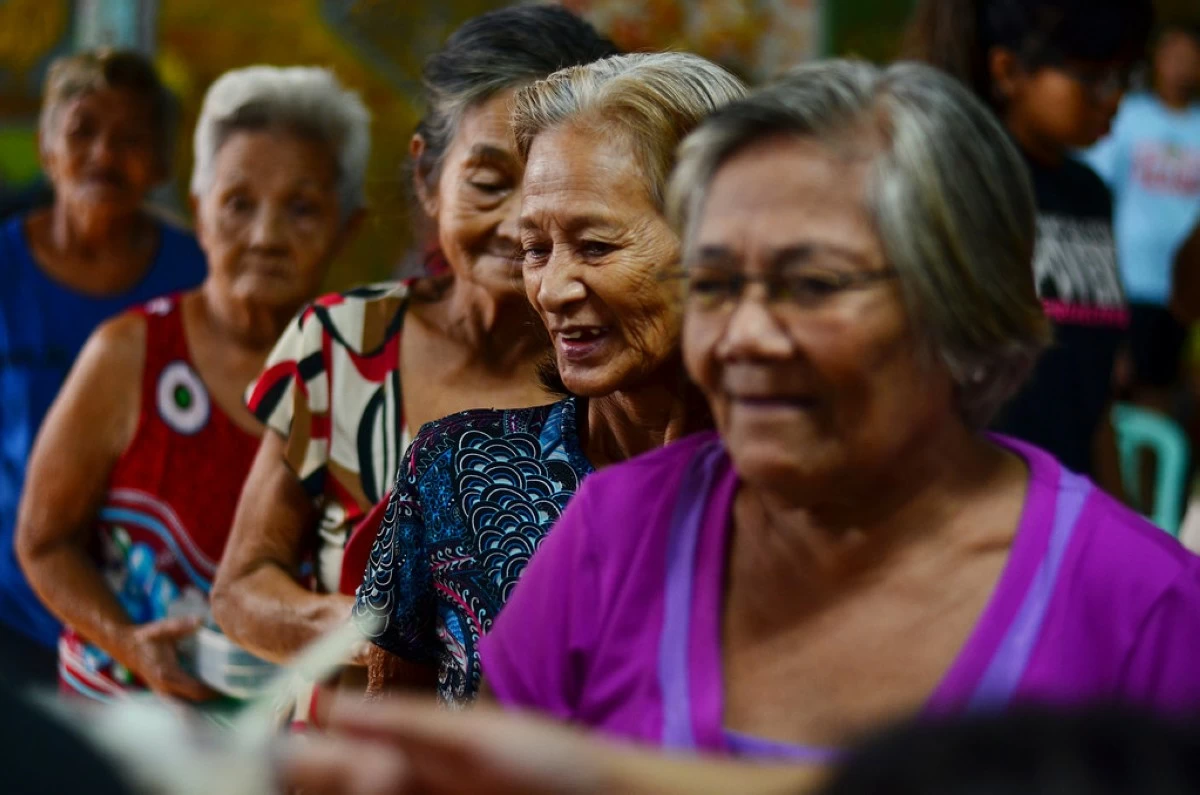
Many older Filipinos remain at risk of falling into poverty despite not being officially classified as poor, highlighting gaps in pension coverage and the need for a broader measure of economic vulnerability, according to state-run policy think tank Philippine Institute for Development Studies (PIDS).
In a statement on Monday, Aug. 10, PIDS said a recent study found that while only 7.8 percent of senior citizens were classified as poor in 2023, 24 percent were vulnerable to falling into poverty.
The disparity suggests that poverty rates alone may overlook many older Filipinos who face economic insecurity and could benefit from social protection programs.
The official poverty threshold determines whether households can afford a minimum basket of food and non-food needs at a given point in time, but does not measure the likelihood that households just above the threshold could fall into poverty because of economic or health-related shocks.
For older Filipinos, whose incomes are often fixed while healthcare needs tend to increase with age, measuring vulnerability alongside poverty could provide a more comprehensive picture of their economic situation.
The risk was even higher among senior citizens living in mixed-generation households, particularly those with children, where vulnerability reached nearly 45 percent despite relatively low poverty rates.
PIDS supervising research specialist Deanne Lorraine Cabalfin said older Filipinos also experience economic vulnerability differently depending on their circumstances.
“Older women living alone rely heavily on remittances for income, while older men living alone are the most asset-poor. Older households also spend a larger share of their income on food and healthcare, leaving many economically fragile despite not being classified as poor,” Cabalfin said.
Women are particularly vulnerable as they often reach old age with fewer savings and weaker pension coverage, while disability, social isolation and Indigenous identity can further compound disadvantages.
Pension coverage also remains a major gap, with 42 percent of Filipinos aged 60 and above receiving no pension.
Nearly one-third of Social Security System (SSS) pensioners receive less than ₱3,000 per month, while the government’s social pension provides only ₱1,000 monthly.
The social pension program also faces targeting challenges, with some eligible senior citizens excluded while some non-indigent beneficiaries are included.
Cabalfin called for the regular measurement of vulnerability alongside poverty to ensure that social protection programs better reflect the actual economic risks faced by older Filipinos.
“Kailangan nating regular na sukatin ang vulnerability, kasama ng poverty, para tugma ang program targeting sa tunay na risk (We need to regularly measure vulnerability alongside poverty so that the program targeting reflects the real risks people face),” Cabalfin said.
Based on the findings, she also recommended a fiscally sustainable expansion of social pensions to widen protection for older Filipinos. - Danielle T. Bayani