






Manila Bulletin
 Business
Banking & Finance
Philippines adds another $3.5 billion to multilateral financing pipeline after upper-middle-income upgrade
Business
Banking & Finance
Philippines adds another $3.5 billion to multilateral financing pipeline after upper-middle-income upgrade
Business
Banking & Finance
Philippines adds another $3.5 billion to multilateral financing pipeline after upper-middle-income upgrade
Philippines adds another $3.5 billion to multilateral financing pipeline after upper-middle-income upgrade
Published Aug 5, 2026 06:01 pm
|
Updated Aug 5, 2026 04:28 pm


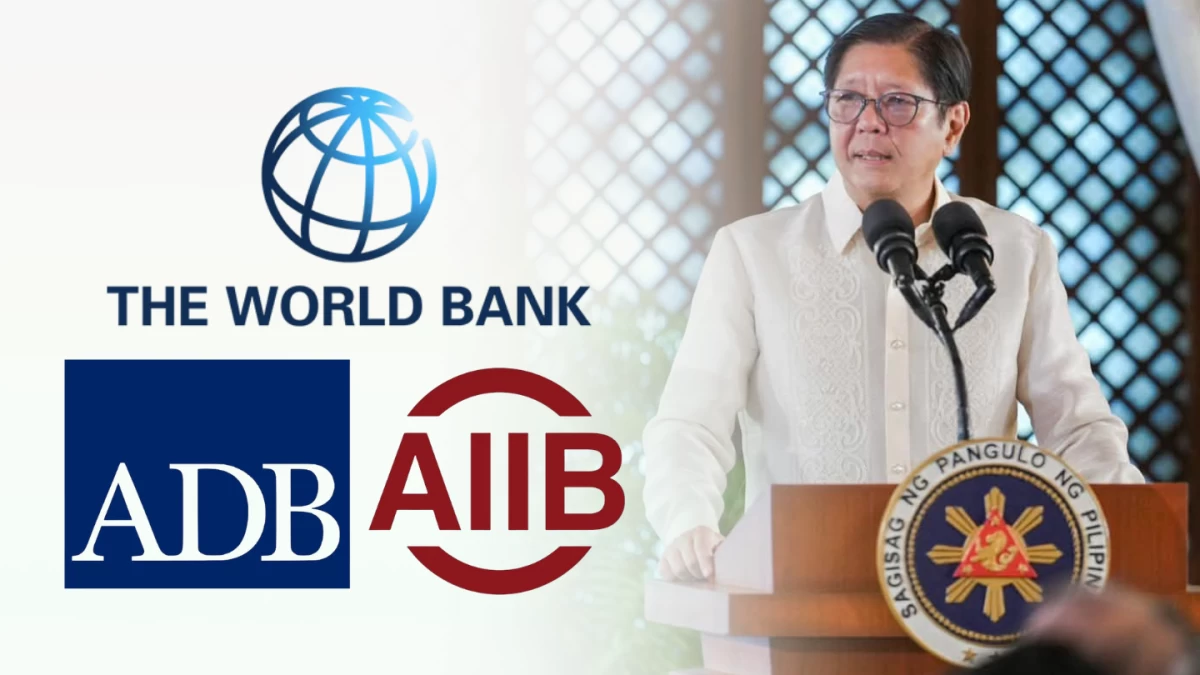
The Philippines is lining up another $3.5 billion in loans from the Asian Infrastructure Investment Bank (AIIB), the Asian Development Bank (ADB), and the World Bank, based on preliminary project documents, adding to the previously identified $8.9-billion indicative pipeline of multilateral development financing after the country’s upgrade to upper middle-income-country (UMIC) status, where access to highly concessional financing is expected to gradually decline.
The newly identified financing consists of a proposed $2.5-billion joint policy-based financing from the Beijing-based AIIB and the Manila-based ADB, alongside a separate $1-billion World Bank development policy loan (DPL) aimed at supporting economic reforms and growth. Together, these would raise the Philippines’ identified indicative pipeline of multilateral loans to about $12.4 billion, based on the latest documents reviewed by Manila Bulletin.
Earlier, Manila Bulletin reported that the Philippines had an $8.9-billion indicative pipeline of loans from the World Bank, the ADB, and the AIIB as the government accelerated project preparation after the country was elevated to UMIC status in July.
According to an AIIB project summary information document, the China-backed multilateral lender is preparing a $1-billion Economic Resilience and Fiscal Stability Program, with estimated financing approval in September this year.
The AIIB document also showed that the operation will be co-financed by the ADB through a separate $1.5-billion financing under its Assistance for Greater Resilience and Alleviation of Poverty (AGAPAY) Program, bringing the total financing package to $2.5 billion. If approved, the ADB’s $1.5-billion financing would be the multilateral lender’s largest sovereign financing for its host country, while the combined $2.5-billion AIIB-ADB package would be the country’s largest multilateral co-financing operation.
The proposed policy-based financing aims to support the Philippines’ economic resilience and fiscal stability in response to the impacts of the prolonged war in the Middle East, including energy supply disruptions, inflationary pressures, as well as supply chain shocks. According to the AIIB, the Philippines imports nearly all of its fuel—primarily from the Middle East—and remains heavily dependent on imported fertilizers, while deployment of overseas Filipino workers (OFWs) declined sharply following the deterioration of conditions in the region earlier this year.
The AIIB said the joint financing would support the government’s Unified Package for Livelihoods, Industry, Food, and Transport (UPLIFT), which was launched following President Ferdinand R. Marcos Jr.’s declaration of a state of national energy emergency under Executive Order (EO) No. 110. The government estimates the UPLIFT package will cost about $7 billion through the end of 2026. The proposed operation is intended to provide fast-disbursing budget support to preserve fiscal space, maintain essential public services, and extend assistance to vulnerable sectors affected by the crisis.
According to the AIIB document, expected outcomes include the uninterrupted delivery of essential public services, continuity of economic activity, and protection of vulnerable sectors. Output indicators include maintaining the availability of reasonably priced public and commercial transport, protecting vulnerable individuals, as well as ensuring the safe repatriation and reintegration of OFWs. The AIIB loan is expected to close in June 2027.
Meanwhile, the Washington-based World Bank is preparing a separate $1-billion Philippines Second Growth and Jobs DPL, which is targeted for board approval on Dec. 11, 2026. Unlike traditional project loans that finance specific infrastructure or government projects, a DPL provides direct budget support in exchange for agreed policy and institutional reforms, helping governments implement measures aimed at strengthening economic management as well as promoting sustainable growth.
According to the World Bank’s concept project information document (PID) disclosed last Tuesday, Aug. 4, the proposed operation seeks to support reforms that strengthen fiscal management, promote private investment and innovation, as well as improve labor force capabilities. The Department of Finance (DOF) will serve as the borrower, while implementation will involve several government agencies, including the Department of Economy, Planning, and Development (DEPDev), the Department of Budget and Management (DBM), the Department of Trade and Industry (DTI), the Department of Education (DepEd), the Department of Social Welfare and Development (DSWD), the Department of the Interior and Local Government (DILG), the Bangko Sentral ng Pilipinas (BSP), the Bureau of Internal Revenue (BIR), the Securities and Exchange Commission (SEC), and the Technical Education and Skills Development Authority (TESDA), among others.