






Manila Bulletin
 Business
Trade & Industry
DOE: Cheap ₱50 fuel could return, but will take 6 to 12 months
Business
Trade & Industry
DOE: Cheap ₱50 fuel could return, but will take 6 to 12 months
Business
Trade & Industry
DOE: Cheap ₱50 fuel could return, but will take 6 to 12 months
DOE: Cheap ₱50 fuel could return, but will take 6 to 12 months
Published Jun 15, 2026 07:24 pm


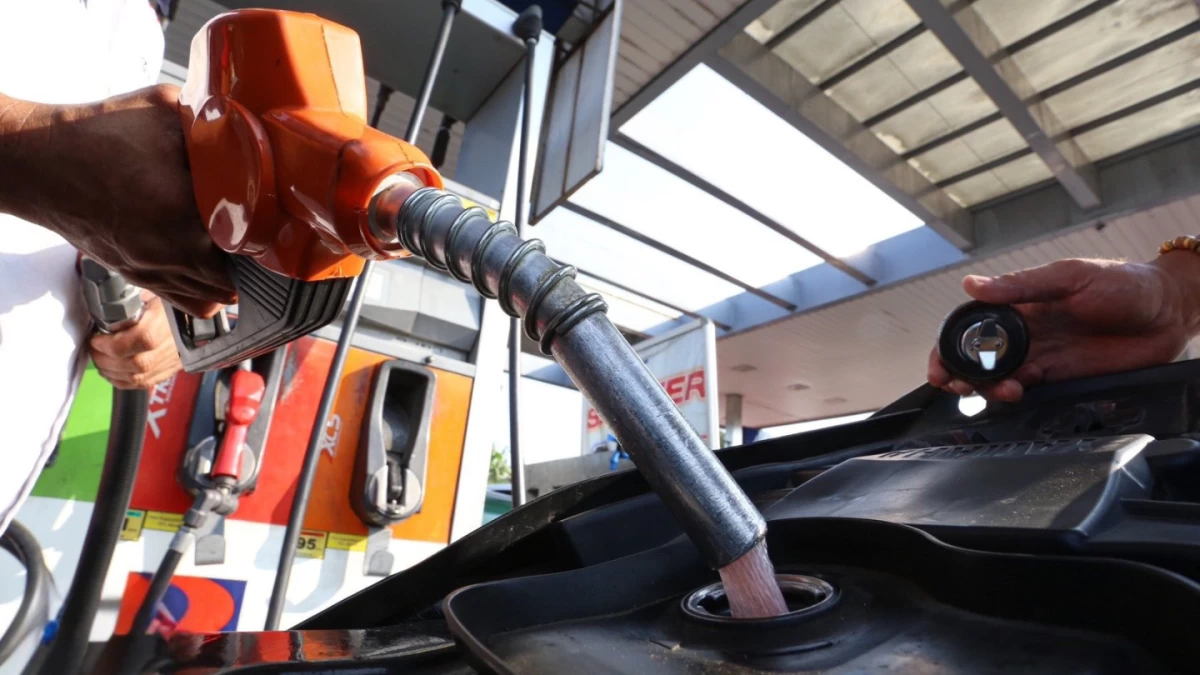
A motorcycle rider refuels at a station in Quezon City on Tuesday, April 21, following a significant rollback in fuel prices. Oil companies implemented a major price cut this week, ₱24.94 per liter decrease for diesel, while gasoline and kerosene prices were slashed by ₱3.41 and ₱2.00, respectively.
(Photo by Santi San Juan I MB)
Petroleum prices may return to normal within six months to one year as the United States (US) and Iran move closer to a deal that could end the war in the Middle East, according to the Department of Energy (DOE).
Energy Secretary Sharon Garin announced on Monday, June 15, a maximum price rollback of ₱5.71 per liter for diesel and ₱2.50 per liter for kerosene this week.
Gasoline prices, meanwhile, may either see a rollback of ₱0.32 per liter or increase by up to ₱1.68 per liter.
Fuel prices are expected to ease slightly this week as the global oil market reacts positively to the announcement by Pakistan, the country mediating truce talks, that the US and Iran have agreed to end all military operations.
The agreement to end the war is expected to be signed on Friday. The deal covers the reopening of the Strait of Hormuz, through which more than 90 percent of the Philippines’ oil supply passes.
The nearly four months of repeated blockades along this critical maritime route directly led to the upward trajectory of fuel prices, which have since accelerated increases in the prices of consumer goods.
“The prospect of the resumption of oil shipments through that waterway, and the potential easing of global energy prices that may follow, is a positive development we are watching closely and cautiously with optimism,” said Garin in a media briefing.
If both the US and Iran sign the peace agreement, the DOE chief said this should pave the way for the much-needed easing of pump prices.
However, the eventual return to pre-war levels, around ₱50 to ₱60 per liter for diesel, would still take time as oil-producing countries attempt to recover from the impact of the war.
Energy Undersecretary Alessandro Sales estimates that the Philippines would need to wait at least six to 12 months before prices return to their previous levels.
“It’s really an issue of restarting the supply that was disrupted by the war. The return of supply is not instantaneous,” he said.
Meanwhile, Garin said a potential end to the conflict in the Middle East would likely not directly lead to the lifting of the government’s declaration of a national state of energy emergency.
In this scenario, she said the oil industry may no longer need emergency powers, but other sectors such as agriculture and transportation “might still need them.”
Garin indicated that ending the emergency declaration would likely hinge on the easing of the inflation rate, which recently slowed to 6.8 percent in May from 7.2 percent in April.
“The emergency started with the oil problem, but right now it’s also an inflation problem,” she said.