






 Business
Banking & Finance
Marcos economic team argues gasoline, diesel tax halt offers minimal consumer relief
Business
Banking & Finance
Marcos economic team argues gasoline, diesel tax halt offers minimal consumer relief
Marcos economic team argues gasoline, diesel tax halt offers minimal consumer relief
DOF warns blanket tax cut to cost ₱50 billion in revenue
By Derco Rosal


At A Glance
- President Ferdinand Marcos Jr.'s economic team said Filipino consumers are unlikely to see meaningful relief from the suspension of excise taxes on gasoline and diesel, as any reduction in pump prices would be minimal and likely offset by prevailing market forces.
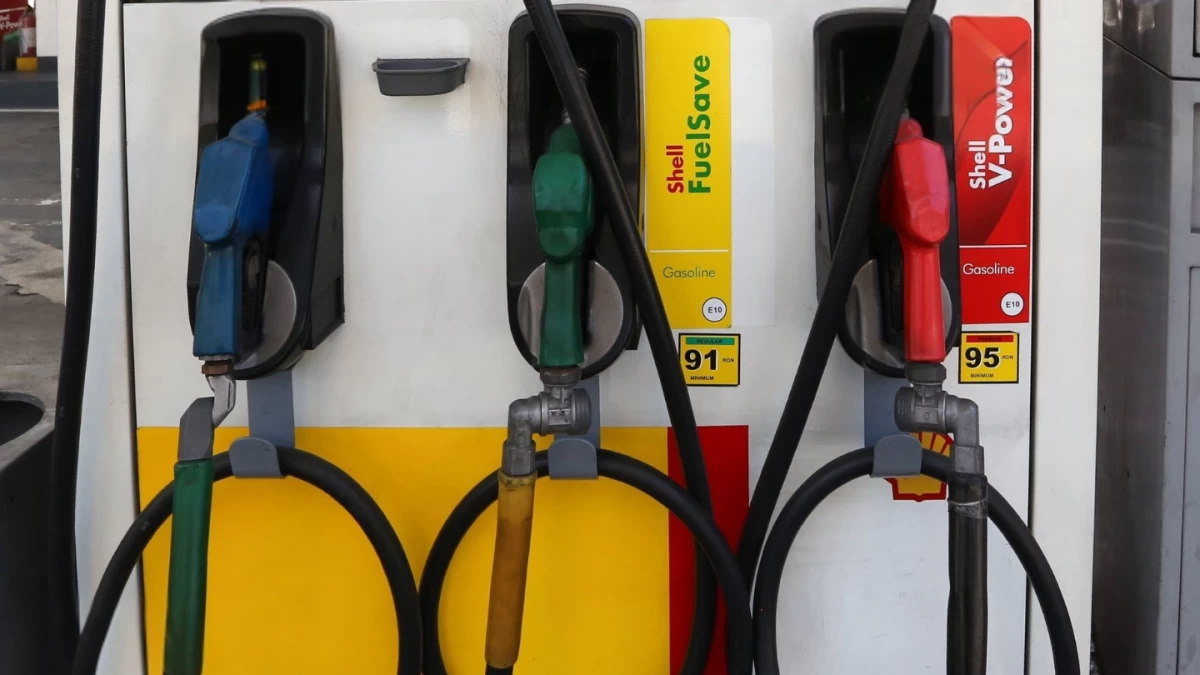
President Ferdinand Marcos Jr.’s economic team said Filipino consumers are unlikely to see meaningful relief from the suspension of excise taxes on gasoline and diesel, as any reduction in pump prices would be minimal and likely offset by prevailing market forces.
This was the Cabinet-level Development Budget Coordination Committee’s (DBCC) justification, as the government only suspended excise taxes on kerosene and liquefied petroleum gas (LPG).
Explaining the refusal to cut taxes on transport fuels, the DBCC argued that “suspending excise taxes on diesel and gasoline would not likely provide meaningful relief.”
Instead of broad tax cuts for these fuels, the government said it will “continue to provide additional targeted and managed subsidies for sectors most affected by rising transportation fuel prices.”
Primary beneficiaries include public transport operators, drivers, commuters, farmers, and fisherfolk.
This strategy aims to provide a safety net for the most vulnerable “while preserving fiscal space to sustain essential public services and respond to an unpredictable global environment,” Department of Finance (DOF) Secretary Frederick D. Go said in a statement on Tuesday, April 14.
Go said the national government (NG) is adopting a “balanced and fiscally responsible approach to address both the immediate and long-term challenges” stemming from external shocks.
Marcos last Monday, April 13, greenlit the full suspension of excise taxes on kerosene and LPG. This move is specifically designed to aid small businesses and average families in meeting their basic cooking and energy needs.
According to the DOF, the tax suspension is expected to have an immediate financial impact, with the government estimating savings of about ₱37 per 11-kg LPG cylinder and ₱5.56 per liter of kerosene.
Data from the 2023 Family Income and Expenditure Survey (FIES) showed that nearly half of total kerosene consumption is attributed to the poorest households, while a majority of LPG users come from the bottom 70 percent.
DOF Undersecretary Karlo Fermin S. Adriano explained during a Malacañang press briefing that a targeted suspension is the appropriate move for now, citing large revenue losses should the government decide to remove taxes across all petroleum products.
Adriano noted that “for full suspension of LPG and kerosene, the losses will be around ₱4.1 billion for three months,” adding that a broader tax removal would incur larger revenue losses.
“If you decide to include a suspension of diesel and gasoline and LPG and kerosene on top, it will be around ₱43.6 billion in losses in three months,” Adriano said. He oversees the DOF’s revenue forecasting and programming for the NG, as well as cash programming and monitoring of NG finances.
Overall, a total suspension would mean ₱50 billion in foregone revenues that are supposed to be used as subsidies for vulnerable sectors. “So, that’s ₱50 billion in assistance that will not be provided to vulnerable and middle-income groups,” Adriano said.
He argued that universal excise tax cuts would disproportionately benefit wealthier citizens who consume more fuel, while depleting funds intended for vulnerable sectors.
For Department of Energy (DOE) Secretary Sharon S. Garin, failing to prioritize vulnerable sectors would trigger economic stagnation and stagflation, creating a disadvantage that would eventually be felt by all Filipinos.
Adriano said no specific projects have yet been identified for funding cuts, adding that decisions on priorities will be deferred to the Department of Budget and Management (DBM).