






Manila Bulletin
 Philippines
National
How the education crisis puts Philippine economic growth at risk
Philippines
National
How the education crisis puts Philippine economic growth at risk
Philippines
National
How the education crisis puts Philippine economic growth at risk
How the education crisis puts Philippine economic growth at risk
Education gaps threaten economic competitiveness; PBEd calls for stronger collaboration, urgent reforms
Published Feb 19, 2026 03:45 pm


At A Glance
- Widespread gaps in basic education, particularly in literacy, undermine workforce readiness and put the Philippines' economic competitiveness at risk, PBEd warns
- PBEd emphasizes that addressing classroom shortages, literacy, and digital learning requires coordinated action among the government, the private sector, and communities
- Investing in education, PBEd says, is essential for long-term growth, with partnerships between business and government shaping a skilled workforce capable of sustaining national development
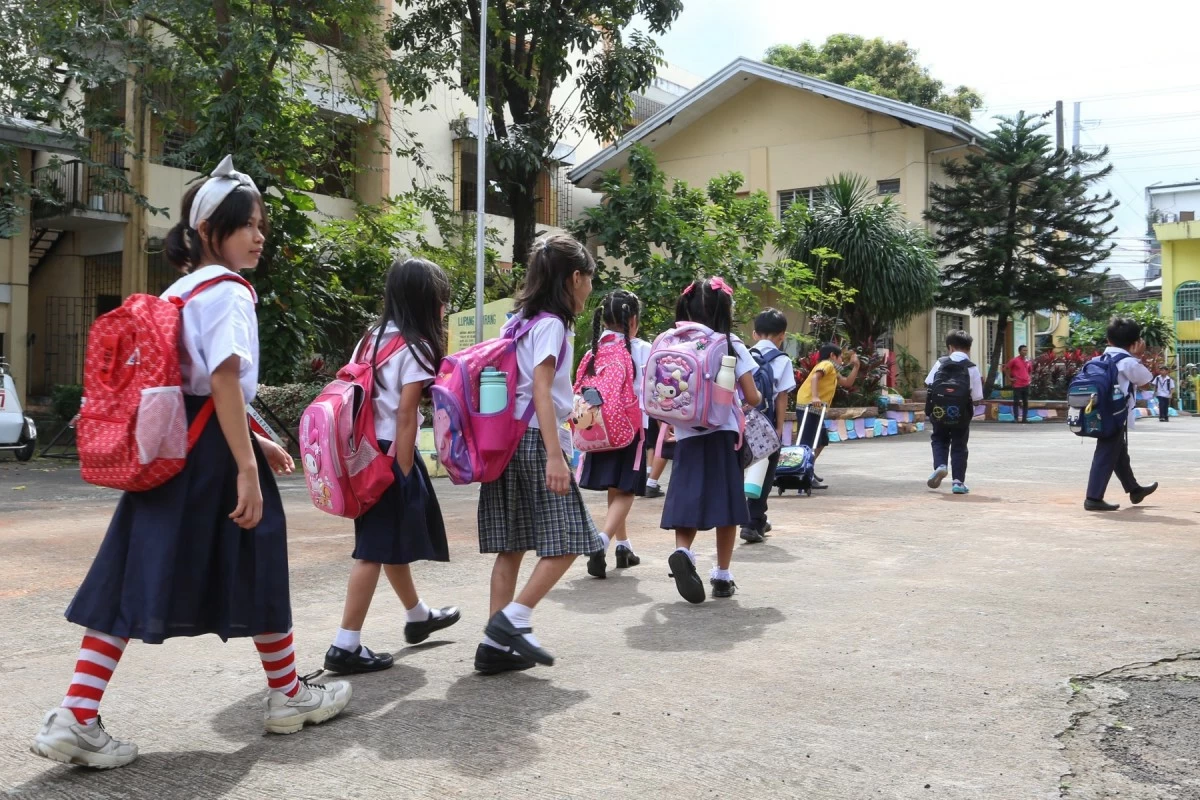
Closing the education gap is critical, PBEd warns, as the Philippines faces risks to economic growth and workforce readiness. (Manila Bulletin / file)
The Philippines faces a critical crossroads, where faltering education reforms could lead to a weakened economy and a workforce even less prepared for the challenges of the next decade.
At the sidelines of the 2026 Leadership Forum organized by the Philippine Business for Education (PBEd) on February 18, PBEd President Chito Salazar warned that the country’s workforce readiness remains under threat without urgent reforms.
“It’s happening now; we don’t have enough job-ready workers,” he said in an interview.
Learning crisis is an economic threat
“Whenever we talk about the lack of properly skilled labor, we often assume the problem lies in higher education—but the real issue is in basic education, where a majority of learners cannot read,” Salazar said.
He also emphasized the magnitude of the learning crisis, as highlighted in reports released by the Second Congressional Commission on Education (EDCOM 2). “The impact on our people is massive, and the urgency is real,” he said.
Salazar warned that without urgent reforms, the country’s education crisis could trigger an economic crisis. “While we focus on physical infrastructure, we often forget human infrastructure, which is even more important,” he added.
Education, he noted, should be a priority—especially for the students who will become the country’s future workforce.
“The Philippines simply cannot rise without it—it is the nation’s greatest resource,” Salazar said. “Without a skilled workforce, the economy has no foundation for growth, and we will not see major development unless we invest in our people,” he added.
A rare and promising moment
In his opening remarks at the invitation-only event, Salazar described the current period as a “rare and promising moment” for the country’s education system.
He cited the closer collaboration between the Department of Education (DepEd) under Secretary Sonny Angara and the completion of a landmark national assessment that revealed deep learning gaps and infrastructure shortages.
“We find ourselves at a rare and promising moment—one where education reform has finally risen to the top of the national agenda,” Salazar said. “We are in possession of an extraordinary body of evidence, analysis, and credible reform roadmaps—the real work begins now,” he added.
From diagnosis to delivery
Central to this shift is the work of EDCOM 2, whose final report outlined the country’s urgent challenges: classroom shortages, learning gaps, and workforce readiness issues.
Salazar emphasized that the report not only diagnoses the problem but also provides evidence-based roadmaps for long-term reform.
“Our challenge is no longer the lack of ideas or data, but the discipline and resolve to carry these reforms through—to ensure that none of them fade into good intentions left unrealized,” he said.
He cited early progress under DepEd, including expanded access to education technology, accelerated classroom construction through local government and private sector partnerships, and a renewed nationwide focus on reading and literacy.
“Education reform is not the sole burden of the executive or the bureaucracy,” Salazar said. “It is a shared obligation—one that we bear as partners in education who have long been working toward the same outcomes,” he added.
Business sector stakes the future workforce
For the business community, education reform is not merely a social responsibility but an economic necessity.
Salazar emphasized that companies have a direct stake in ensuring that graduates are equipped with the skills necessary to compete globally. “We share this responsibility as a business community—many of whom are here today—with a direct stake in the quality, adaptability, and competitiveness of our future workforce,” he said.
He also highlighted a shared vision: Filipino learners reading at grade level, graduates securing meaningful employment, and citizens embracing lifelong learning.
PPPs and digital transformation
To address classroom shortages, Salazar urged stronger support for reforms, including expanding education vouchers, allowing private properties to be used as schools, and reviving public-private partnerships (PPP) for school infrastructure.
“We now have a pipeline capable of delivering tens of thousands of classrooms in record time,” he said. “Combined with local partnerships, we have a realistic path to eliminating the classroom deficit in just a few years,” he added.
However, he noted that infrastructure alone is not enough.
Salazar underscored the need to keep pace with regional neighbors in digital learning, including connectivity, devices, and education technology integration. “We cannot afford incrementalism,” he said.
Education as an economic strategy
Salazar framed investments in education as a growth strategy, not a cost.
“The cost of these investments is modest compared to the price of inaction. Education is not a social expense—it is a growth strategy,” he said, stressing that today’s reforms will shape the country’s long-term economic competitiveness and resilience.
PBEd, an advocacy group led by top Filipino business leaders aiming to drive systemic education reforms by uniting industry, academe, and government, reaffirmed private sector support for DepEd’s reform agenda and urged sustained collaboration across programs and administrations.
“Let us match that direction with national resolve and move forward with seriousness of purpose, a spirit of partnership, and a shared commitment to do what must finally be done,” Salazar said.
RELATED STORY: