






Manila Bulletin
 Philippines
Visayas
ASEAN Tourism Forum concludes with sights set on regional tourism
Philippines
Visayas
ASEAN Tourism Forum concludes with sights set on regional tourism
Philippines
Visayas
ASEAN Tourism Forum concludes with sights set on regional tourism
ASEAN Tourism Forum concludes with sights set on regional tourism
Published Jan 30, 2026 06:40 pm


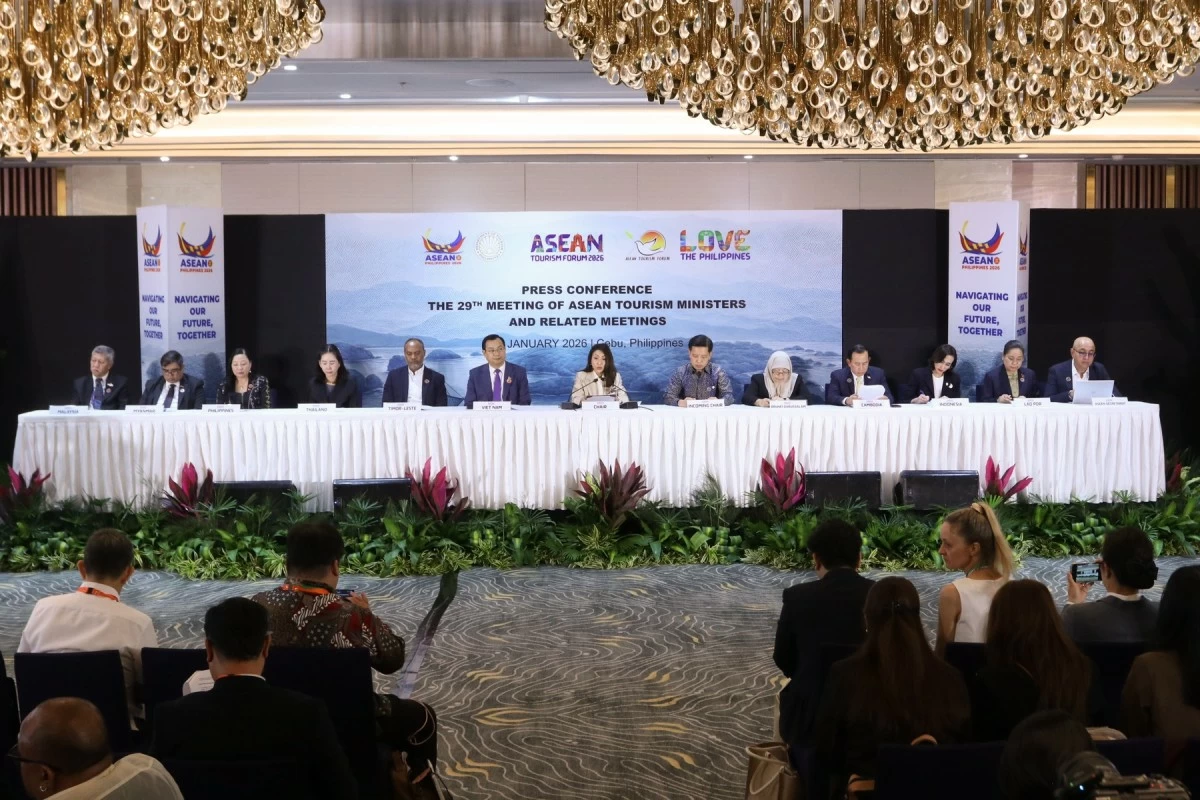
ASEAN Tourism Forum Chairwoman and Department of Tourism Secretary Christina Garcia Frasco leads a press conference with ASEAN tourism ministers on Friday, Jan. 30, in Cebu City. (Santi San Juan)
CEBU CITY – With emphasis on digital innovation, cross-border connectivity, and high-value market opportunities, tourism leaders are setting their sights on the future of regional tourism following the conclusion of the 29th ASEAN Tourism Forum here on Friday, Jan. 30.
Chaired by Tourism Secretary Christina Garcia-Frasco, the three-day forum marked the transition from the ASEAN Tourism Strategic Plan (ATSP) 2016-2025 to the upcoming ATSP 2026-2030 and the ASEAN Tourism Marketing Strategy (ATMS) 2026-2030.
The ATSP 2026-2030 and the ATMS 2026-2030 will guide the region’s tourism policies and promotional activities for the next five years.
“The meeting encouraged continued efforts to operationalize ATMS 2026 to 2030, with a strong focus on promoting Southeast Asia as a single, seamless, and high-quality tourism destination through data-driven, audience-centered, and digitally enabled regional marketing initiatives,” said Frasco, reading the joint media statement on the outcomes of the ministry meeting.
The use of data-driven strategies, digital platforms, and targeted marketing campaigns to position Southeast Asia as a single, seamless, and competitive destination were emphasized by the tourism ministers.
The future of ASEAN tourism is digitally enabled and market-focused, with efforts to strengthen regional collaboration with private sector partners, online travel platforms, and sub-regional mechanisms, said Frasco.
It was through the forum that emerging market segments as key growth areas, including cruise tourism, multi-destination itineraries, wellness, adventure, and creative tourism experiences were identified.
Ministers also tackled the operationalization of the ASEAN Mutual Recognition Arrangement for Tourism Professionals (MRATP) in 2026, which aims to create a highly skilled, future-ready workforce to meet evolving market demands.
“The meeting encouraged further capacity-building development efforts, including digital skills training and support for micro, small, and medium tourism enterprises,” Frasco said.
Regional marketing integration as a cornerstone of future development was also highlighted.
The region aims to amplify its global presence, attract longer-stay visitors, and encourage multi-country travel within Southeast Asia by coordinating campaigns across member states and aligning branding messages.
Frasco added that the Philippines is prioritizing a new initiative under its ASEAN chairmanship: The ASEAN Sustainable and Resilient Tourism Outlook, which will serve as a key economic deliverable in 2026.
It was also announced that the 30th ASEAN Tourism Ministers Meeting will be held in Singapore in 2027.