






Manila Bulletin
 Lifestyle
Arts and Culture
Tracing energy through form: Gus Albor's "Aurae II" turns minimalism into lived experience
Lifestyle
Arts and Culture
Tracing energy through form: Gus Albor's "Aurae II" turns minimalism into lived experience
Lifestyle
Arts and Culture
Tracing energy through form: Gus Albor's "Aurae II" turns minimalism into lived experience
Tracing energy through form: Gus Albor's "Aurae II" turns minimalism into lived experience
The abstractionist's latest exhibition, supported by WWRS Philippines and paired with a Bocca culinary collaboration, connects painting, place and contemporary life
Published Jan 28, 2026 08:46 pm


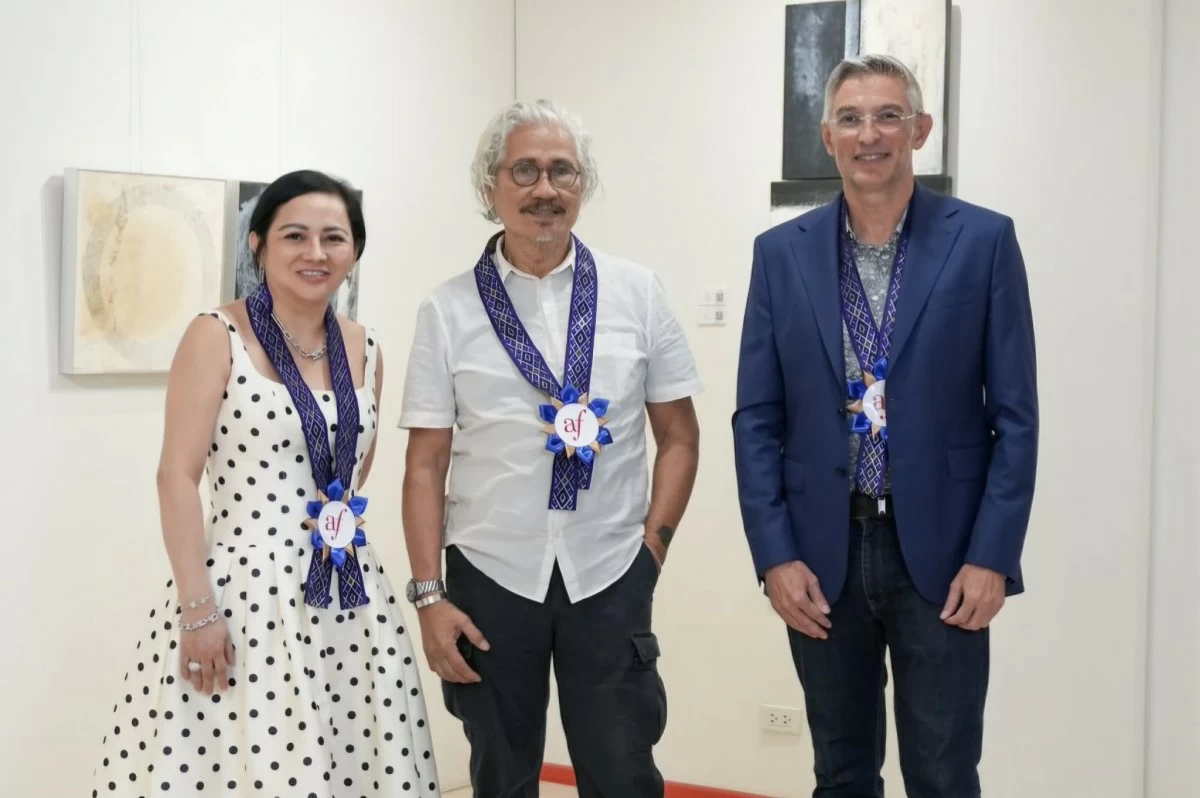
Rosita Lara “Otty” Lumagui, managing director of WWRS Philippines and founder and chief executive officer of Bocca; artist Gus Albor; and Olivier Dintinger, executive director of Alliance Française de Manille, at the opening of Aurae II.
The first impression of “Aurae II” is not abundance, but restraint.
Large canvases marked by fields of color, lines and textured surfaces hold the gallery space with measured presence. Rather than narrate directly, the works ask viewers to slow down, to observe how a single form can suggest motion, emotion and connection. For Gus Albor, this economy of elements is where meaning begins.
Mounted with the support of Worldwide Resource Solutions Philippines Inc. and in collaboration with Bocca restaurant, the exhibition positions minimalist art within a broader lifestyle setting. Paintings are accompanied by a curated dining experience, linking visual composition with flavors rooted in French, Italian and Spanish traditions.
Gus approaches each piece through experimentation rather than formula.
“I play around with ideas,” he said. “Maybe, unknowingly, that becomes my meditation.”
From this process comes the concept of “aurae,” the invisible mental, emotional and spiritual energies that surround individuals, objects and places. The exhibition’s title reflects that belief, with each canvas acting as a visual expression of those unseen fields.
Curator Carina Gaskell explained how the works translate that idea into form.
“On the canvas, such energy fields take center stage,” she said. “Like a fractal, each work also emits its own aura, encouraging contemplation and ultimately leading us to the root of ourselves.”
Several major pieces define the exhibition, including “Resonance,” “Islands,” “Aurae” – D25, “Halik” and “Luzon,” each priced at about half a million pesos. Though minimal in structure, the works carry contemporary references.
“Luzon” draws from the country’s main island, while “Tagalog Pulo,” which means “island,” continues the geographic motif.
“It’s timely,” Gus said. “Another interpretation of the same theme – about islands.”
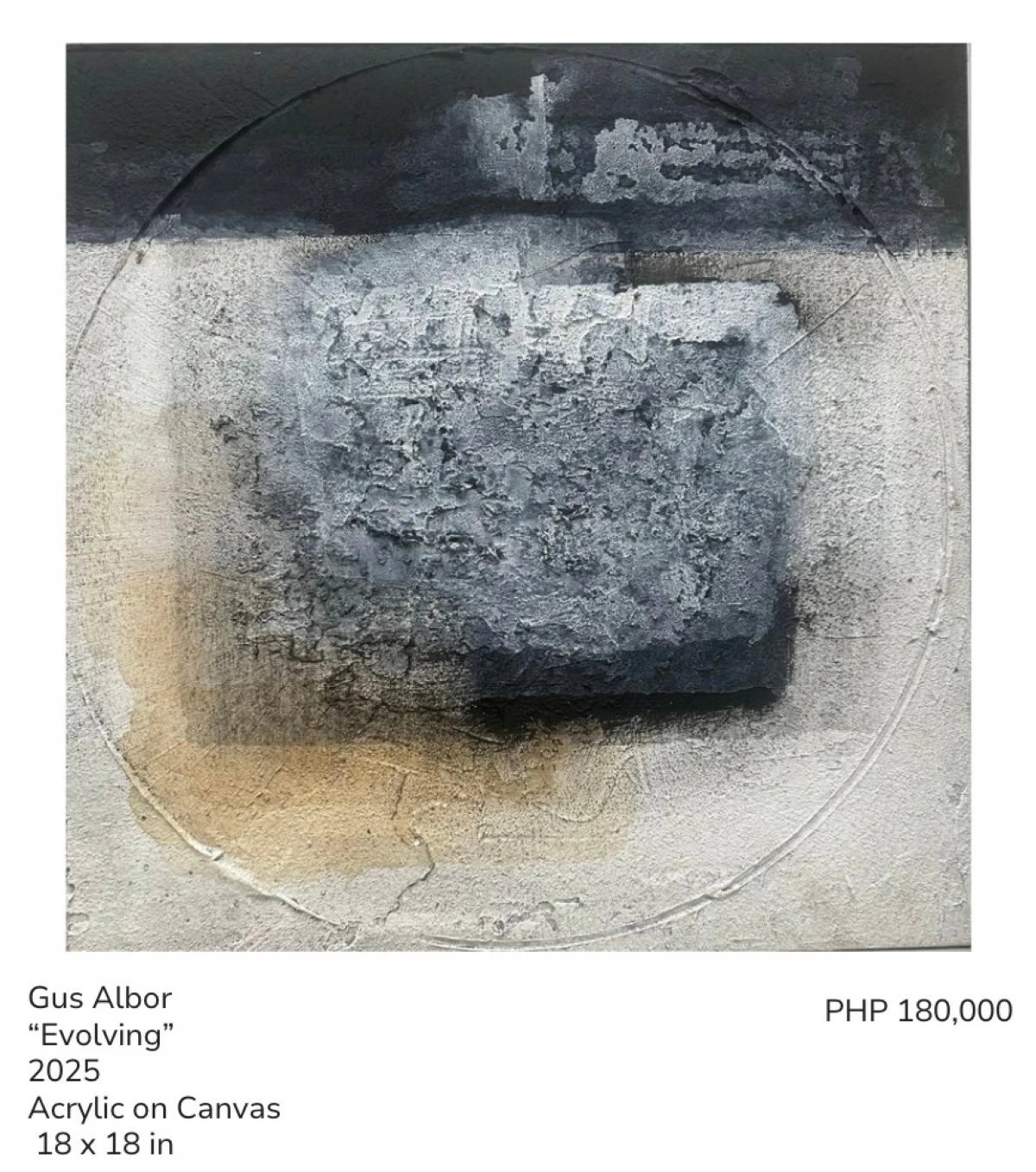
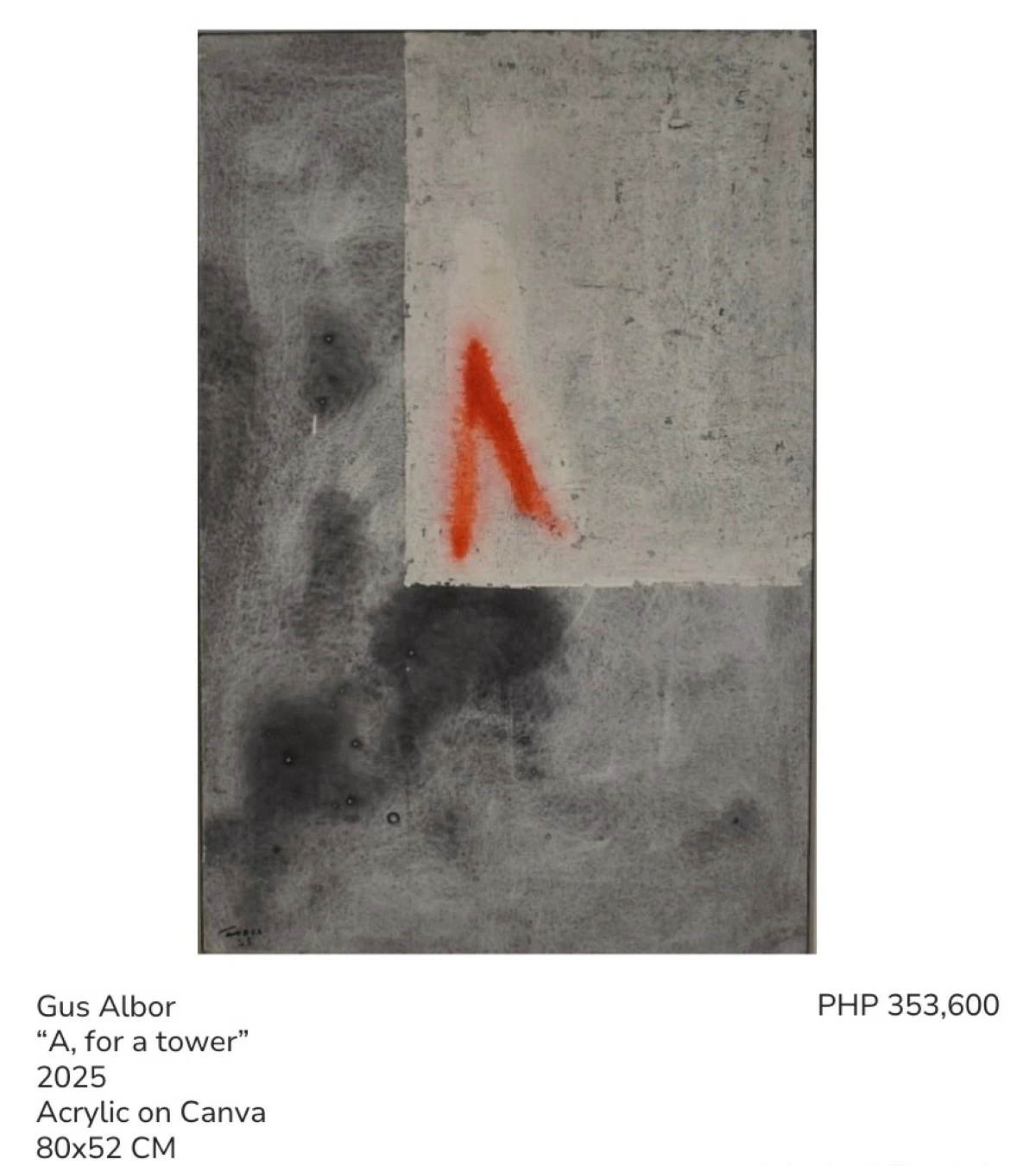
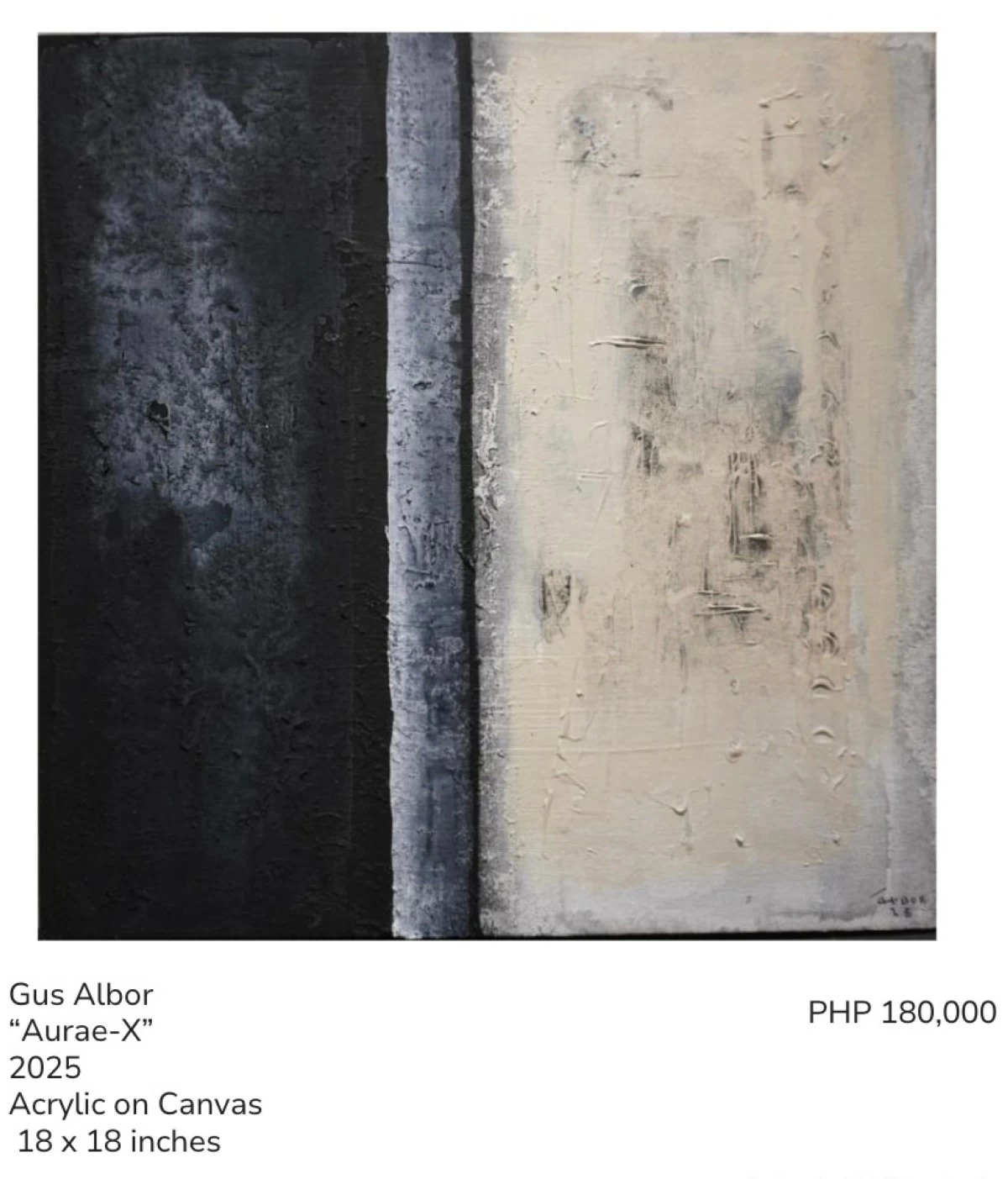
Influences from Japanese aesthetics are evident, particularly the emphasis on balance and simplicity. Beneath the controlled surfaces, however, are materials chosen for endurance. Gus uses acrylic, house paint and industrial pigments, and also creates bamboo sculptures that introduce dimension while maintaining functional qualities.
The pace of his work varies.
“Sometimes I finish a piece in one day. Sometimes it takes a month,” he said. “It depends on the mood, the time of day. If everything aligns, it flows onto the canvas.”
One painting, “Halik,” remained unfinished for several years before he completed it in 2014.
“Basically, you feel it. It talks to you and says, ‘I’m complete,’” Gus said.
A leading figure in Philippine abstraction since the 1970s, Gus is a recipient of the Cultural Center of the Philippines’ Thirteen Artists Award and has exhibited in Germany, Italy, Japan, France and the United States.
“I paint my time,” he said. “It’s the era of post-modernism. Playing around with ideas and envisioning aura, sa aking pananaw – through personal vision – has become the mantra of my work.”
Supporting the exhibition is WWRS Philippines, an outsourcing and transformation partner in the health staffing sector that has also taken an active role in promoting Filipino talent. Its managing director, Rosita Lara “Otty” Lumagui, who is also founder and chief executive officer of Bocca, said the partnership was designed to create a fuller sensory encounter.
“Gus’s paintings speak in colors and textures, while Bocca speaks in flavors,” Lumagui said. “Together, they create an experience that awakens all the senses. WWRS Philippines empowers artists like him to show the world the depth and soul of Filipino creativity, and it’s humbling to be part of that journey.”
She later added, “Albor’s paintings remind us of the depth of Filipino creativity. WWRS Philippines ensures that such talent doesn’t stay hidden but inspires globally, while Bocca brings a tangible, sensory celebration that honors our culture. Together, it’s a harmony of vision, flavor, and pride.”
Bocca, located in Bridgetowne, Quezon City, is known for its refined yet approachable take on modern continental cuisine and serves as the culinary extension of the exhibition experience.
Several works in “Aurae II” also engage with present-day realities, subtly referencing geopolitical concerns and shifting landscapes. Though abstract, the compositions remain connected to contemporary life.
For Gus, awareness is central to artistic freedom.
“Having this awareness lets us explore possibilities and enjoy artistic freedom,” he said.
Through measured forms and controlled color, “Aurae II” invites reflection on how unseen forces shape both art and everyday experience, offering viewers a space to consider energy, place and time through the language of minimalism.