






Manila Bulletin
 Philippines
National
Marcos stands by Filipino officials amid China embassy row on West PH Sea
Philippines
National
Marcos stands by Filipino officials amid China embassy row on West PH Sea
Philippines
National
Marcos stands by Filipino officials amid China embassy row on West PH Sea
Marcos stands by Filipino officials amid China embassy row on West PH Sea
Published Jan 26, 2026 01:45 pm


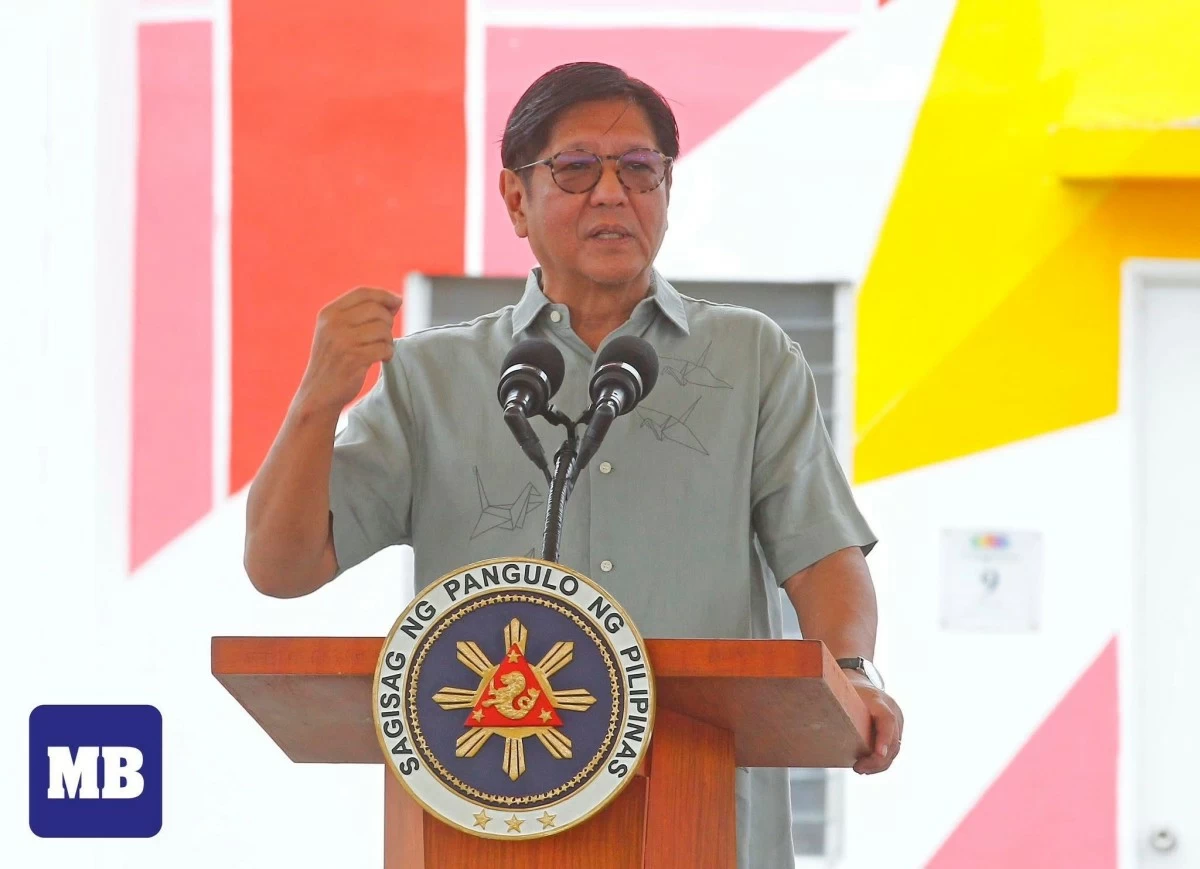
PRESIDENT FERDINAND 'BONGBONG' MARCOS JR. (MARK BALMORES/MB FILE PHOTO)
President Marcos stands by Filipino officials defending the country’s maritime rights, Malacañang said on Monday, Jan. 26, amid escalating word wars between the Chinese Embassy in Manila and Philippine officials over statements on the West Philippine Sea.
In a press briefing, Presidential Communications Office (PCO) Undersecretary Claire Castro said the President supports government agencies and officials as long as their actions are lawful and aligned with the national interest.
“Kapag po ang mga ahensiya ng gobyerno, ang mga heads po ng ahensiya ay tama at naaayon sa batas ang ginagawa at naaayon sa ating adbokasiya na ipaglaban ang karapatan at interes ng bansa, iyan po ay sinusuportahan ng Pangulo (When government agencies and their heads act correctly, in accordance with the law, and in line with our advocacy to defend the country’s rights and interests, they have the President’s support),” she said.
Asked directly if Marcos stands by the statements of Filipino officials amid the attacks, Castro replied: “Yes.”
Castro likewise confirmed that Chinese authorities summoned Philippine Ambassador to China Jaime FlorCruz, following Chinese accusations of a supposed smear campaign linked to statements by Philippine Coast Guard (PCG) spokesperson Commodore Jay Tarriela.
“Doon sa meeting na iyon ay pinagtibay pa rin ang ating paninindigan para sa maritime issues at para proteksyunan din po ang ating soberanya (In that meeting our position on maritime issues and the protection of our sovereignty was reaffirmed),” she said.
Castro reiterated Marcos’ long-standing position that Philippine territory will not be surrendered, even as the government continues to pursue diplomacy.
She said actions taken by Philippine agencies to defend national interests reflect the President’s directive, even as diplomacy remains the primary approach in managing disputes with other countries.
“But mananatili pa rin po na diplomasya ang kailangan para kung mayroon mang issues sa ibang bansa ay maayos po in a way na dapat may kasamang diplomasya (Diplomacy will still be necessary so that issues with other countries can be resolved properly, with diplomacy as part of the process),” she said.
Disinformation concerns
Castro also addressed claims by a non-profit group that the Chinese Embassy is influencing Chinese-language media in the Philippines to push propaganda.
She said the government respects freedom of expression but condemns disinformation and fake news, regardless of the source.
“Iginagalang po natin ang freedom of expression, ang freedom of speech, ngunit kinukondena natin ang anumang disinformation o fake news (We respect freedom of expression and freedom of speech, but we condemn any disinformation or fake news),” she stressed.
The Palace Press Officer said the PCO is coordinating with the Department of Information and Communications Technology and the Cybercrime Investigation and Coordinating Center to look into possible inauthentic behavior online.
Call for unity, vigilance
Castro said transparency remains the administration’s guiding principle and urged the public to remain vigilant and united.
“Ang nais po natin ay transparency, masabi ang katotohanan… maging mapanuri, magkaisa po tayo (What we want is transparency, to tell the truth… be discerning and let us remain united),” she said.
The Palace official stressed that the paramount concern is protecting the country’s interests, not those of other states.
“Ang dapat po nating ipaglaban at ingatan at proteksyunan ay ang interes ng ating bansa at hindi interes ng ibang bansa (What we must fight for, safeguard, and protect is the interest of our country, not the interests of other countries),” she said.
Legal basis of WPS claims reaffirmed
The Palace’s position was echoed by legal and policy advocates, who stressed that the Philippines’ stance in the West Philippine Sea is firmly anchored in international law.
Civic leader and Palace ally Dr. Jose Antonio Goitia said Philippine rights in the WPS do not arise from political rhetoric but from binding treaties.
“The name is administrative. The rights come from law,” Goitia said, explaining that while “West Philippine Sea” is an official designation under a 2012 administrative order, Philippine maritime rights are grounded in the United Nations Convention on the Law of the Sea (UNCLOS).
Goitia said UNCLOS clearly defines the country’s 200-nautical-mile exclusive economic zone (EEZ), a position affirmed by the 2016 Arbitral Award, which ruled that areas such as Recto Bank fall within the Philippine EEZ.
“The boundaries are not ambiguous,” he said.
He stressed that while the EEZ is not sovereign territory, it grants the Philippines exclusive rights over resource management and prohibits coercive or law enforcement actions by other states.
Goitia also rejected claims questioning the validity of the 2016 arbitral ruling, noting that UNCLOS expressly recognizes arbitration as a legitimate dispute-settlement mechanism and that a party’s non-participation does not invalidate the ruling.
“Diplomacy without law is not peace but weakness,” he said.
Goitia said defending the West Philippine Sea is a legal and national imperative, calling on Filipinos to remain vigilant against misleading narratives and to uphold the country’s rights through law.
“The true measure of patriotism is the firm but measured defense of our rights through law,” he said.