

ADVERTISEMENT

No Filipinos reported killed in Nepal floods; Marcos expresses sympathy — Palace

Published Aug 27, 2026 02:02 pm

At A Glance

  • No Filipino casualty has been reported so far after catastrophic floods struck Nepal, according to the Department of Foreign Affairs (DFA).
  • President Marcos expressed sympathy for those affected and urged prayers for people impacted by the disaster, Malacañang said.
  • The Philippine government is coordinating with Nepalese authorities and the Filipino community as the death toll and number of missing continue to rise.
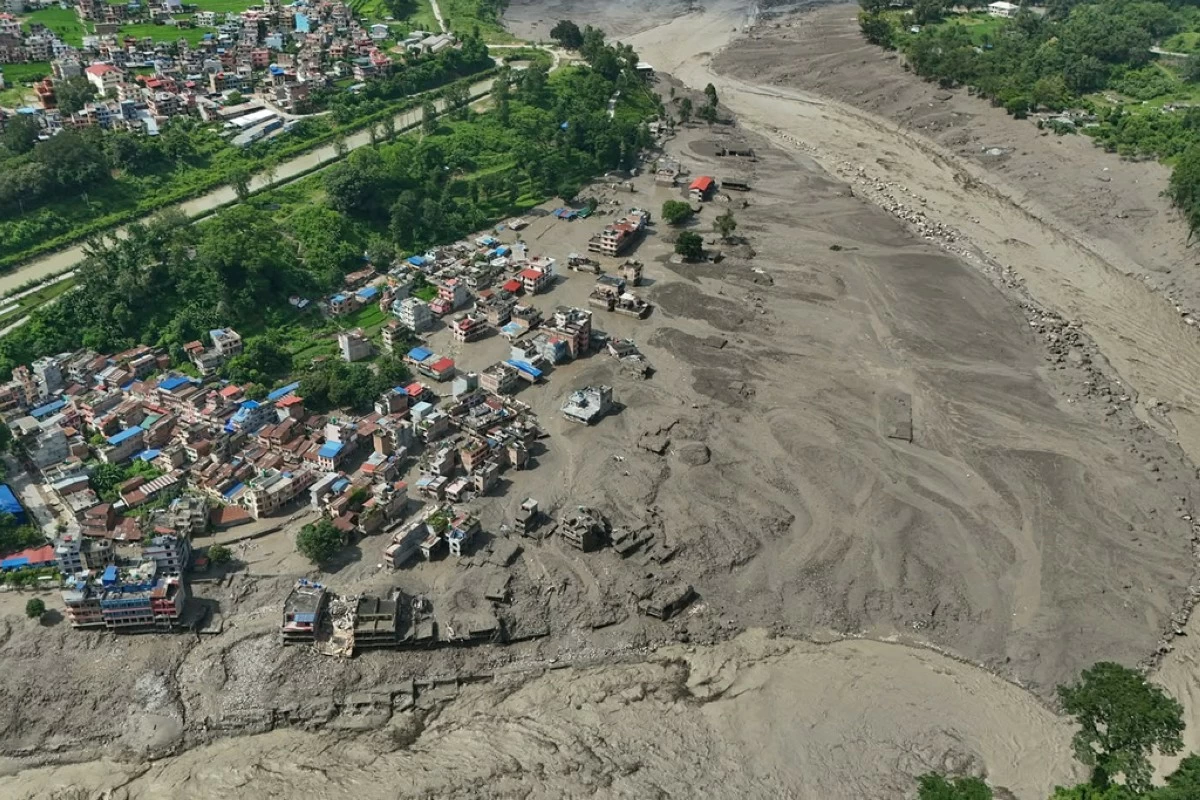
Damaged houses stand precariously near the swollen, debris-choked banks of the Trishuli River after flash floods in Nepal's Nuwakot district on Wednesday, Aug. 26, 2026. (AP Photo/Niranjan Shrestha)

No Filipino casualty has been reported so far after catastrophic flash floods struck the Nepal-China border, as President Marcos expressed sympathy for those affected by the disaster, Malacañang said.

Presidential Communications Office (PCO) Undersecretary Claire Castro said this after a wall of mud and rock collapsed into a river along the Himalayan border, sending a destructive surge through communities in Nepal and China's Tibet region.

In a press briefing, Castro said the Department of Foreign Affairs (DFA) had reported no Filipino deaths or injuries as of the afternoon briefing.

“Wala pa po na naibabalita na naapektuhan po na ating mga kababayan (There are no reports of Filipinos affected by the tragedy as of now),” she said on Thursday, Aug. 27.

President Marcos, according to Castro, viewed the disaster as a cause for concern and expressed sympathy for those affected.

“Ang kanyang (President Marcos) mensahe ay nakakalungkot ang ganitong pangyayari (His message is that it is saddening to see such an incident),” she said.

“Patuloy nating ipagdasal ang maging magandang kondisyon ng mga tao na naapektuhan ng kalamidad sa Nepal (We should continue to pray for the well-being of the people affected by the disaster in Nepal),” she added.

In a post on X, Marcos said the Philippines extended its “deepest condolences” to Nepal and to all those affected by the deadly flash flood.

“Our deepest sympathies go out to those who lost family, loved ones and friends,” Marcos said, asking those affected to accept his “most heartfelt prayers for strength in this difficult time.”

Citing records from the Overseas Workers Welfare Administration (OWA) and the DFA, Castro said there are 18 overseas Filipino workers (OFWs) in Nepal, while DFA data lists 128 Filipinos in the country — most of them women married to Nepalese nationals. 

The Palace Press Officer said the government was coordinating with Nepalese authorities and the Filipino community to determine whether any Filipinos had been affected by the floods.

The absence of reported Filipino casualties therefore remains subject to continuing verification as rescue operations and efforts to account for missing people continue in the disaster-hit areas.

As of Thursday, the reported death toll had reached at least 168, while more than 1,300 people were missing across Nepal and Tibet, according to the latest reports, with rescue teams continuing to search for survivors.

The disaster has also left hundreds of foreign nationals unaccounted for, including tourists and other visitors in the affected Himalayan areas, while damaged roads, bridges, and other infrastructure have complicated rescue operations.

The US Geological Survey determined that the disaster was triggered by a glacial collapse rather than an earthquake, while experts have linked the increasing vulnerability of the Himalayan region to accelerating glacier melt and climate change.

Related Tags

Claire Castro DFA OFWs OWWA Nepal
ADVERTISEMENT
.most-popular .layout-ratio{ padding-bottom: 79.13%; } @media (min-width: 768px) and (max-width: 1024px) { .widget-title { font-size: 15px !important; } }

{{ articles_filter_1561_widget.title }}

.most-popular .layout-ratio{ padding-bottom: 79.13%; } @media (min-width: 768px) and (max-width: 1024px) { .widget-title { font-size: 15px !important; } }

{{ static_articles_1562_widget.title }}

.most-popular .layout-ratio{ padding-bottom: 79.13%; } @media (min-width: 768px) and (max-width: 1024px) { .widget-title { font-size: 15px !important; } }

{{ articles_filter_1563_widget.title }}

{{ articles_filter_1564_widget.title }}

.mb-article-details { position: relative; } .mb-article-details .article-body-preview, .mb-article-details .article-body-summary{ font-size: 17px; line-height: 30px; font-family: "Libre Caslon Text", serif; color: #000; } .mb-article-details .article-body-preview iframe , .mb-article-details .article-body-summary iframe{ width: 100%; margin: auto; } .read-more-background { background: linear-gradient(180deg, color(display-p3 1.000 1.000 1.000 / 0) 13.75%, color(display-p3 1.000 1.000 1.000 / 0.8) 30.79%, color(display-p3 1.000 1.000 1.000) 72.5%); position: absolute; height: 200px; width: 100%; bottom: 0; display: flex; justify-content: center; align-items: center; padding: 0; } .read-more-background a{ color: #000; } .read-more-btn { padding: 17px 45px; font-family: Inter; font-weight: 700; font-size: 18px; line-height: 16px; text-align: center; vertical-align: middle; border: 1px solid black; background-color: white; } .hidden { display: none; }
function initializeAllSwipers() { // Get all hidden inputs with cms_article_id document.querySelectorAll('[id^="cms_article_id_"]').forEach(function (input) { const cmsArticleId = input.value; const articleSelector = '#article-' + cmsArticleId + ' .body_images'; const swiperElement = document.querySelector(articleSelector); if (swiperElement && !swiperElement.classList.contains('swiper-initialized')) { new Swiper(articleSelector, { loop: true, pagination: false, navigation: { nextEl: '#article-' + cmsArticleId + ' .swiper-button-next', prevEl: '#article-' + cmsArticleId + ' .swiper-button-prev', }, }); } }); } setTimeout(initializeAllSwipers, 3000); const intersectionObserver = new IntersectionObserver( (entries) => { entries.forEach((entry) => { if (entry.isIntersecting) { const newUrl = entry.target.getAttribute("data-url"); if (newUrl) { history.pushState(null, null, newUrl); let article = entry.target; // Extract metadata const author = article.querySelector('.author-section').textContent.replace('By', '').trim(); const section = article.querySelector('.section-info ').textContent.replace(' ', ' '); const title = article.querySelector('.article-title h1').textContent; // Parse URL for Chartbeat path format const parsedUrl = new URL(newUrl, window.location.origin); const cleanUrl = parsedUrl.host + parsedUrl.pathname; // Update Chartbeat configuration if (typeof window._sf_async_config !== 'undefined') { window._sf_async_config.path = cleanUrl; window._sf_async_config.sections = section; window._sf_async_config.authors = author; } // Track virtual page view with Chartbeat if (typeof pSUPERFLY !== 'undefined' && typeof pSUPERFLY.virtualPage === 'function') { try { pSUPERFLY.virtualPage({ path: cleanUrl, title: title, sections: section, authors: author }); } catch (error) { console.error('ping error', error); } } // Optional: Update document title if (title && title !== document.title) { document.title = title; } } } }); }, { threshold: 0.1 } ); function showArticleBody(button) { const article = button.closest("article"); const summary = article.querySelector(".article-body-summary"); const body = article.querySelector(".article-body-preview"); const readMoreSection = article.querySelector(".read-more-background"); // Hide summary and read-more section summary.style.display = "none"; readMoreSection.style.display = "none"; // Show the full article body body.classList.remove("hidden"); } document.addEventListener("DOMContentLoaded", () => { let loadCount = 0; // Track how many times articles are loaded const offset = [1, 2, 3, 4, 5, 6, 7, 8, 9, 10]; // Offset values const currentUrl = window.location.pathname.substring(1); let isLoading = false; // Prevent multiple calls if (!currentUrl) { console.log("Current URL is invalid."); return; } const sentinel = document.getElementById("load-more-sentinel"); if (!sentinel) { console.log("Sentinel element not found."); return; } function isSentinelVisible() { const rect = sentinel.getBoundingClientRect(); return ( rect.top < window.innerHeight && rect.bottom >= 0 ); } function onScroll() { if (isLoading) return; if (isSentinelVisible()) { if (loadCount >= offset.length) { console.log("Maximum load attempts reached."); window.removeEventListener("scroll", onScroll); return; } isLoading = true; const currentOffset = offset[loadCount]; window.loadMoreItems().then(() => { let article = document.querySelector('#widget_1690 > div:nth-last-of-type(2) article'); intersectionObserver.observe(article) loadCount++; }).catch(error => { console.error("Error loading more items:", error); }).finally(() => { isLoading = false; }); } } window.addEventListener("scroll", onScroll); });

Sign up by email to receive news.