






 Business
The Economy
Low trade openness may limit Philippine clout as ASEAN eyes global-power status
Business
The Economy
Low trade openness may limit Philippine clout as ASEAN eyes global-power status
Low trade openness may limit Philippine clout as ASEAN eyes global-power status


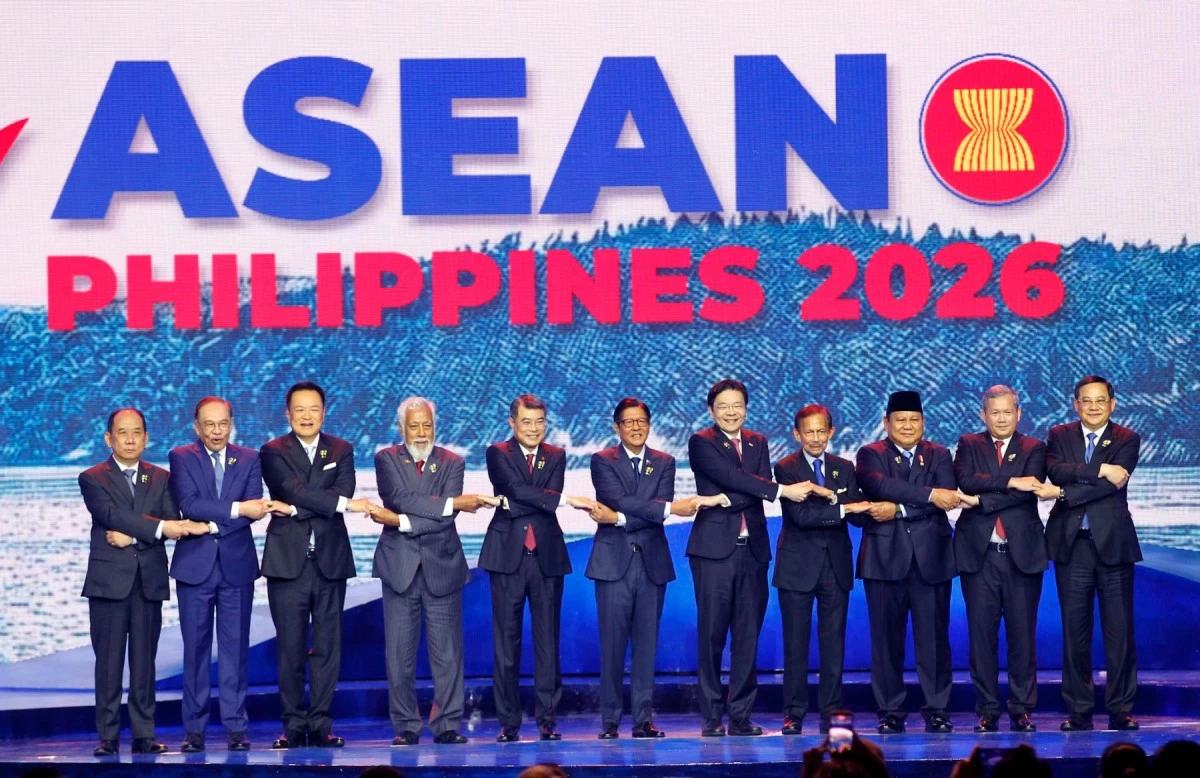
The Philippines’ relatively low level of trade openness could constrain its ability to build greater economic influence, as a study by state-run think tank Philippine Institute for Development Studies (PIDS) found that deeper integration into global trade is among the factors that could strengthen the Association of Southeast Asian Nations’ (ASEAN) emergence as a global power.
In a statement last Thursday, Aug. 20, PIDS highlighted findings from the study “ASEAN’s Ascent: A Global Power in the Making,” authored by PIDS supervising research specialist Mark Anthony Barral and senior research fellow Francis Mark Quimba.
The study was published in December 2025 and examined whether ASEAN could move beyond its traditional role as a regional facilitator and become a more independent center of influence in an increasingly multipolar world.
The study showed varying levels of trade openness among ASEAN economies, reflecting differences in the extent to which individual members are integrated into global markets.
The Philippines has a more domestically driven economy and a smaller scale of external trade relative to its gross domestic product (GDP) compared with some of its ASEAN neighbors, while highly trade-dependent Singapore stands at the other end of the spectrum.
Under the study’s least absolute shrinkage and selection operator (LASSO) model, trade openness carried a coefficient of 0.275, indicating that greater trade openness positively contributes to the likelihood of being classified as a polar economy.
Economic size emerged as the strongest factor associated with polar status, with a coefficient of 5.609, followed by corruption control at 1.768, armed forces at 1.228, military expenditure at 1.222, and research and development (R&D) at 1.199.
Digital connectivity, measured through internet access, had a coefficient of 0.496, followed by trade openness at 0.275, and rule of law at 0.263. Foreign direct investment (FDI) had a smaller positive coefficient of 0.007.
The findings suggest that deeper trade integration, alongside stronger institutions, technological capacity, and other economic and governance improvements, could enhance ASEAN’s ability to translate its growing economic weight into greater global influence.
The authors, however, warned that wide disparities among ASEAN members could complicate efforts to forge greater regional cohesion.
“ASEAN... is composed of internal diversity and institutional limitations, with wide asymmetries in economic size, political systems, and strategic orientations, among others, which present a critical conundrum that complicates efforts to forge unified foreign policy and collective strategic identity,” the authors noted.
Despite these challenges, ASEAN’s growing economic weight provides a foundation for greater global influence. The bloc’s combined GDP increased from $118 billion in 2000 to $3.37 trillion in 2023, while its population surpassed 685 million.
Statistical analysis in the study also pointed to ASEAN’s potential to move toward global-power status. Under the LASSO model, the probability of ASEAN being classified as a “core polar”—a category associated with established centers of global power—rose to as high as 0.89 during the middle of the 24-year observation period, while its probability of remaining in the emerging-economy category fell below 0.5.
The study cautioned, however, that this does not mean ASEAN has already achieved global-power status, with another model presenting a more conservative assessment that increasingly associates the bloc with emerging-power status while still showing potential to move toward core global-power status.
Beyond economic and military capabilities, the study said ASEAN’s strategic advantage lies in its centrality and neutrality, allowing it to maintain relationships with competing major powers and serve as a bridge among them.
To strengthen its global trajectory, the study recommended deeper economic integration, including faster implementation of the Regional Comprehensive Economic Partnership (RCEP), greater harmonization of supply chain standards, and improved digital connectivity.
It also called for stronger regional cooperation in maritime security, disaster response, digital governance, and sustainable development, as well as diversification of ASEAN’s strategic partnerships beyond the United States (US) and China.
The findings are particularly relevant as the Philippines chairs ASEAN in 2026, giving the country an opportunity to advance initiatives that strengthen regional integration, institutional capacity, and the bloc’s strategic autonomy amid intensifying geopolitical competition.