






Manila Bulletin
 Business
Banking & Finance
Peso slips toward 62 per dollar as US-Iran peace truce expires
Business
Banking & Finance
Peso slips toward 62 per dollar as US-Iran peace truce expires
Business
Banking & Finance
Peso slips toward 62 per dollar as US-Iran peace truce expires
Peso slips toward 62 per dollar as US-Iran peace truce expires
By Derco Rosal
Published Aug 19, 2026 02:54 pm


At A Glance
- Market concerns relapsed following the expiry of the two-month truce between the United States (US) and Iran, pushing the Philippine peso further close to another record low of ₱62 per US dollar.
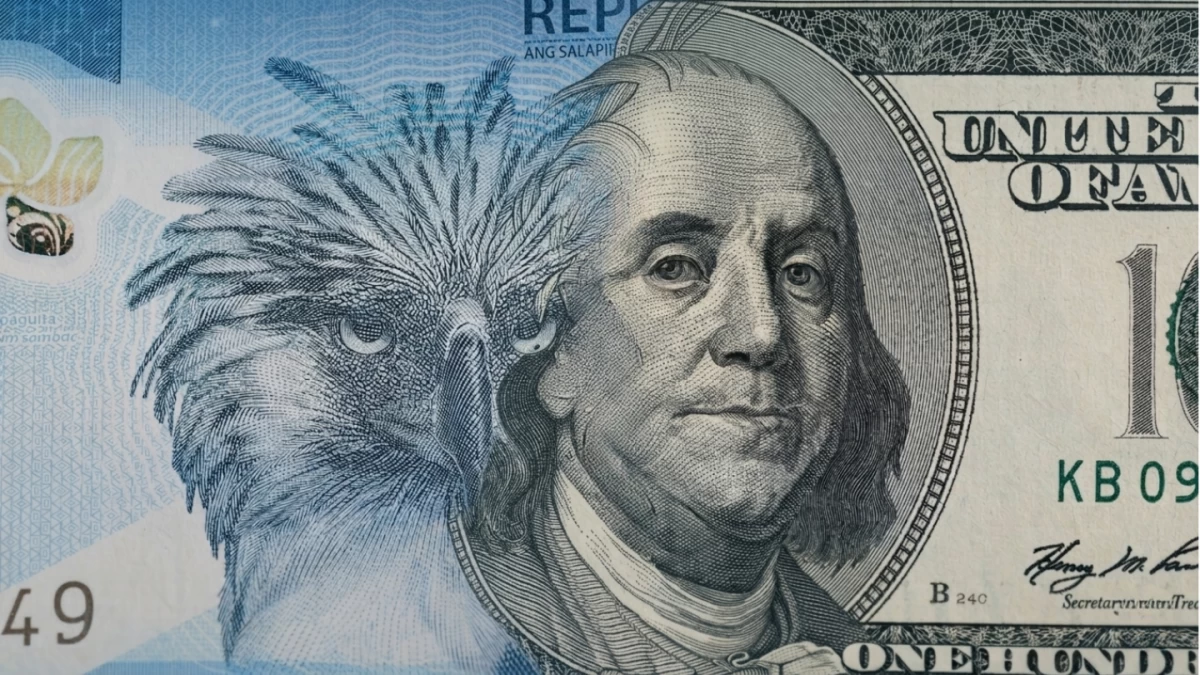
Market concerns flared up following the expiry of the two-month truce between the United States (US) and Iran, pushing the peso closer to another record low of ₱62 per US dollar.
The local currency dropped as much as 0.3 percent to touch an intraday record low of ₱61.995 per dollar in morning trade before settling three centavos lower at ₱61.815. The finish approached the currency’s historical closing low of ₱61.847 set in July, according to data from the Bankers Association of the Philippines.
Volume on the local foreign-exchange market surged to $1.888 billion from $1.337 billion in the previous session.
According to a trader, the local currency brushed the ₱62:$1 threshold as demand for the safe-haven dollar surged after the peace deal expired, a development that rattled broader markets.
Union Bank of the Philippines chief economist Ruben Carlo O. Asuncion and Reyes Tacandong & Co. senior adviser Jonathan Ravelas pointed to the renewed uncertainty in the Middle East, which threatens to trigger another spike in global crude prices.
“Lingering geopolitical uncertainty in the Middle East is encouraging a flight to safety,” Ravelas said.
“As a major oil importer, the Philippines is vulnerable to higher energy costs, which increase demand for dollars and weigh on the currency,” Asuncion added.
The trader noted that the Bangko Sentral ng Pilipinas (BSP) could step in more aggressively to stabilize the foreign exchange market if the peso breaches ₱62:$1, though a drop past that level is not yet guaranteed given the high uncertainty ahead of the central bank's policy meeting this week.
Asuncion added that the local currency's direction will largely hinge on crude prices, developments in the US-Iran conflict, and the greenback's trajectory. “If these external pressures persist, the peso could remain under pressure near current levels,” he said.