






 Philippines
National
Palace ensures continued gov't response as rains batter Metro Manila, other areas
Philippines
National
Palace ensures continued gov't response as rains batter Metro Manila, other areas
Palace ensures continued gov't response as rains batter Metro Manila, other areas


At A Glance
- Malacañang assured the public that the government is continuously taking measures in areas severely affected by successive rains in Metro Manila and other parts of the country.
- President Marcos ordered the DPWH to coordinate with Quezon City in aligning its flood-control master plan with national efforts.
- Government agencies have stepped up flood monitoring, health preparations, humanitarian assistance, and dam surveillance as the rains continue.
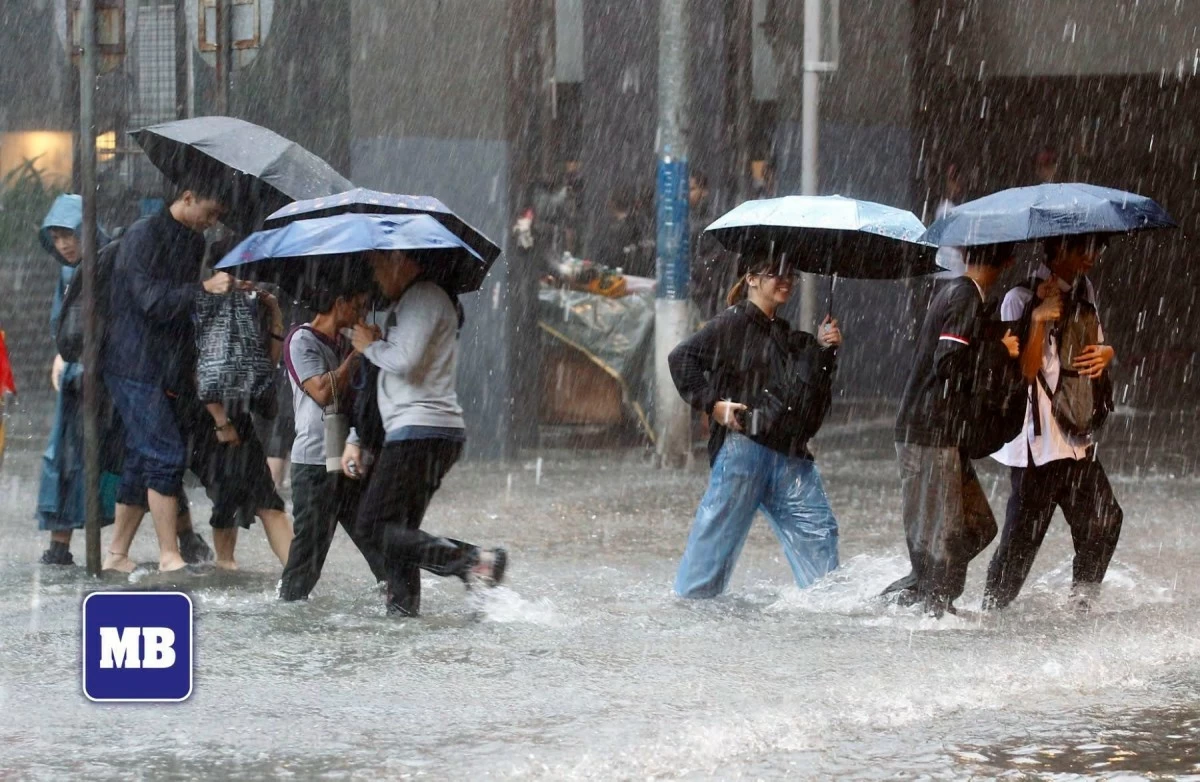
Malacañang assured the public that the government would continue taking measures in areas severely affected by successive rains in Metro Manila and other parts of the country as President Marcos ordered agencies to intensify their response to the continuing bad weather.
In a press briefing on Wednesday, Aug. 19, Presidential Communications Office (PCO) Undersecretary Claire Castro said the government's response covers flood-control operations, monitoring of waterways and dams, preparations for possible health threats, and the delivery of assistance to affected residents.
“Walang hinto ang pamahalaan sa pagsasagawa ng mga hakbang sa mga lugar na lubhang naapektuhan ng sunud-sunod na pag-ulan sa Metro Manila at ilang bahagi ng bansa, alinsunod ito sa utos ni Pangulong Marcos Jr. na siguruhing ligtas ang mga residente sa gitna ng walang tigil na pag-ulan (The government is continuously taking measures in areas severely affected by successive rains in Metro Manila and other parts of the country, in line with President Marcos’ order to ensure the safety of residents amid the nonstop rainfall),” she said.
The Palace said Marcos would also convene key government agencies Wednesday afternoon to review the continuing response to the weather conditions and the situation of affected residents.
Flood control coordination
According to Castro, President Marcos ordered the Department of Public Works and Highways (DPWH) to coordinate with the Quezon City government to align the city's flood-control master plan with the national government's efforts.
The directive aims to help speed up the receding of floodwaters in the city as authorities continue responding to areas affected by the rains.
The DPWH has also continued inspecting flooded areas to immediately assess conditions on the ground and identify measures that could address problems in affected communities.
Waterways monitoring
The Department of Environment and Natural Resources (DENR), for its part, has intensified the cleaning and monitoring of rivers, esteros, drainage systems, and coastal areas with the help of estero rangers, river warriors, and partner organizations.
The effort is part of the government's continuing response in areas where flooding has affected residents and communities.
LGUs told to stay in contact with disaster councils
The Department of the Interior and Local Government (DILG) reminded regional and provincial directors, as well as local government units in affected areas, to maintain coordination with their Local Disaster Risk Reduction and Management Councils.
The DILG also urged residents to remain alert to prevent accidents in areas affected by the continuing bad weather.
“Pinaalalahanan din ang lahat na maging alerto at magbantay upang maiwasan ang disgrasya sa mga apektadong residente (Everyone is also reminded to remain alert and vigilant to prevent accidents among affected residents),” Castro said.
Possible leptospirosis rise
According to Castro, the Department of Health (DOH) is monitoring the possible increase in leptospirosis cases resulting from widespread flooding.
Affected Centers for Health Development have remained operational and adequately supplied, while code white alert remains in effect in affected health centers, according to the Palace.
The DOH central office and the 17 Centers for Health Development have about 3.1 million doxycycline capsules available to respond to the needs of hospitals and local governments.
The health department is also continuing coordination with the National Disaster Risk Reduction and Management Council as the government monitors possible health consequences of the flooding.
Government aid
Meanwhile, the Department of Social Welfare and Development (DSWD) has released nearly P800 million in humanitarian assistance amid the successive rains.
Castro said the government has also provided about P2.3 million in financial assistance to affected residents, while the DSWD remains prepared to deliver additional aid to flooded communities.
The government currently has P832 million in standby funds nationwide to support disaster response operations as needs arise.
Dams remain under close watch
On the other hand, the National Irrigation Administration (NIA) is closely monitoring water levels at the Magat Dam in Isabela and Pantabangan Dam in Nueva Ecija following Marcos' directive to maintain strict surveillance of the country's dams.
The latest NIA report placed the water level at Magat Dam at 178.27 meters above sea level and Pantabangan Dam at 187.72 meters above sea level.
NIA reported that no spillway gate was open at either dam and that there had been no reported spill discharge.
Guillen also reported no widespread damage to rice crops, while noting that the rains had strengthened irrigation supplies in agricultural areas.
Rains boost irrigation
According to NIA data, the Magat Dam can provide irrigation for about 90,000 hectares, while Pantabangan Dam can support about 100,000 hectares as a result of the increased water supply from the rains.
The additional irrigation capacity is expected to benefit farmers who had been affected by El Niño.
NIA said it would continue monitoring water levels at the dams despite the successive rains.
Hagonoy flood concerns
Meanwhile, Castro said she will relay concerns raised by residents of Hagonoy, Bulacan, who have called on President Marcos and DPWH Secretary Vince Dizon to visit the area and see the flooding situation firsthand.
Castro said she was not aware of the tarpaulins calling on the President and Dizon to visit Hagonoy until the issue was raised during the briefing.
“Ngayon ninyo lang po iyan nabanggit sa akin. So, makakarating po (This is the first time you have mentioned it to me. It will reach the President),” she said.
“Hindi naman po mag-aatubili na kung anuman po ang kailangan ng ating mga kababayan sa Hagonoy, iyan naman po ay agad na bibigyan ng tugon (We will not hesitate to immediately respond to whatever our countrymen in Hagonoy need),” she added.
Castro, however, said flooding could not always be avoided because of the intensity of the rainfall, while acknowledging that the government still needed to broaden its response to the concerns raised by affected residents.
“Hindi po natin itinatanggi — ng pamahalaan — na kailangan pa ng mas malawak na pagtugon sa ating mga hinaing ng ating mga kababayan (The government does not deny that there is still a need for a broader response to the concerns raised by our countrymen),” she said.