ADVERTISEMENT

PBBM wants to leave an accessible government, better Philippines

Published Aug 14, 2026 07:15 pm
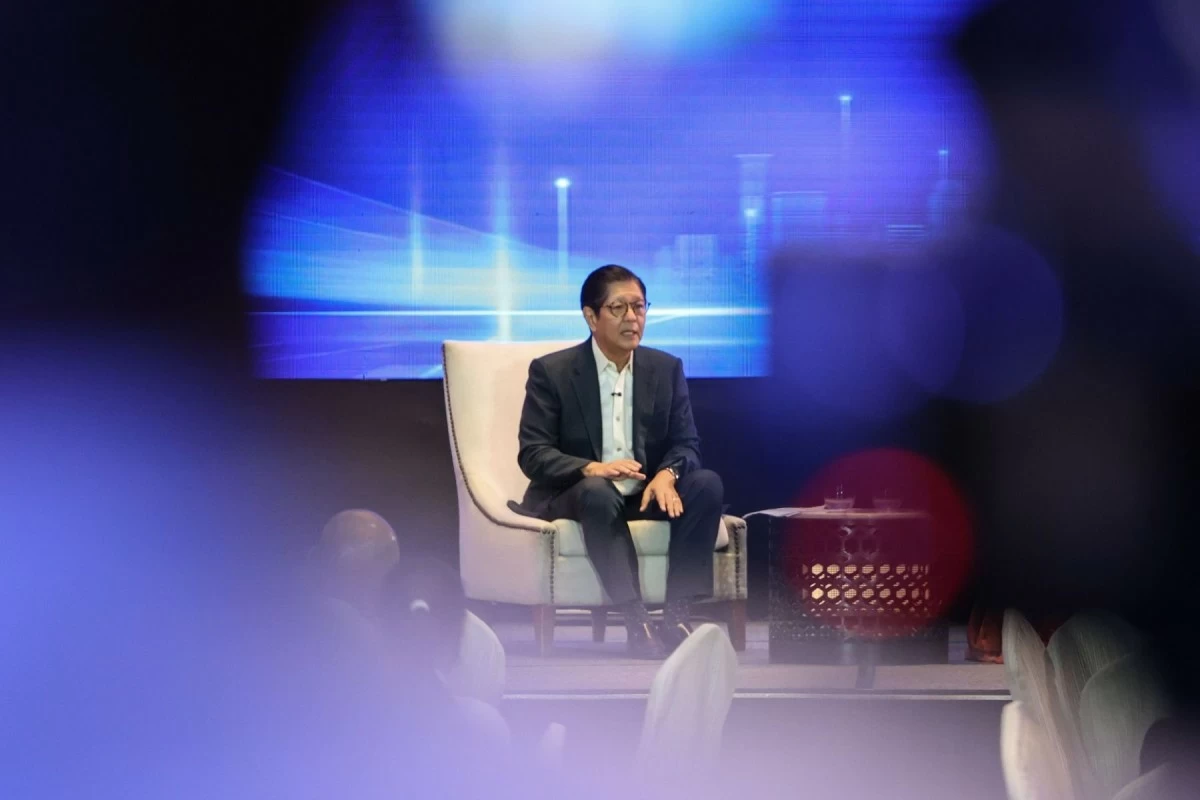
President Ferdinand R. Marcos Jr. speaks before members of the Foreign Correspondents Association of the Philippines (FOCAP) and answers questions on various national and international issues during the group’s Presidential Luncheon at a hotel in Manila on August 14, 2026. (PPA Pool)
A government closer to the people and a better Philippines are what President Marcos hopes to leave after his presidency.
Although hesitant, Marcos gave a lengthy response when asked what legacy he hopes to leave to the country after his term in 2028.
"I'm weary about legacy. Legacy is when you die. I'm not about to die anytime soon, despite the reports to the contrary." he said in jest during a press conference at the Foreign Correspondents Association of the Philippines (FOCAP) Presidential Luncheon in Manila on Friday, Aug. 14.
"Legacy, I just hope we put the faith of people back in government. And that we now have a government that people can depend on, people can trust, and that people can talk to," Marcos said.
The President emphasized that instead of having a government telling you what to do, he hopes to leave one that listens.
He cited his administration's effort to partner with local government units in bringing solutions to their problems and helping with their needs by listening to local officials, who know their areas better than anyone.
"So, that we make government more accessible, not only in terms of transparency, but accessible in terms of we can bring our concerns to government and we have enough confidence that they will, in fact, do something about it," he said.
He underscored that by listening to the local governments, he brings the government closer to the people.
"It may not be perfect, but it is something that will give you an idea of how to proceed, how to get these things – how to improve matters. And so that's what, it's a more open, more open government," the Chief Executive said.

Better country

Another legacy Marcos wants to leave is "that we move the country forward."
The President said the intention to "build a nation" should come back.
"And now we are bringing back that idea that government is not here to coast and to just, you know sit back, and I don't know what, make pasikat and make payabang (to show off, be boastful)," he said. "No, government is there to build the nation. And that's what I hope that we have started to be."
"It is a long road to build the nation, it is a difficult process. And, you know, there are growing pains in everything that you do. Every change, of course, entails all kinds of adjustments, some pleasant, some not so. So, it is a difficult process. But hopefully we have started that process once again of nation building, that we are making the country better," he added.
A better country, Marcos said, means better lives for the people, more jobs, better livelihood, more development, and trying to be an active and important part of the global economy.
"We're not just custodians and just, you know, just making sure it's the same, nothing new, just do the same, business as usual, no new initiatives, you know it's too hard, it's too complicated, you know, people won't understand," he said, adding that "we have to get away from that" and aspire for something better.
"That's the legacy I hope, and hesitant as I am to speak about legacy, that's the legacy I hope to leave, that now government is your partner hand in hand with every citizen, with every sector, hand in hand trying to build a better Philippines," he added.
"If I can do that, if I have met with even some success to do that, then I will say that we have done a reasonably good job. We will never have done a perfect job but we will have done a reasonably good job. Nation building once again returns to the government, once again returns to the people, once again returns to the country. That perhaps is the most important thing that I hope to achieve," the President went on.

Related Tags

President Marcos legacy Marcos administration open government
ADVERTISEMENT
.most-popular .layout-ratio{ padding-bottom: 79.13%; } @media (min-width: 768px) and (max-width: 1024px) { .widget-title { font-size: 15px !important; } }

{{ articles_filter_1561_widget.title }}

.most-popular .layout-ratio{ padding-bottom: 79.13%; } @media (min-width: 768px) and (max-width: 1024px) { .widget-title { font-size: 15px !important; } }

{{ static_articles_1562_widget.title }}

.most-popular .layout-ratio{ padding-bottom: 79.13%; } @media (min-width: 768px) and (max-width: 1024px) { .widget-title { font-size: 15px !important; } }

{{ articles_filter_1563_widget.title }}

{{ articles_filter_1564_widget.title }}

.mb-article-details { position: relative; } .mb-article-details .article-body-preview, .mb-article-details .article-body-summary{ font-size: 17px; line-height: 30px; font-family: "Libre Caslon Text", serif; color: #000; } .mb-article-details .article-body-preview iframe , .mb-article-details .article-body-summary iframe{ width: 100%; margin: auto; } .read-more-background { background: linear-gradient(180deg, color(display-p3 1.000 1.000 1.000 / 0) 13.75%, color(display-p3 1.000 1.000 1.000 / 0.8) 30.79%, color(display-p3 1.000 1.000 1.000) 72.5%); position: absolute; height: 200px; width: 100%; bottom: 0; display: flex; justify-content: center; align-items: center; padding: 0; } .read-more-background a{ color: #000; } .read-more-btn { padding: 17px 45px; font-family: Inter; font-weight: 700; font-size: 18px; line-height: 16px; text-align: center; vertical-align: middle; border: 1px solid black; background-color: white; } .hidden { display: none; }
function initializeAllSwipers() { // Get all hidden inputs with cms_article_id document.querySelectorAll('[id^="cms_article_id_"]').forEach(function (input) { const cmsArticleId = input.value; const articleSelector = '#article-' + cmsArticleId + ' .body_images'; const swiperElement = document.querySelector(articleSelector); if (swiperElement && !swiperElement.classList.contains('swiper-initialized')) { new Swiper(articleSelector, { loop: true, pagination: false, navigation: { nextEl: '#article-' + cmsArticleId + ' .swiper-button-next', prevEl: '#article-' + cmsArticleId + ' .swiper-button-prev', }, }); } }); } setTimeout(initializeAllSwipers, 3000); const intersectionObserver = new IntersectionObserver( (entries) => { entries.forEach((entry) => { if (entry.isIntersecting) { const newUrl = entry.target.getAttribute("data-url"); if (newUrl) { history.pushState(null, null, newUrl); let article = entry.target; // Extract metadata const author = article.querySelector('.author-section').textContent.replace('By', '').trim(); const section = article.querySelector('.section-info ').textContent.replace(' ', ' '); const title = article.querySelector('.article-title h1').textContent; // Parse URL for Chartbeat path format const parsedUrl = new URL(newUrl, window.location.origin); const cleanUrl = parsedUrl.host + parsedUrl.pathname; // Update Chartbeat configuration if (typeof window._sf_async_config !== 'undefined') { window._sf_async_config.path = cleanUrl; window._sf_async_config.sections = section; window._sf_async_config.authors = author; } // Track virtual page view with Chartbeat if (typeof pSUPERFLY !== 'undefined' && typeof pSUPERFLY.virtualPage === 'function') { try { pSUPERFLY.virtualPage({ path: cleanUrl, title: title, sections: section, authors: author }); } catch (error) { console.error('ping error', error); } } // Optional: Update document title if (title && title !== document.title) { document.title = title; } } } }); }, { threshold: 0.1 } ); function showArticleBody(button) { const article = button.closest("article"); const summary = article.querySelector(".article-body-summary"); const body = article.querySelector(".article-body-preview"); const readMoreSection = article.querySelector(".read-more-background"); // Hide summary and read-more section summary.style.display = "none"; readMoreSection.style.display = "none"; // Show the full article body body.classList.remove("hidden"); } document.addEventListener("DOMContentLoaded", () => { let loadCount = 0; // Track how many times articles are loaded const offset = [1, 2, 3, 4, 5, 6, 7, 8, 9, 10]; // Offset values const currentUrl = window.location.pathname.substring(1); let isLoading = false; // Prevent multiple calls if (!currentUrl) { console.log("Current URL is invalid."); return; } const sentinel = document.getElementById("load-more-sentinel"); if (!sentinel) { console.log("Sentinel element not found."); return; } function isSentinelVisible() { const rect = sentinel.getBoundingClientRect(); return ( rect.top < window.innerHeight && rect.bottom >= 0 ); } function onScroll() { if (isLoading) return; if (isSentinelVisible()) { if (loadCount >= offset.length) { console.log("Maximum load attempts reached."); window.removeEventListener("scroll", onScroll); return; } isLoading = true; const currentOffset = offset[loadCount]; window.loadMoreItems().then(() => { let article = document.querySelector('#widget_1690 > div:nth-last-of-type(2) article'); intersectionObserver.observe(article) loadCount++; }).catch(error => { console.error("Error loading more items:", error); }).finally(() => { isLoading = false; }); } } window.addEventListener("scroll", onScroll); });

Sign up by email to receive news.