






 Philippines
National
'Make up your mind!': Palace hits conflicting criticisms of 2027 budget, says education, infrastructure are pro-poor
Philippines
National
'Make up your mind!': Palace hits conflicting criticisms of 2027 budget, says education, infrastructure are pro-poor
'Make up your mind!': Palace hits conflicting criticisms of 2027 budget, says education, infrastructure are pro-poor


At A Glance
- Malacañang questioned conflicting criticisms of the proposed 2027 national budget, with one lawmaker faulting previous spending for being too focused on aid and another calling the new budget anti-poor.
- Palace Press Officer Claire Castro said education, infrastructure, food assistance, and disaster aid should also be considered pro-poor spending.
- The proposed P7.2-trillion budget includes P1.314 trillion for education, P1.467 trillion for public infrastructure, P241.6 billion for DSWD, and P45.7 billion for the National Disaster Risk Reduction and Management Fund.
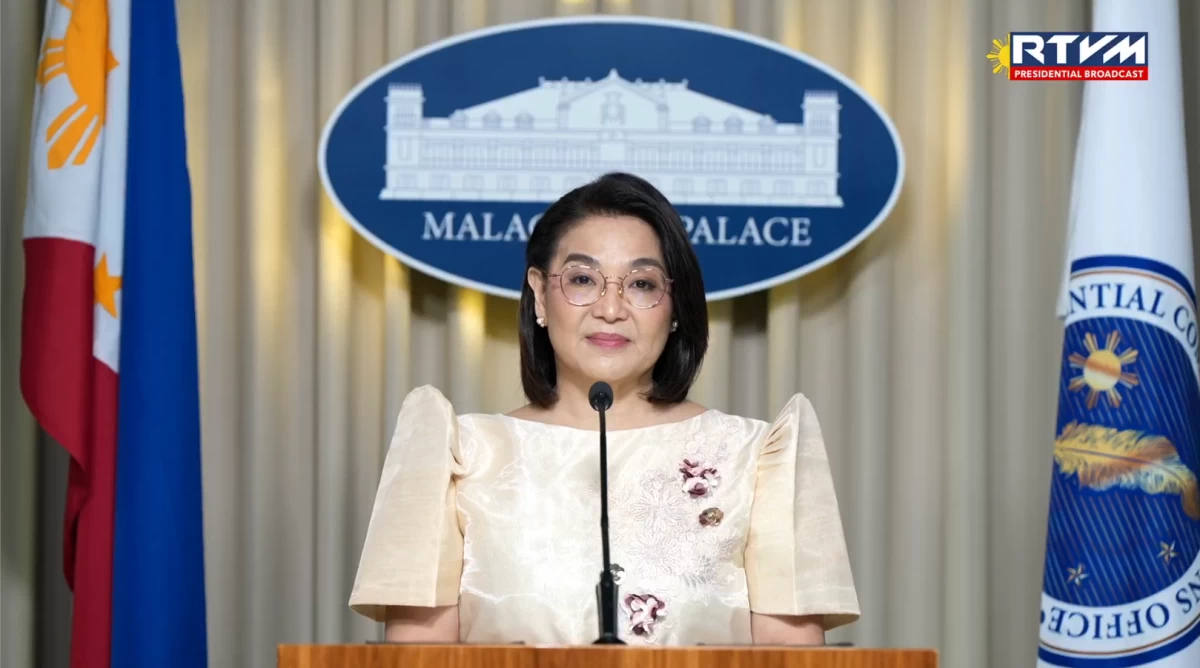
Malacañang has challenged what it described as conflicting criticisms of the proposed 2027 national budget, after lawmakers separately faulted the government for allegedly focusing too much on aid in previous budgets and for reducing social spending in the new spending plan.
Presidential Communications Office (PCO) Undersecretary Claire Castro said the contrasting criticisms from Caloocan 2nd District Rep. Edgar Erice and ACT Teachers party-list Rep. Antonio Tinio should be reconciled before lawmakers judge the proposed budget.
“Siguro, dapat mag-usap-usap kayo para hindi kayo nagsasabog, hindi iba-iba iyong mga sinasabi (Perhaps you should talk among yourselves so you don't make conflicting statements and say different things),” she said in a press briefing on Thursday, Aug. 13.
Erice had said he would not yet judge the 2027 budget but criticized previous government spending as being too focused on “ayuda,” while Tinio described the proposed budget as anti-poor and anti-people because of alleged reductions in social services alongside higher allocations for defense, infrastructure, and anti-insurgency programs.
“Siguro, dapat mag-usap na muna sila — sino ba sa inyo nagsisinungaling o pareho ba kayong nagsisinungaling (Perhaps they should talk among themselves and determine who among them is lying, or whether both of them are lying),” Castro said.
Education, infrastructure as pro-poor spending
Castro said the administration's spending priorities cannot be assessed by looking only at individual budget items, arguing that programs outside traditional social assistance also directly benefit poor and vulnerable Filipinos.
The President's Budget Message proposes P1.314 trillion for education, including P11.4 billion for the Department of Education's School-Based Feeding Program and P38.1 billion for government assistance and subsidies benefiting learners.
“Ang edukasyon po ba ay pro-poor (Is education not pro-poor)?” Castro said, citing education and scholarships as examples of government spending that directly benefits poorer Filipinos.
The proposed budget also earmarks P1.467 trillion for public infrastructure under the Build Better More program, including roads, bridges, railways, airports, power facilities, water systems, schools, hospitals, and irrigation infrastructure.
“Ang pagpapatayo ng mga bridge, ng mga kalsada pro-poor (Are building bridges and roads not pro-poor)?” Castro said.
Aid remains in 2027 budget
The Palace Press Officer also pointed to several programs that provide direct assistance, rejecting the notion that the proposed budget has abandoned government aid.
The President’s 2027 Budget Message provides P241.6 billion for the Department of Social Welfare and Development (DSWD), including P99.1 billion in cash assistance for the poorest households, P33.3 billion for 4.6 million vulnerable Filipinos, and P51.6 billion for the basic and medical needs of 4.2 million indigent senior citizens.
The proposed budget also provides P235.5 billion in total funding for government cash transfer programs and P1.533 trillion in allocations to local government units, which the administration says will help LGUs deliver essential services and respond to local needs.
Castro cited the Walang Gutom Program, the government's P20-per-kilo rice initiative, the Local Government Support Fund (LGSF), and financial assistance provided to communities affected by disasters as examples of assistance that remain part of government spending.
The budget message separately allocates P45.7 billion for the National Disaster Risk Reduction and Management Fund, including assistance for disaster rehabilitation and reconstruction, while the agriculture sector is proposed to receive P276.6 billion to support food production and food security.
On the other hand, the budget message identifies the broader category of Domestic Security rather than a specific anti-insurgency allocation.
Domestic Security is proposed to receive P452.4 billion in 2027, including P316.7 billion for the Armed Forces of the Philippines, of which P50 billion is earmarked for modernization activities.
Castro said the administration's budget should be viewed as a whole rather than through individual line items.
“Hindi puwede nating i-isolate lang or isa-isahin lang, lumiit ang budget dito (We cannot simply isolate or look at individual items and say that the budget was reduced here),” she said.
“Ito pong lahat ng ginagawa ng Pangulo, ay pangkalahatan (Everything that the President is doing is for the general welfare),” she added.
Castro said the proposed spending program was intended to benefit Filipinos across income groups rather than only the poor or any single sector.
“Lahat ng ginagawa dito makikinabang po lahat, hindi lang mahirap, hindi mayaman, lahat ng Pilipino (Everyone will benefit from everything being done here, not just the poor or the rich, but all Filipinos),” she said.
UP, PGH budget cuts tied to completed projects, Palace says
Meanwhile, Malacañang said the reported reductions in the proposed 2027 budgets of the University of the Philippines (UP) and Philippine General Hospital (PGH) were partly due to the completion of projects that had received funding in 2026.
Castro said the Department of Budget and Management (DBM) had explained that agency allocations can rise or fall depending on whether specific projects require funding in a given year, such as building projects that would no longer be included in the proposed spending plan once construction had been completed.
“May mga pagkakataon na malaki ang budget, let’s say ng UP-PGH sa taong 2026, kasi may proyekto diyan (There are instances when the budget of, say, UP-PGH is large in 2026 because there is a project there),” she said.
“Kung natapos na po ito noong nakaraang taon, so hindi na po idadagdag sa nasabing ahensiya, kasi tapos na iyong proyekto (If it was completed last year, then it would no longer be added to the agency's budget because the project has already been completed),” she added.
Castro also said the overall reduction from the P11-trillion funding proposals initially submitted by government agencies to the P7.2-trillion proposed national budget reflected President Marcos' direction to prioritize spending.
“Ang pagkakasabi po sa atin ng DBM, ang talagang unang supposed-to-be budget ay 11 trillion. Pero, sinabi ng Pangulo na unahin iyong dapat na unahin, kaya po bumaba ito ng 7.2 trillion (The DBM told us that the initial proposed budget was P11 trillion. But the President said to prioritize the most important things, which is why it went down to P7.2 trillion),” she said.