ADVERTISEMENT

Marcos administration's first PPP project fails to attract a single bidder

Published Aug 10, 2026 12:00 am
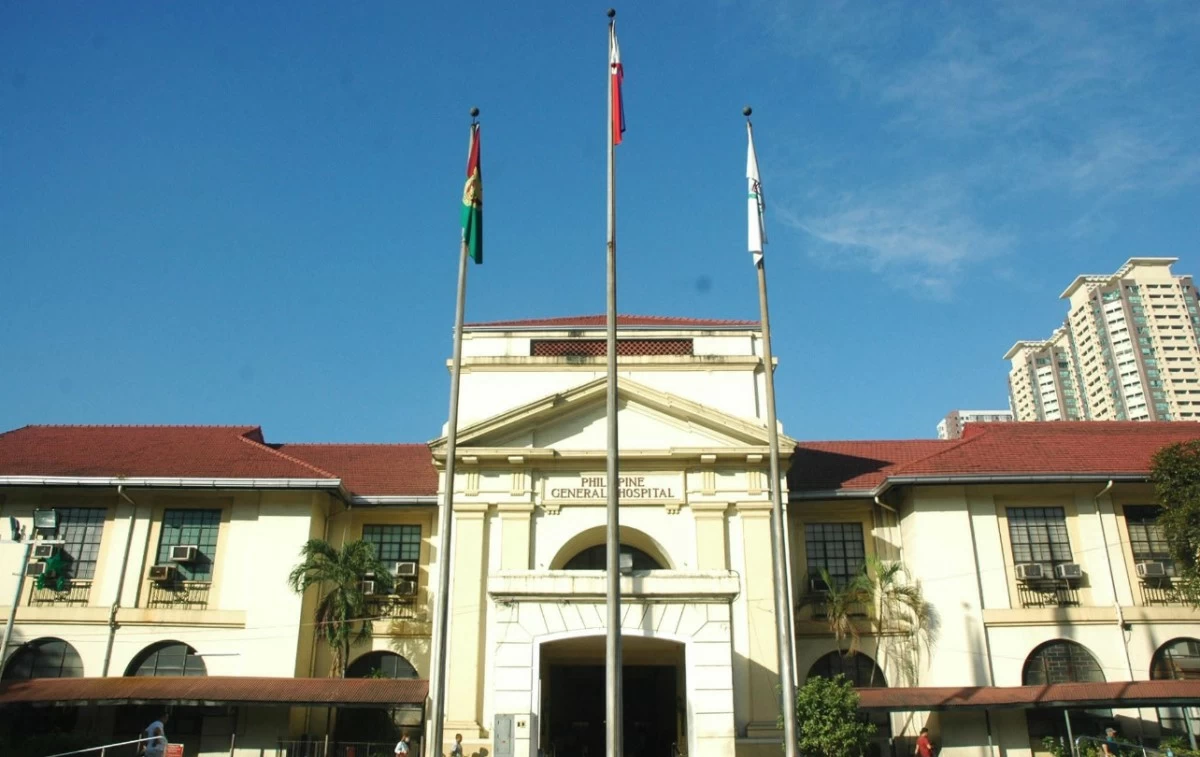
(PHOTO: PGH FACEBOOK PAGE)

The University of the Philippines-Philippine General Hospital (UP-PGH) Cancer Center Project—touted as the Marcos Jr. administration’s first public-private partnership (PPP) project—failed to attract a single bidder, delaying the construction of a new 300-bed cancer hospital intended to help decongest the existing UP-PGH Cancer Institute, the country’s primary national referral hub for low-income cancer patients.

In a notice of failure of bidding dated Aug. 4, published on the PPP Center’s website last Friday, Aug. 7, UP-PGH’s special bids and awards committee (SBAC) declared the bidding unsuccessful after no prospective bidder submitted an offer before the Aug. 4 deadline, pursuant to Section 92(a) of the PPP Code of the Philippines and its implementing rules and regulations (IRR).

The project was greenlit in February 2023 by the then National Economic and Development Authority (NEDA) Board—now the Economy and Development (ED) Council chaired by President Ferdinand R. Marcos Jr.—making it the first PPP project approved under the current administration.

Initially estimated to cost ₱6.05 billion, the project involves the financing, design, engineering, construction, as well as operation and maintenance (O&M) of a standalone 300-bed cancer hospital within UP-PGH’s campus in Manila under a 30-year build-transfer-operate (BTO) concession arrangement.

The hospital will allocate 150 charity beds and another 150 beds for private self-paying patients. The private partner will finance, design, construct, and commission the facility; procure, maintain, and periodically replace medical and non-medical equipment; undertake commercial activities such as parking and food and beverage outlets; and manage non-clinical services, including facility maintenance, laundry, catering, cleaning, and security.

According to the PPP Center, the project is designed to be viable, bankable, and value for money while generating savings of up to ₱29 billion compared with traditional public procurement. The new hospital will be built to accommodate advanced cancer detection and treatment technologies while supporting safer and more efficient patient care, teaching, and research.

In April 2024, the NEDA Board approved revised parameters, terms, and conditions (PTCs) for the project to align it with the PPP Code and strengthen its financial sustainability. The revisions included improvements to the annual payment mechanism, equipment supply and financing arrangements, and technical requirements to meet recognized global best practices, increasing the estimated project cost to ₱9.49 billion from ₱6.05 billion.

Following the approval of the revised PTCs, the project proceeded with the competitive bidding process. Construction is expected to take two to three years once a private partner is selected.

The project seeks to expand UP-PGH’s cancer care capacity through a new standalone hospital.

PPP Center documents showed the existing institute operates at around 400 percent of its intended capacity despite having only 51 beds.

Because the existing institute, which dates back to 1938, is housed in a protected heritage structure, UP-PGH cannot expand the building. According to the PPP Center, the facility will instead be repurposed into a premier academic and research and development (R&D) hub focused on cancer data and clinical oncology research, while patient services will be permanently transferred to the public wing of the new cancer hospital.

According to the World Health Organization’s (WHO) International Agency for Research on Cancer, the Philippines recorded an estimated 149,852 new cancer cases and 86,338 cancer deaths in 2024, while the number of five-year prevalent cancer cases reached 352,713.

The Marcos Jr. administration has increasingly turned to PPPs under its Build Better More (BBM) Program by tapping private sector capital to help implement big-ticket infrastructure projects amid tight fiscal space.

The PPP Center’s latest project dashboard showed that, as of Aug. 7, 2026, the government’s PPP pipeline totaled ₱6.6 trillion, comprising ₱5.4 trillion worth of national projects and another ₱1.2 trillion in local PPP projects.

The failed bidding for UP-PGH’s Cancer Center Project also follows another high-profile PPP setback involving state-run Bases Conversion and Development Authority (BCDA), which likewise failed to attract any bidder for its ₱2.5-billion passive information and communications technology (ICT) infrastructure project in New Clark City in Tarlac province.

The ICT project, which is expected to provide the digital backbone for New Clark City and support the planned Pax Silica artificial intelligence (AI) industrial hub, was declared a failure of bidding after no company submitted the required bid documents during the procurement process. BCDA had also failed to award the project during its initial bidding in 2023 before relaunching the procurement in 2025 under the PPP Code, only for the latest tender to end without a bidder. - Danielle T. Bayani

Related Tags

University of the Philippines-Philippine General Hospital (UP-PGH) public-private partnership (PPP) Public-Private Partnership (PPP) Center Public-Private Partnership (PPP) Code of the Philippines cancer
ADVERTISEMENT
.most-popular .layout-ratio{ padding-bottom: 79.13%; } @media (min-width: 768px) and (max-width: 1024px) { .widget-title { font-size: 15px !important; } }

{{ articles_filter_1561_widget.title }}

.most-popular .layout-ratio{ padding-bottom: 79.13%; } @media (min-width: 768px) and (max-width: 1024px) { .widget-title { font-size: 15px !important; } }

{{ static_articles_1562_widget.title }}

.most-popular .layout-ratio{ padding-bottom: 79.13%; } @media (min-width: 768px) and (max-width: 1024px) { .widget-title { font-size: 15px !important; } }

{{ articles_filter_1563_widget.title }}

{{ articles_filter_1564_widget.title }}

.mb-article-details { position: relative; } .mb-article-details .article-body-preview, .mb-article-details .article-body-summary{ font-size: 17px; line-height: 30px; font-family: "Libre Caslon Text", serif; color: #000; } .mb-article-details .article-body-preview iframe , .mb-article-details .article-body-summary iframe{ width: 100%; margin: auto; } .read-more-background { background: linear-gradient(180deg, color(display-p3 1.000 1.000 1.000 / 0) 13.75%, color(display-p3 1.000 1.000 1.000 / 0.8) 30.79%, color(display-p3 1.000 1.000 1.000) 72.5%); position: absolute; height: 200px; width: 100%; bottom: 0; display: flex; justify-content: center; align-items: center; padding: 0; } .read-more-background a{ color: #000; } .read-more-btn { padding: 17px 45px; font-family: Inter; font-weight: 700; font-size: 18px; line-height: 16px; text-align: center; vertical-align: middle; border: 1px solid black; background-color: white; } .hidden { display: none; }
function initializeAllSwipers() { // Get all hidden inputs with cms_article_id document.querySelectorAll('[id^="cms_article_id_"]').forEach(function (input) { const cmsArticleId = input.value; const articleSelector = '#article-' + cmsArticleId + ' .body_images'; const swiperElement = document.querySelector(articleSelector); if (swiperElement && !swiperElement.classList.contains('swiper-initialized')) { new Swiper(articleSelector, { loop: true, pagination: false, navigation: { nextEl: '#article-' + cmsArticleId + ' .swiper-button-next', prevEl: '#article-' + cmsArticleId + ' .swiper-button-prev', }, }); } }); } setTimeout(initializeAllSwipers, 3000); const intersectionObserver = new IntersectionObserver( (entries) => { entries.forEach((entry) => { if (entry.isIntersecting) { const newUrl = entry.target.getAttribute("data-url"); if (newUrl) { history.pushState(null, null, newUrl); let article = entry.target; // Extract metadata const author = article.querySelector('.author-section').textContent.replace('By', '').trim(); const section = article.querySelector('.section-info ').textContent.replace(' ', ' '); const title = article.querySelector('.article-title h1').textContent; // Parse URL for Chartbeat path format const parsedUrl = new URL(newUrl, window.location.origin); const cleanUrl = parsedUrl.host + parsedUrl.pathname; // Update Chartbeat configuration if (typeof window._sf_async_config !== 'undefined') { window._sf_async_config.path = cleanUrl; window._sf_async_config.sections = section; window._sf_async_config.authors = author; } // Track virtual page view with Chartbeat if (typeof pSUPERFLY !== 'undefined' && typeof pSUPERFLY.virtualPage === 'function') { try { pSUPERFLY.virtualPage({ path: cleanUrl, title: title, sections: section, authors: author }); } catch (error) { console.error('ping error', error); } } // Optional: Update document title if (title && title !== document.title) { document.title = title; } } } }); }, { threshold: 0.1 } ); function showArticleBody(button) { const article = button.closest("article"); const summary = article.querySelector(".article-body-summary"); const body = article.querySelector(".article-body-preview"); const readMoreSection = article.querySelector(".read-more-background"); // Hide summary and read-more section summary.style.display = "none"; readMoreSection.style.display = "none"; // Show the full article body body.classList.remove("hidden"); } document.addEventListener("DOMContentLoaded", () => { let loadCount = 0; // Track how many times articles are loaded const offset = [1, 2, 3, 4, 5, 6, 7, 8, 9, 10]; // Offset values const currentUrl = window.location.pathname.substring(1); let isLoading = false; // Prevent multiple calls if (!currentUrl) { console.log("Current URL is invalid."); return; } const sentinel = document.getElementById("load-more-sentinel"); if (!sentinel) { console.log("Sentinel element not found."); return; } function isSentinelVisible() { const rect = sentinel.getBoundingClientRect(); return ( rect.top < window.innerHeight && rect.bottom >= 0 ); } function onScroll() { if (isLoading) return; if (isSentinelVisible()) { if (loadCount >= offset.length) { console.log("Maximum load attempts reached."); window.removeEventListener("scroll", onScroll); return; } isLoading = true; const currentOffset = offset[loadCount]; window.loadMoreItems().then(() => { let article = document.querySelector('#widget_1690 > div:nth-last-of-type(2) article'); intersectionObserver.observe(article) loadCount++; }).catch(error => { console.error("Error loading more items:", error); }).finally(() => { isLoading = false; }); } } window.addEventListener("scroll", onScroll); });

Sign up by email to receive news.