






Manila Bulletin
 Philippines
National
Why did VP Duterte's camp oppose judicial notice in the Senate impeachment trial?
Philippines
National
Why did VP Duterte's camp oppose judicial notice in the Senate impeachment trial?
Philippines
National
Why did VP Duterte's camp oppose judicial notice in the Senate impeachment trial?
Why did VP Duterte's camp oppose judicial notice in the Senate impeachment trial?
Defense argued House committee records cannot automatically be treated as evidence without authentication and cross-examination
Published Aug 6, 2026 01:45 pm


At A Glance
- The Senate impeachment court took judicial notice only of the existence and official character of House committee hearings and records, not the truth of their contents.
- Vice President Sara Duterte's defense argued that House committee records must still be authenticated and witnesses must be presented for cross-examination before they can be admitted as evidence.
- Presiding Officer Senator Francis "Chiz" Escudero ruled that the prosecution must still present competent and admissible evidence and comply with evidentiary rules despite the grant of judicial notice.
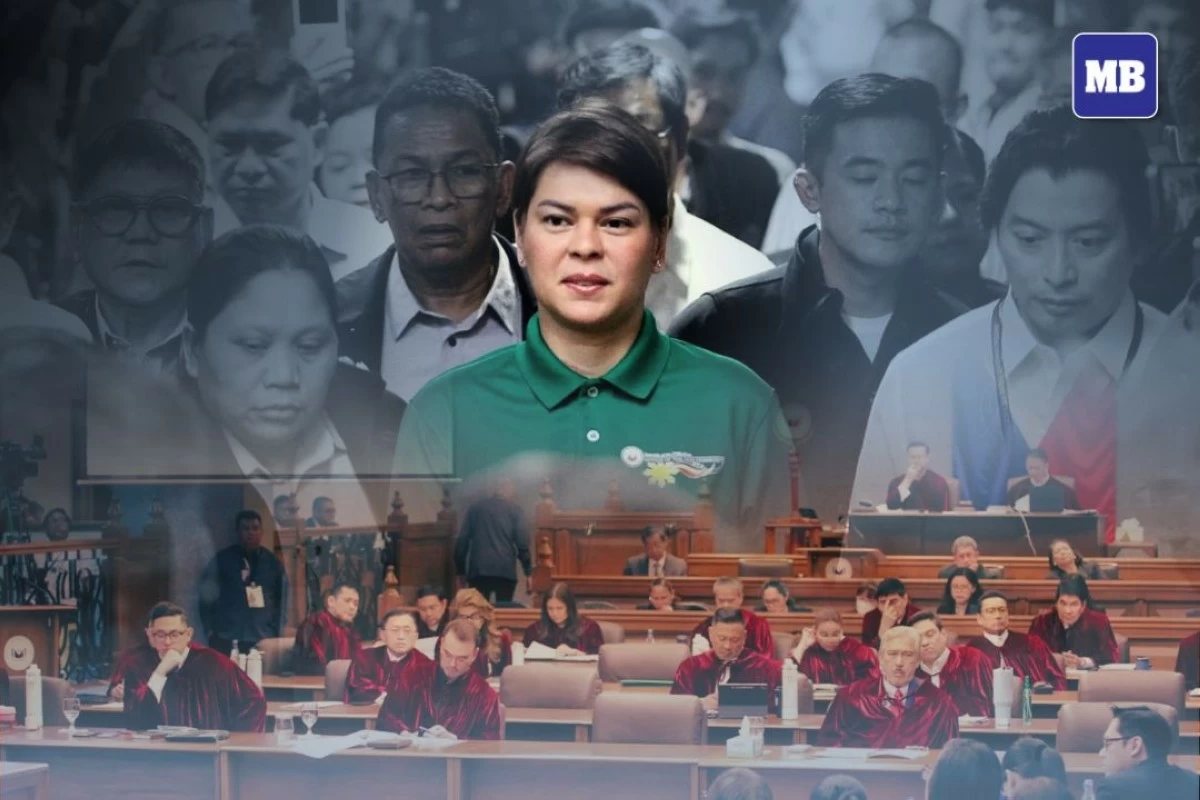
Vice President Sara Duterte's legal team opposed the prosecution's motion for judicial notice, arguing that House committee records cannot automatically be treated as evidence without proper authentication and cross-examination. (Mark Balmores / Manila Bulletin / file)
One of the key legal issues raised during the August 6 impeachment trial of Vice President Sara Duterte was the defense's opposition to the prosecution's request for the Senate impeachment court to take judicial notice of the House of Representatives' committee hearings and related records.
The issue centers on whether the Senate can officially recognize the existence of House committee proceedings without requiring the prosecution to present the documents and witnesses in the usual manner during trial.
Understanding judicial notice
In legal proceedings, judicial notice allows a court to recognize certain facts or official acts without requiring formal proof.
During Wednesday's impeachment proceedings, Senate impeachment court Presiding Officer Sen. Francis "Chiz" Escudero granted the prosecution's motion—but with important limitations.
The Senate recognized only the existence and official character of the House Committee on Good Government and Public Accountability hearings, including their transcripts, audio-visual recordings, and committee reports. It did not automatically accept the contents of those records as evidence proving the allegations against Duterte.
Escudero emphasized that judicial notice is not a substitute for presenting evidence during trial. The prosecution must still comply with rules on authentication, hearsay, relevance, and the respondent's right to object and confront evidence.
Duterte's defense raised opposition
Defense lawyer Atty. Kristine Ferrer opposed the prosecution's motion on three main grounds.
First, Ferrer argued that judicial notice "cannot be taken of disputed matters."
In her manifestation, Ferrer argued that judicial notice cannot be applied to facts that remain contested.
"Judicial notice is the cognizance of certain facts that judges may properly take and act on without proof because these facts are already known to them," Ferrer said.
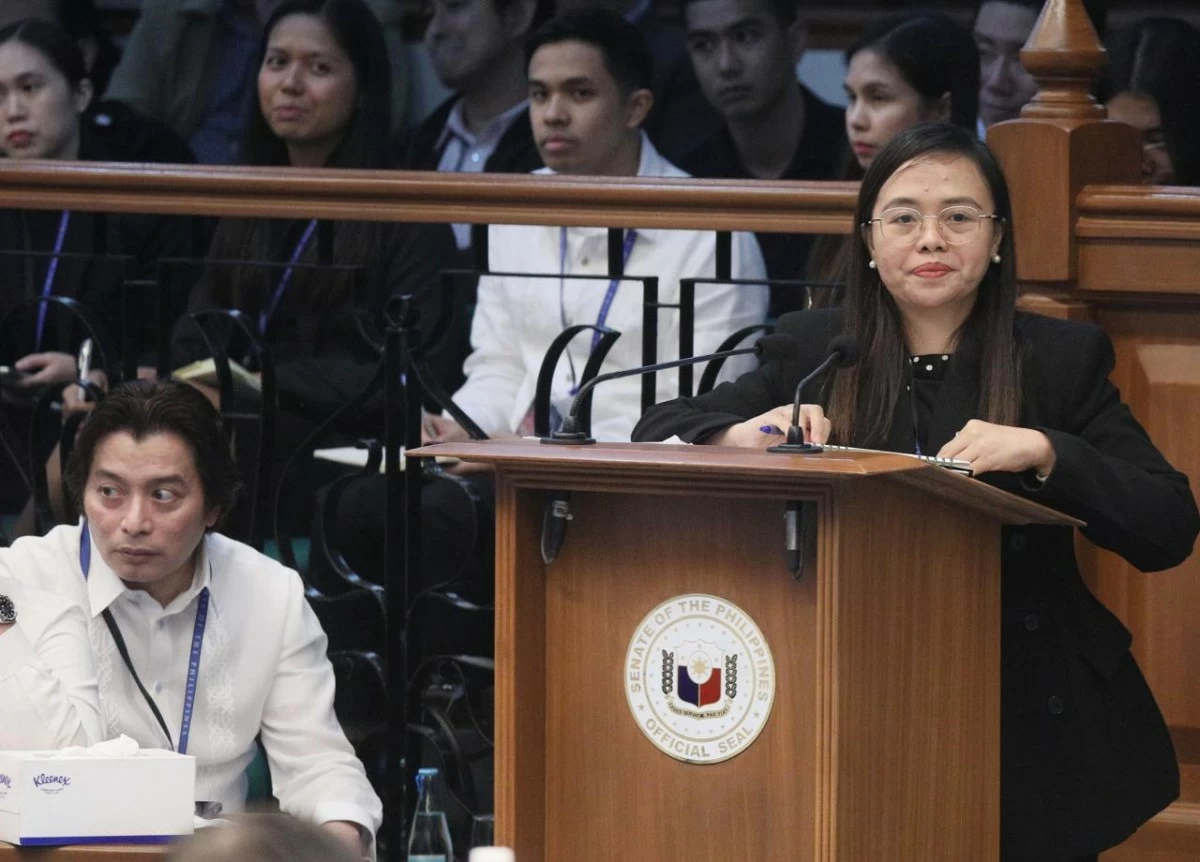
Defense lawyer Atty. Kristine Ferrer says House committee records must first be authenticated and tested through cross-examination before they can be admitted as evidence, opposing the prosecution's motion for judicial notice during Vice President Sara Duterte's impeachment trial on Aug. 6, 2026. (Mark Balmores / Manila Bulletin)
"Put differently, it is the assumption of a court of a fact without need of further traditional evidentiary support," she said. "The principle is based on convenience and expediency in securing and introducing evidence on matters which are not ordinarily capable of dispute and are not bona fide disputed," she added.
According to the defense, while the House hearings undeniably took place, the testimonies, findings, and allegations discussed during those proceedings are not automatically established facts. Instead, they remain claims that the prosecution must prove through admissible evidence.
The defense pointed out that Article I of the Articles of Impeachment accuses Duterte of misusing confidential funds—allegations that must still be established during the trial.
Second, Ferrer argued that Duterte has the right to cross-examine witnesses.
The defense also argued that due process requires giving Duterte an opportunity to question witnesses before the Senate admits transcripts, videos, and committee reports into evidence.
"The respondent is fully entitled to have all the observations, the objections, and cross-examination questions placed on record before the court admits these documents in evidence," Ferrer said.
Ferrer noted that witnesses should first authenticate the records and verify that they are accurate, complete, and unaltered. She also raised concerns that some videos could have been edited and that portions of the transcripts allegedly differed from the defense's own transcribed notes.
According to the defense, admitting the documents without first presenting witnesses to authenticate them would deprive Duterte of her constitutional right to confront the evidence against her.
Finally, Ferrer stressed that the House proceedings are being challenged before the Supreme Court.
The defense also argued that Duterte has questioned the legality of the House Committee on Justice's proceedings before the Supreme Court.
The petition describes the House inquiry as a "fishing expedition" and an unauthorized "mini-trial," arguing that only the Senate has the constitutional authority to conduct an impeachment trial.
"The petition pending before the Supreme Court challenges the proceedings before the House of Representatives Committee on Justice (HOR-COJ) only and not the actions of the Honorable Impeachment Court," Ferrer said.
Because the House proceedings themselves are under judicial challenge, the defense argued that the Senate should refrain from taking judicial notice of records originating from those proceedings.
"This distinction, however, does not preclude any future legal challenges against actions that this court may take while sitting as an impeachment court," she added.
What did the Senate say?
While Escudero granted the prosecution's motion, he adopted a narrower interpretation of judicial notice than what the defense feared.
The ruling simply acknowledges that the House hearings were officially conducted and that the transcripts, recordings, and reports exist as official legislative records. However, it does not mean that the contents of those materials are automatically accepted as truthful or admissible evidence.
Escudero reminded the prosecution that it must still formally present competent and admissible evidence during the trial and comply with evidentiary rules before the Senate can consider the substance of those records.
The dispute over judicial notice is expected to shape how evidence is presented throughout Duterte's impeachment trial.
If House committee records were automatically treated as proof of the allegations, the prosecution's burden of presenting evidence would be significantly reduced.
However, under Escudero's ruling, the prosecution must still authenticate documents, present witnesses when necessary, and allow the defense to challenge the evidence through objections and cross-examination before the Senate impeachment court can rely on it in deciding the case.
In a separate briefing, defense spokesperson Atty. Michael Wesley Poa said the Duterte camp respects the authority of the impeachment court regardless of whether its rulings favor the defense.
"Kami, nirerespeto naman po talaga natin kahit ano yung maging ruling ng Senate Impeachment Court, whether it is in our favor or not (We respect whatever ruling the Senate impeachment court issues, whether it is in our favor or not)," he said.
Poa stressed that while the impeachment court granted the prosecution's motion for judicial notice, it also clarified the scope of what was recognized.
"Napansin naman po natin na maingat na rin po 'yung naging ruling dahil may restrictions imposed at limit—kumbaga nilimitahan at in-emphasize kung ano ibig sabihin ng pag-grant nila ng motion for judicial notice (We also noticed that the ruling was carefully crafted because restrictions and limits were imposed—in other words, the court clarified and emphasized what it meant by granting the motion for judicial notice)," he said.
Poa added that the defense considered the court's explanation important because it prevented the ruling from being interpreted more broadly than what the court expressly allowed.
RELATED STORY: