







Farm output rebounds in Q2 on stronger harvests


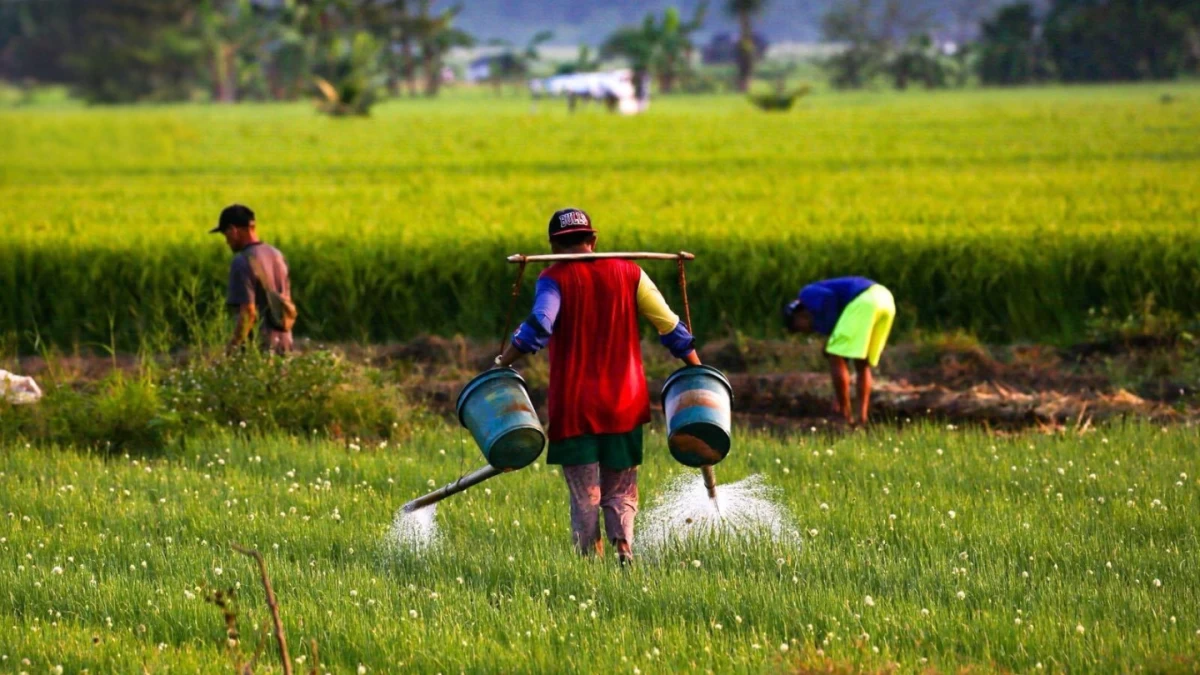
The value of the country’s agriculture and fisheries production increased by 2.9 percent in the second quarter, equivalent to more than ₱12 billion, fueled by increased productivity across all major subsectors, according to the Philippine Statistics Authority (PSA).
The latest PSA data on Thursday, Aug. 6, showed that the value of agriculture and fisheries output, measured in constant 2018 prices, rose to ₱452.22 billion from April to June, up from ₱439.66 billion in the same period last year.
While slower than last year’s six-percent expansion, the growth in the second quarter marked a sharp reversal of the 0.3-percent contraction in the previous quarter, which stemmed from weaker crop output.
The PSA said crop production, which accounts for 55 percent of total output, recovered in the second quarter, with its value increasing by 1.6 percent to ₱248.9 billion from ₱244.9 billion in the same period last year.
The growth was driven largely by palay, or unmilled rice, whose production value climbed by 5.7 percent to ₱93.69 billion compared to ₱88.62 billion recorded last year.
The increased palay output is a direct result of the four-month suspension of rice importation last year, which lifted farmgate prices and planting intentions, according to the Department of Agriculture (DA).
PSA data also showed that poultry emerged as the fastest-growing subsector in the second quarter, with production value growing by 6.3 percent to ₱79.84 billion from ₱75.08 billion.
Meanwhile, livestock production rose by 3.6 percent to ₱79.84 billion from ₱75.08 billion last year, as local hog farming continues to recover from the impact of African swine fever (ASF).
The value of the fisheries subsector, which declined in the first quarter, has since turned around, registering a 2.7-percent improvement to ₱61.64 billion from ₱60.02 billion.
Despite higher input costs and lingering weather and disease risks, Agriculture Secretary Francisco Tiu Laurel Jr. said the increase in the country’s agricultural output is proof that the government’s long-term investments are beginning to produce gains.
“This strong second-quarter performance shows the Marcos administration’s farm modernization agenda is delivering results where they matter most, on our farms and in rural communities,” the DA chief said.
Tiu Laurel said enhancing the country’s productivity is crucial to strengthening the sector ahead of the projected impact of the El Niño phenomenon later this year.
While certain safeguards are already in place, Philippine Chamber of Agriculture and Food Inc. (PCAFI) president Danilo Fausto said he expects the crops subsector to register a decline in the second half due to the impact of El Niño.
Crop output is typically lower during the third and fourth quarters due to disruptions from typhoons, he said.
“The growth of the three sectors (livestock, poultry, and fisheries) will persist for the third quarter, except for crops,” Fausto told Manila Bulletin.
To sustain growth in the next six months, Tiu Laurel said the DA is banking on increased agricultural exports and the opening of new markets abroad to drive demand for domestic production.
“Sustaining the momentum will require continued investments in modernization and climate resilience,” he said.