






Manila Bulletin
 Technews
The architecture of AI process orchestration: How callback is re-engineering the enterprise back office
Technews
The architecture of AI process orchestration: How callback is re-engineering the enterprise back office
Technews
The architecture of AI process orchestration: How callback is re-engineering the enterprise back office
The architecture of AI process orchestration: How callback is re-engineering the enterprise back office
By Bob Reyes
Published Aug 5, 2026 11:37 am


As Artificial Intelligence (AI) models grow exponentially more capable, a quiet realization is settling over Silicon Valley and enterprise IT departments alike: inference is becoming a commodity. Generating a polite customer support email or processing a routine phone call no longer holds scarce value. The true value — and the primary structural bottleneck to widespread AI adoption — lies in owning the configuration that runs the factory floor.
This core thesis drives Callback [getcallback.ai], a venture-backed startup based in San Francisco building the definitive system of record for process orchestration. Supported by top-tier venture investors whose portfolios include generation-defining companies like Stripe, Airbnb, and Coinbase, Callback is addressing a critical enterprise reality. Foundational large language models are powerful engines, but without rigorous infrastructure, guardrails, and deterministic workflows, they cannot safely handle high-stakes back-office operations in regulated industries like healthcare and finance.
The Flaw of the Standalone Agent
Many enterprise automation efforts fall short because they treat generative AI models like autonomous human employees rather than components of a broader system. In a production environment, relying solely on prompt engineering or standalone AI agents creates an unreliable, memoryless system.
Paulo Bautista, COO of Callback, compares current AI models to the protagonist in the movie Memento or 50 First Dates, explaining that models have long-term general knowledge from training but start from zero context every time they receive a message, “AI models don’t actually create memories after they’re trained. Having a continuous conversation with one is an illusion: each time you send a message, it’s rereading the full chain from scratch and pretending to remember. That seems like the wrong tool for a problem you not only know exactly how to solve, but have precise instructions to make sure it’s solved correctly each time.”
For enterprise back offices where processes run tens of thousands of times under strict regulatory scrutiny, this unpredictability is fatal. Callback bridges this gap by serving as the central orchestration layer. Rather than giving an agent free rein, Callback provides a unified, fully auditable platform where enterprises define, version, and execute complex workflows step-by-step. Within this framework, raw AI models act as modular, undifferentiated inputs. Tightly scoped AI agents perform specific, bounded tasks, but the platform itself guarantees that overarching process logic, human-in-the-loop approvals, and compliance gates are strictly enforced on every single run.
Engineering Auditability in Regulated Environments
In healthcare and finance, compliance is the ultimate gatekeeper for software adoption. Callback addresses this by treating execution history with the same rigor as an immutable financial ledger. Every workflow version, variable, reference document, and agent output is stored in perpetuity, making all runs fully legible and open to audit.
When encountering edge cases, Callback relies on explicit exception scaffolding rather than allowing models to hallucinate through unknown scenarios. The system builds defined flows for every category of exception. When an unprecedented error occurs, Callback cleanly triggers a human-in-the-loop workflow, routing the case directly to a human analyst while preserving system stability and maintaining an unbroken audit trail.
Transformative Leadership and Operations Expertise
Extracting operational knowledge to build these systems requires deep domain expertise, as tribal knowledge rarely lives in clean documentation. Callback’s leadership brings together complementary technical and operational backgrounds to tackle this challenge.
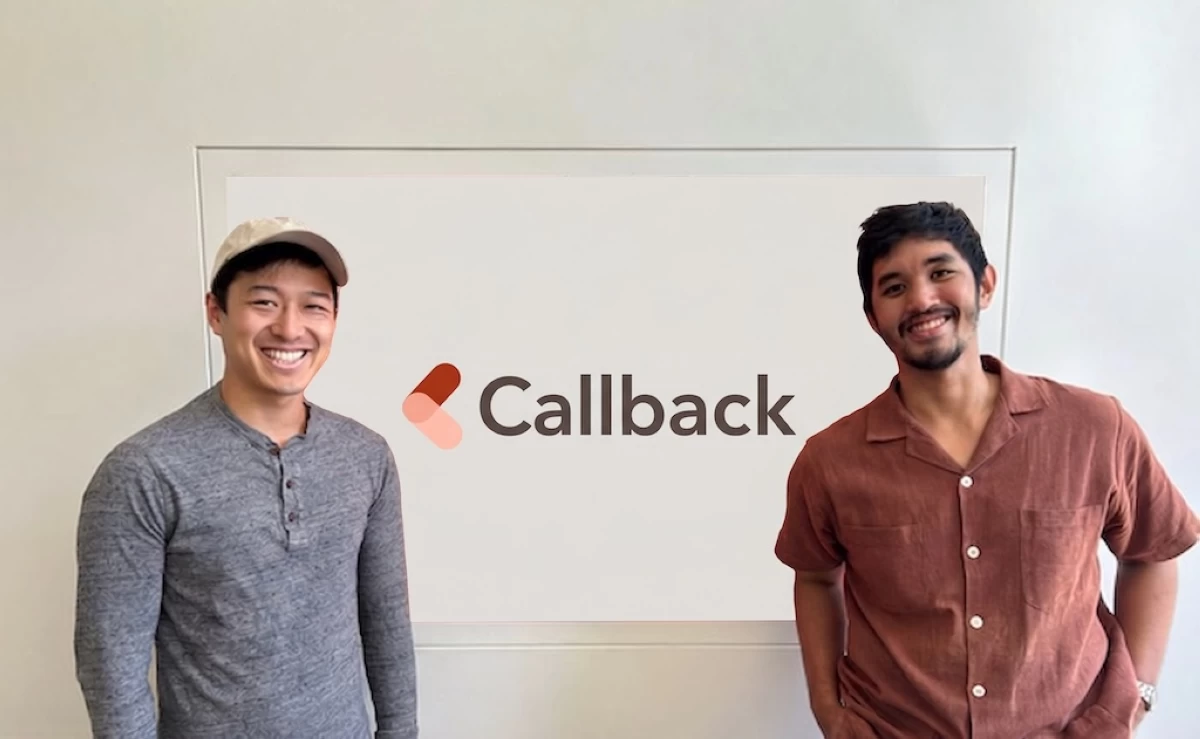
Alan Xie, CEO, is a seasoned technology executive with prior experience managing global-scale software products at Microsoft and Amazon. He studied computer science at Harvard College and Columbia University and holds an MBA from Harvard Business School. Paulo Bautista, COO, is an experienced technology and operations executive who previously managed thousand-person teams and complex operations at Ninja Van and Tarro. He holds an Economics degree from the University of the Philippines and an MBA from Harvard Business School.
Together, the founding team translates manual operational processes into modular, reusable software components. By codifying fragmented operational details into a structured system of execution, Callback enables non-technical enterprise teams to elevate their back-office operations. Instead of manually executing repetitive tasks, human operators shift toward inspecting edge cases, improving workflows, and managing system outputs, unlocking long-term enterprise value in an AI-driven economy.